
Best Products to Sell on Amazon FBA in 2026: Top Categories for Maximum Profit
The best products to sell on Amazon FBA in 2026 differ significantly from those of previous years. Consumer habits evolve rapidly, and individuals increasingly focus on sustainability, eco-conscious choices, enhancing their quality of life, and utilizing everyday technology that simplifies daily tasks.
Recent data from Jungle Scout reveals an intriguing insight: over 73% of sellers who focus on emerging Amazon FBA business opportunities achieve a profit of more than 20% in their first year. Selecting the right niches for the Fulfillment by Amazon program can significantly influence your online store’s future.
The game has undergone substantial evolution since 2025. Specific markets that previously appeared overly saturated are now experiencing renewed opportunities. Emerging categories present numerous possibilities for savvy sellers pursuing profitability.
This comprehensive guide discusses the most profitable products to sell with Amazon in 2026. You’ll receive expert recommendations on effective sourcing options, realistic profit margins, and current competitive landscape overview. Understanding trends 2026 will provide you with a significant advantage for your FBA business.
Whether you’re currently selling and seeking to expand or launching your first product, this guide covers everything you need to know about Amazon FBA product selection strategy.
Ready to explore proven strategies for e-commerce success? Discover our comprehensive Amazon FBA automation services that help sellers scale their operations efficiently while maximizing profitability in the competitive Amazon marketplace.
Understanding Amazon FBA Product Selection in 2026
Effective Amazon FBA product research remains the most crucial factor for achieving success in any business. When considering how to choose products in 2026, the Fulfillment by Amazon program distinguishes itself from traditional retail by allowing sellers to leverage Amazon’s extensive distribution capabilities while managing their own research, sourcing, and marketing efforts.
Several key factors influence what products sell best with Amazon FBA in 2026:
- Environmentally friendly materials that demonstrate durability
- Integrating health and wellness initiatives
- Collaboration with smart home technology
- Consumables included with a subscription
- Focusing on a niche market
The most successful Amazon FBA selling strategies typically select items that consistently attract demand, face manageable competition, and achieve a profit margin of 25% to 40%. Amazon product research tools, such as Helium 10, have noted that vendors offering 2 to 3 linked products generate approximately 60% more consistent revenue compared to those who sell only a single product through their Amazon seller account.
For beginners looking to navigate this landscape, understanding the fundamentals is crucial. FBA for beginners requires proper foundation, experience, and knowledge of profitable Amazon FBA products 2026.
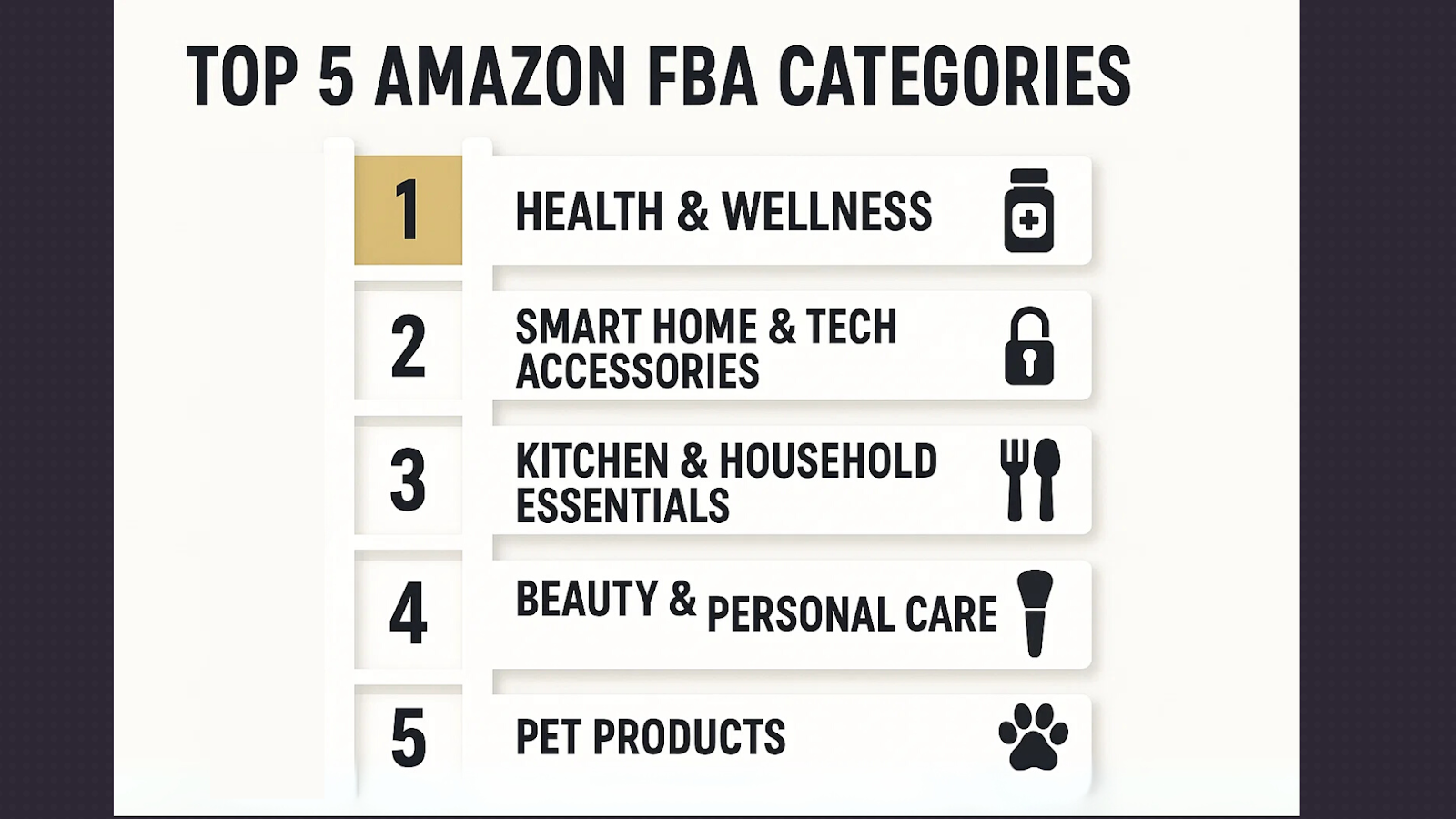
Top Profitable Amazon FBA Categories 2026
Health and Wellness Products
Health and wellness remain among the top Amazon categories in 2026. According to Statista’s health market analysis, wellness products have reported a 45% increase in sales of supplements and fitness products compared to the same period last year. This reflects the significant growth of this market segment and presents excellent opportunities.
The selection is extensive and diverse for health products. It encompasses everything from daily vitamins to gym equipment and personal wellness devices. This category offers excellent business opportunities for sellers who understand the regulations and target specific audiences.
High-demand subcategories for product ideas include:
Beauty supplements: Vitamin and collagen supplements typically range from $25 to $45, with Amazon FBA profit margins between 35% and 50%.
Home fitness equipment: Resistance bands and small fitness equipment continue growing at 30% annually as more people incorporate home workouts into their inventory management.
Aromatherapy products: Essential oils and aromatherapy items enjoy consistent, dedicated customer bases seeking sustainable products for Amazon FBA.
Sleep aids: Weighted blankets, masks, and relaxation aids effectively enhance sleep quality and represent high-demand products.
Understanding the regulations is essential for achieving success in this niche. The FDA enforces stringent regulations regarding supplements, requiring that all claims be substantiated with scientific evidence. Sellers who excel often focus beyond a general health approach and concentrate on specific categories, such as seniors, athletes, or busy professionals seeking to achieve their health goals efficiently through selling.
Smart Home and Tech Accessories: The Best Amazon FBA Niches in 2026
Smart home technology has gained significant popularity for Amazon FBA business. It represents one of the best FBA niches for beginners in 2026. An increasing number of homes are adopting smart devices and automation, leading to growing demand for innovative technologies and practical accessories through the Amazon marketplace.
This category provides Amazon FBA sellers with excellent opportunities. You can offer both cutting-edge and essential items that consumers frequently require for their FBA private label products.
Trending smart home Amazon FBA products:
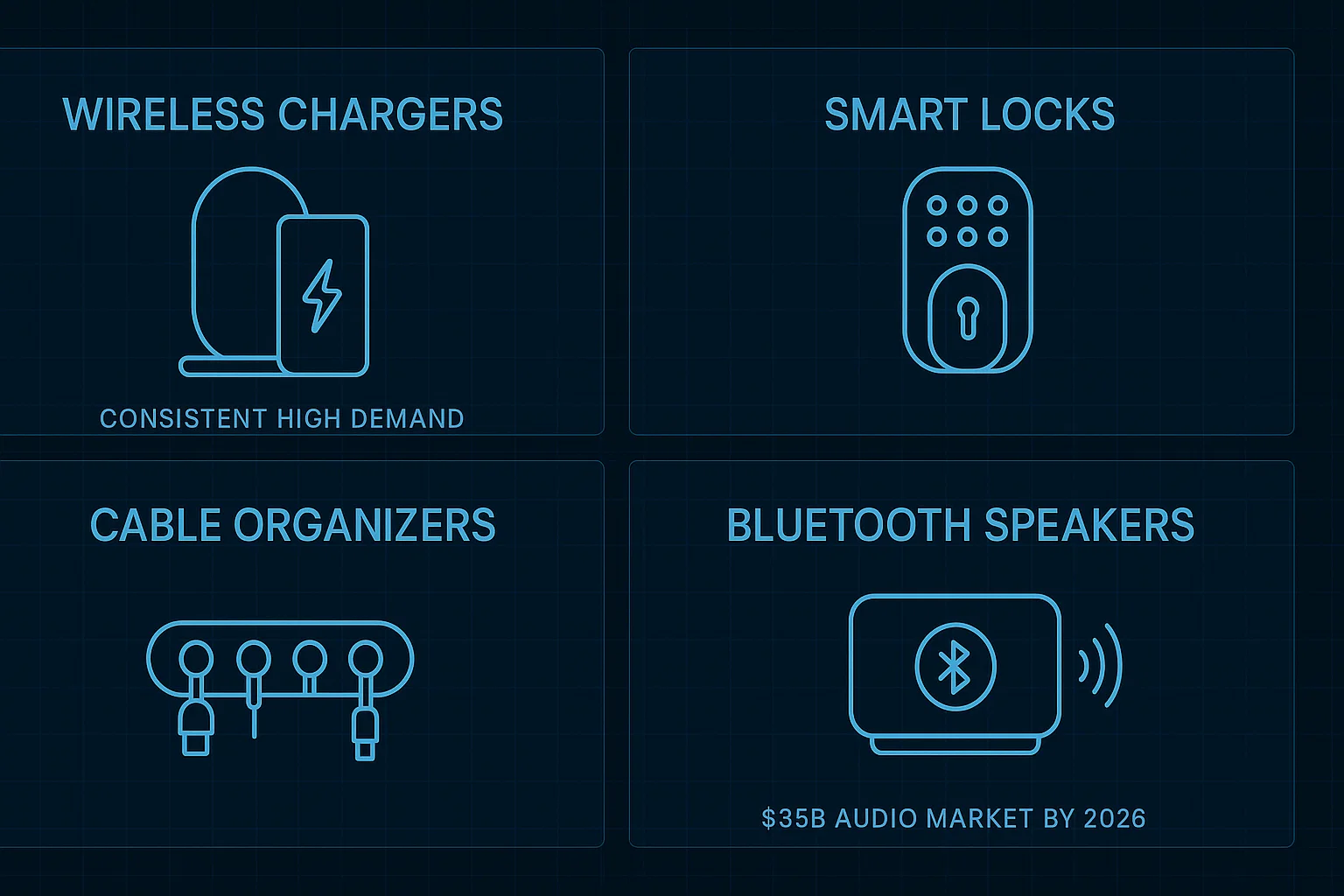
Phone accessories and wireless chargers consistently maintain high demand for tech accessories, a trend that intensifies with the release of each new phone model.
Smart locks, doorbell cameras, and motion sensors represent essential components of modern home security solutions and low competition Amazon FBA niches.
Cable organizing and management products represent a surprisingly valuable yet largely overlooked market for Amazon FBA product research.
Bluetooth speakers and audio equipment: According to Statista’s consumer electronics report, the market is projected to reach $35 billion by 2027, presenting strong opportunities.
The positive aspect is that demand remains consistent for sourcing, and there are already well-established supplier networks, particularly in regions such as China and South Korea, where manufacturing capabilities are robust. However, the challenging aspect lies in adapting to rapid device changes and ensuring that your Amazon FBA strategy aligns with customer preferences.
Kitchen and Household Essentials
For several years, kitchen products have consistently represented a strong market for sellers, and they’re projected to remain among the top Amazon FBA products in 2026. This area is particularly advantageous as buyers consistently seek innovative equipment that can enhance their cooking and organizational capabilities through household essentials.
Items that can be restocked and seasonal purchasing trends help sustain Amazon FBA selling consistently throughout the year.
Profitable kitchen subcategories for Amazon FBA business:
Specialized tools and gadgets designed to address specific culinary challenges represent excellent product ideas.
Popular food storage and meal preparation designs that aim to minimize food waste attract eco-friendly ideas enthusiasts.
Coffee and beverage accessories driven by the $45 billion global coffee industry according to International Coffee Organization data.
Sustainable Amazon FBA products including environmentally friendly cleaning supplies and tools for FBA inventory management.
This group typically maintains Amazon FBA categories with high margins ranging from 25% to 35%. Products that excel in this context usually enhance existing designs or effectively address unmet customer needs for profitable products 2026. Numerous positive reviews can significantly accelerate FBA business growth compared to many other sectors.
Beauty and Personal Care
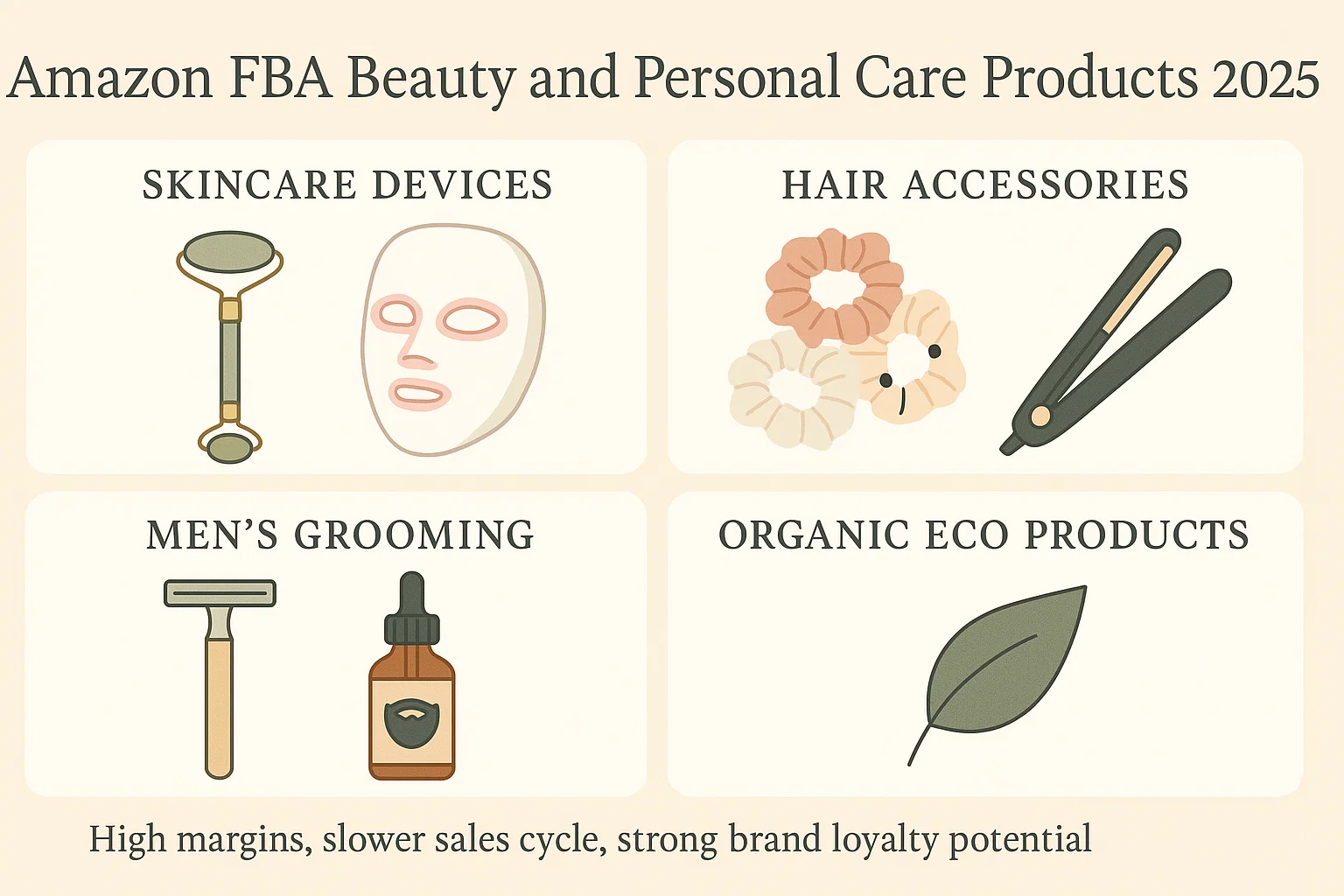
The beauty products industry has undergone significant changes in recent years. Consumers are increasingly purchasing natural, organic beauty, and niche products, presenting opportunities for retailers who can meet these demands and adhere to more stringent regulations in this Amazon FBA niche.
High-opportunity beauty segments for Amazon FBA selling:
Facial rollers, cleansing brushes, and LED light therapy devices are examples of skincare tools and technologies for product selection strategy.
Hair care accessories including headbands, scrunchies, and styling products continue to capture consumer interest and demand in the Amazon marketplace.
Men’s grooming products industry is gaining momentum as more men prioritize self-care, yet it still lacks adequate attention, representing emerging Amazon FBA niches.
Organic and eco-friendly ideas have gained popularity among individuals seeking healthier beauty alternatives and sustainable products for FBA.
Beauty products typically exhibit higher profit margins; however, they often require a longer sales cycle. In many instances, achieving success in this Amazon FBA business necessitates greater investment in brand development. When merchants operate effectively through Amazon FBA automation, they cultivate a base of loyal clients who make repeat purchases, resulting in cumulative benefits over time.
Pet Products and Accessories
The demand for pet products Amazon FBA remains robust, with sales continuing to thrive. Sellers in this category are experiencing significant growth as more individuals acquire pets and invest more in their health and comfort. The American Pet Products Association reported that in 2025, expenditures in this sector reached $261 billion, with a significant portion allocated to online spending through the Amazon marketplace.
Profitable pet accessories Amazon FBA niches:
Puzzle toys and feeders designed to engage pets and stimulate their cognitive abilities represent high-demand Amazon FBA products.
Grooming products and accessories contribute to sustaining stable demand for Amazon FBA inventory management.
Carriers, GPS trackers, and auto harnesses represent essential items for pet travel and safety in the business.
Pet dietary supplements are gaining popularity as owners become increasingly health-conscious regarding their dogs, creating opportunities.
Individuals often acquire pets for emotional motivations, resulting in a strong commitment as customers. Many successful vendors carve out their niche by addressing specific challenges faced by pet owners, such as anxiety, chewing, or travel difficulties, while simultaneously simplifying their experience through Amazon FBA selling.
Amazon FBA Product Trends 2026 and Seasonal Opportunities
One of the significant advantages of being an Amazon seller is timing. You can capitalize on seasonal FBA products in 2026 and enter popular categories early through effective strategy.
Understanding these cycles greatly influences your earning potential with Amazon FBA business. Market research indicates that vendors following seasonal trends may see sales increases of 200% to 400% during peak months in the Amazon marketplace.
This knowledge helps you position inventory strategically for profitability. It also allows you to maximize profits during high-demand periods through inventory management.
Holiday and Gift Items
Holidays have consistently been a significant factor driving consumer purchases through Amazon FBA, and this trend is expected to continue in 2026. Valentine’s Day and Mother’s Day gifts consistently attract attention, particularly those that are personalized or emphasize experiential offerings through the Fulfillment by Amazon program.
Individuals purchasing gifts tend to exhibit reduced sensitivity to pricing, indicating that retailers have the potential to increase their Amazon FBA profit margins during these times.
Back-to-school purchasing represents a reliable seasonal increase that can be anticipated for Amazon FBA business. Between July and September, items such as dorm room essentials, study supplies, and organizational tools experience significant increases in demand. Sellers can more effectively organize their FBA inventory management and promotions, as they have a clearer understanding of anticipated sales volumes.
Emerging Trend Categories
Emerging Amazon FBA trends 2026 are gaining significant traction alongside seasonal categories. Eco-friendly ideas and sustainable products for FBA are leading the way. Eco-conscious consumers are seeking products made from recycled materials, zero-waste alternatives, and energy-saving devices through the Amazon marketplace. They’re prepared to invest more in these types of products.
The market for products that support mental wellness and stress alleviation is experiencing rapid growth through business opportunities. This trend indicates a cultural shift towards prioritizing wellness and balance. It encompasses items such as meditation cushions, stress balls, and diaries designed for mindfulness in the Amazon FBA niche.
This platform serves as a venue for sellers to generate innovative ideas and engage with buyers in meaningful ways through effective product research.
Need help identifying the right products for your specific market? Contact our expert team for personalized Amazon FBA product research service and sourcing guidance tailored to your particular Amazon FBA business needs and goals.
Product Sourcing and Supplier Strategies
Having the appropriate product alone is insufficient for implementing effective Amazon FBA profitability strategies. FBA sourcing techniques and robust relationships with suppliers are essential for achieving success with FBA business. The top sellers maintain diverse supplier ranges, enabling them to quickly adapt their Amazon FBA strategy in response to fluctuations in demand or market conditions.
International Sourcing Considerations
China remains the primary source for most FBA private label products. This is due to low costs and a well-established production infrastructure for sourcing.
Many merchants are now diversifying their supplier base for business. They’re collaborating with manufacturers in Vietnam, India, and even US suppliers. This reduces reliance on a single country for Amazon FBA inventory management.
This diversification strategy offers multiple benefits for selling:
Reduces supply chain risk for FBA operations and the Fulfillment by Amazon program.
Accelerates delivery times for products reaching the Amazon marketplace.
Provides pricing flexibility for maintaining profit margins.
Quality control becomes even more critical when sourcing internationally for Amazon FBA business. To mitigate returns and costly delays, thoroughly test samples. Clear communication with factories is essential for sourcing success.
According to Alibaba’s Global Trade Report, diversified sourcing has become increasingly important for e-commerce businesses and Amazon FBA automation in 2026.
Domestic Sourcing Benefits
Local suppliers offer several distinct advantages for Amazon FBA business:
Expedited shipping times for faster FBA inventory management.
Improved communication for better Amazon FBA strategy implementation.
Stronger reputation for quality in the Amazon marketplace.
While costs are typically higher, US sourcing becomes strategic in specific situations for Amazon FBA selling. Speed to market becomes critical for trending products. The “made locally” appeal also enhances brand value for many customers seeking FBA opportunities.
Some vendors explore wholesale and liquidation opportunities as alternative Amazon FBA sourcing methods. This approach typically involves managing a larger number of items at reduced margins. However, it can facilitate smoother inventory turnover and accelerate FBA business growth.
High Demand, Low Competition Products, Amazon FBA 2026
Finding high demand Amazon FBA products with low competition Amazon niches requires strategic analysis and timing. The key lies in identifying emerging niches before they become saturated while ensuring sufficient market demand exists to sustain profitable Amazon operations.
Profit Margin Analysis and Pricing Strategies
It’s essential to recognize that FBA selling involves more than just selecting the right product. To generate revenue, it’s necessary to understand all associated costs and avoid common mistakes in Amazon FBA product selection strategy. Many new vendors often overlook their costs, leading to a rapid decline in their profit margins.
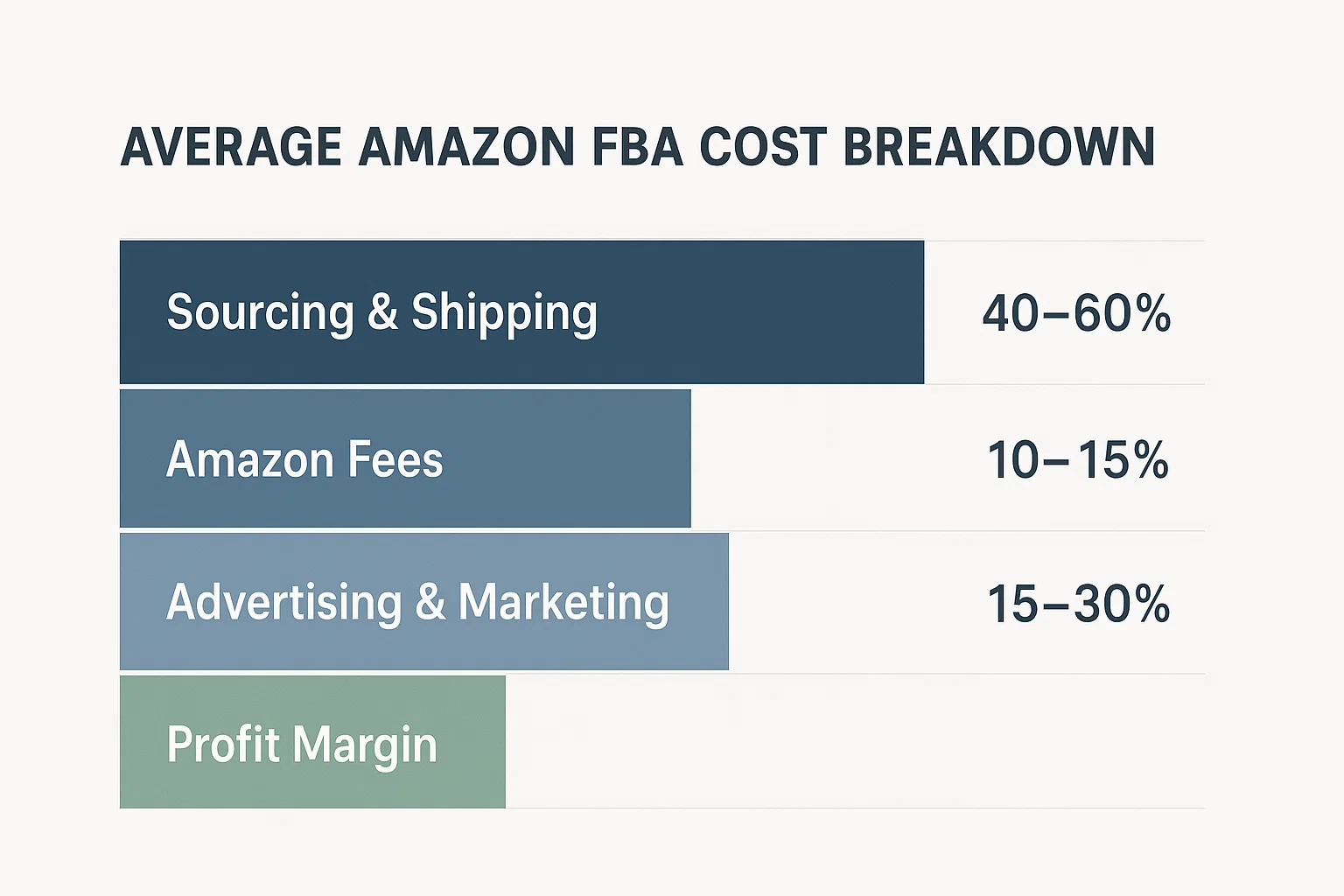
Cost Structure Breakdown for Amazon FBA business:
Amazon FBA fees and costs typically account for 10–15% of the selling price, varying by size and category. Before establishing rates, it’s essential to ensure these fees are accurate for the Fulfillment by Amazon program, as they have increased.
Another significant cost factor is advertising and marketing for Amazon FBA business. When selling products comparable to others in the Amazon marketplace, it’s typically necessary to allocate 15–30% of sales revenue towards advertising efforts. Effective sellers integrate this approach with long-term SEO and organic rankings to minimize dependence on continuous ad spending for FBA profitability.
A significant portion of the selling price, typically ranging from 40% to 60%, is allocated to Amazon FBA sourcing and shipping the product. One practical approach to protecting profit margins is negotiating improved terms with suppliers, particularly as order volumes increase for your FBA business.
Competitive Pricing Analysis
The Amazon marketplace operates as a highly competitive environment. Your pricing must align with market expectations and the strategies of your competitors for Amazon FBA selling.
Many merchants use automated repricing tools for Amazon FBA automation. Systems like RepricerExpress and Sellery automatically adjust prices in response to competitor actions and changes in inventory. This helps maintain a competitive position without requiring constant manual monitoring for Amazon FBA business.
Value-based pricing proves more effective for distinctive Amazon FBA products. Customers invest more when you demonstrate superior features, quality, or service. Focus on differentiation rather than competing solely on price for FBA opportunities.
According to Jungle Scout’s State of the Amazon Seller Report, successful sellers prioritize value proposition over price competition in the Amazon marketplace.
If you’re looking to diversify your e-commerce portfolio beyond the Amazon marketplace, consider exploring our Walmart dropshipping automation services for additional revenue streams beyond Amazon FBA business.
Finding Best Amazon FBA Niches 2026: Research and Validation
Market research is a crucial factor that distinguishes successful Amazon FBA sellers from those who struggle to achieve their goals. Selecting products without data resembles gambling; however, sellers who assess demand from various perspectives before placing orders tend to make significantly fewer errors and achieve superior results.
Using Amazon’s Own Data
Amazon provides vendors with a wealth of helpful information, provided one knows where to look. The Amazon Best Sellers lists showcase current popular items; however, the best sellers don’t merely replicate leading products. Instead, they examine subgroups more closely, identifying markets characterized by reduced competition while maintaining sufficient demand to ensure viable sales opportunities.
Evaluating customer reviews is an effective way to gain valuable insights. Analyzing reviews reveals the preferences, frustrations, and areas where customers desire improved product performance. Amazon product research tools, such as Helium 10 and Jungle Scout, serve as examples of tools capable of extracting this data on a large scale, facilitating the identification of patterns and areas for potential improvement.
Third-Party Research Tools
Integrating Amazon’s internal data with external sources can provide a comprehensive view of the situation. Google Trends serves as an effective tool for assessing current consumer interest in products, determining whether it is rising or declining. Analyzing both search statistics and sales trends on Amazon can offer greater clarity regarding products’ long-term potential.
Another strategy that warrants more attention is monitoring social media. Facebook, Instagram, and TikTok serve as platforms that frequently showcase emerging product trends before they become widely available on Amazon. Sellers who focus on this area can gain a competitive advantage and capitalize on opportunities to be first to act.
Amazon FBA Inventory Management Strategies
Implementing effective Amazon FBA inventory management strategies is crucial for maintaining profitability and avoiding costly storage fees. Successful sellers in 2026 utilize sophisticated systems to balance stock levels, manage cash flow, and optimize storage costs.
The most effective approach involves maintaining a stock of 60 to 90 days, depending on the sales velocity of items. Utilizing inventory management software is essential for monitoring the performance of various products. Additionally, establishing reorder points should account for lead times from suppliers and seasonal fluctuations in sales.
Successful sellers ensure they maintain diverse arrays of suppliers to prevent stock shortages, establish payment terms that align with their cash flow cycles, and utilize Amazon’s inventory performance metrics to reduce storage costs and avoid incurring long-term storage fees.
Conclusion: Building Your Amazon FBA Success Strategy
The Amazon FBA landscape in 2026 presents numerous opportunities; however, success will favor sellers who engage strategically and with patience in their Amazon FBA business. Success isn’t merely about hastily pursuing the following significant product; it involves integrating robust Amazon FBA product research with effective systems and maintaining commitment to continuous improvement in the Amazon marketplace.
The most successful Amazon FBA sellers focus on building long-term relationships rather than pursuing short-term gains. They’re establishing enduring businesses through enhanced supplier relationships for Amazon FBA sourcing, brand development investment, and implementing systems that facilitate smoother scaling as order volumes increase for their Fulfillment by Amazon program.
For those interested in expanding their e-commerce presence beyond the Amazon marketplace, consider exploring opportunities in other marketplaces. Our comprehensive guide on Etsy automation services for 2026 shows how to scale creative product businesses efficiently beyond Amazon FBA business.
Achieving success with FBA involves more than simply identifying products; it also requires effective product management. The outcome ultimately depends on the execution of your FBA strategy, strategic sourcing, meticulous Amazon FBA inventory management, exceptional customer service delivery, and the development of marketing systems that generate consistent sales through the Amazon marketplace.
Regardless of whether you’re new to Amazon FBA or have existing products and are considering expansion, the fundamentals are of utmost importance. Sellers who approach their FBA business as professional operations, implementing effective systems, processes, and well-defined Amazon seller growth strategies, are the ones who succeed. In 2026, there will be significant opportunities for individuals prepared to invest the effort required to create something sustainable and profitable through the Fulfillment by Amazon program.
Ready to scale with the best products to sell with FBA in 2026? The right systems and processes can transform your operations from time-intensive management to streamlined, profitable growth. Explore our Amazon FBA automation services designed to maximize your Amazon profitability while minimizing hands-on management.
For those interested in wholesale opportunities, our Amazon wholesale FBA services provide comprehensive support for scaling your business efficiently in the competitive Amazon marketplace
Frequently Asked Questions
Q. What is the minimum budget needed to start selling products on Amazon FBA in 2026?
The minimum budget to start Amazon FBA in 2026 is $2,000 to $5,000 for your first product, covering inventory, seller fees, advertising, and setup costs. Higher budgets of $10,000 to $15,000 significantly improve success rates.
To start selling profitable products in 2026, you’ll need $2,000 to $5,000 for your first product. This covers inventory costs ($1,000 to $3,000), fees for an Amazon seller account ($39.99/month for the Professional plan), initial advertising budget ($500 to $1,000), plus product photography and packaging design costs. Having $10,000 to $15,000 provides greater flexibility for inventory and marketing strategies, significantly improving your chances of success.
Q. How long does it take to see profits from Amazon FBA products?
Most successful Amazon FBA sellers achieve consistent profits within 3-6 months of launching their first product, with the initial investment typically recovered within 2-4 months following a proper launch.
With proper market research and a sound initial investment, most successful sellers begin to see consistent profits within 3 to 6 months of launching their first product. The timeline depends on the competitiveness of the product category, the effectiveness of initial advertising, and seasonal demand variations. Sellers typically recoup their initial investment within 2 to 4 months as organic rankings improve and advertising costs decrease relative to sales volume.
Q. What are the most common mistakes new Amazon FBA sellers make with product selection?
Common Amazon FBA product selection mistakes include choosing oversaturated markets without differentiation, failing to accurately calculate total costs, selecting seasonal products without understanding demand cycles, and selecting oversized items with high FBA fees.
Q. How do I compete with established sellers in popular product categories?
To compete with established sellers, focus on product differentiation over price competition, target underserved customer segments, improve designs based on negative competitor reviews, and offer superior customer service with value-added bundles.
Q. What inventory management strategies work best for Amazon FBA sellers?
Effective inventory management involves maintaining a stock level of 60-90 days based on sales velocity, utilizing inventory software for monitoring, establishing reorder points that account for lead times, and maintaining diverse supplier relationships to prevent stockouts.