
YouTube Automation Mistakes That Can Get You Demonetized
YouTube automation mistakes can turn what looks like an easy path to passive income into a frustrating experience almost overnight. Starting a YouTube automation channel can seem like the perfect way to build passive income. However, even one mistake can lead to YouTube demonetization. According to recent YouTube Partner Program data, more than 34% of new creators face monetization issues in their first year.
The idea of running a faceless YouTube channel that generates income while you sleep is appealing. Yet many new creators underestimate how complex YouTube Partner Program policies can be. Algorithm updates and content rules create ongoing challenges.
The gap between a profitable automated channel and one that gets shut down often comes down to one thing. You must avoid key YouTube automation mistakes from the very start. This guide will walk you through the most common YouTube automation mistakes that lead to YouTube automation demonetization. You’ll learn how violations are detected. You’ll also discover what steps you can take to build a compliant and profitable channel.
Understanding YouTube Automation and Monetization Requirements
YouTube automation involves building channels where the owner is not the on-screen personality. Often, they don’t handle every part of the production either. Instead, video creation, voiceovers, editing, and channel management are delegated to freelancers or agencies.
These types of faceless YouTube channels typically publish top 10 lists. They also create documentary-style explainers, educational tutorials, or compilation content. When executed properly, they can attract significant viewership.
How YouTube Monetization Actually Works
Before looking at why YouTube automation channels get demonetized, you need to understand how monetization works. To qualify for the YouTube Partner Program, a channel must have at least 1,000 subscribers. You also need 4,000 watch hours within the last 12 months.
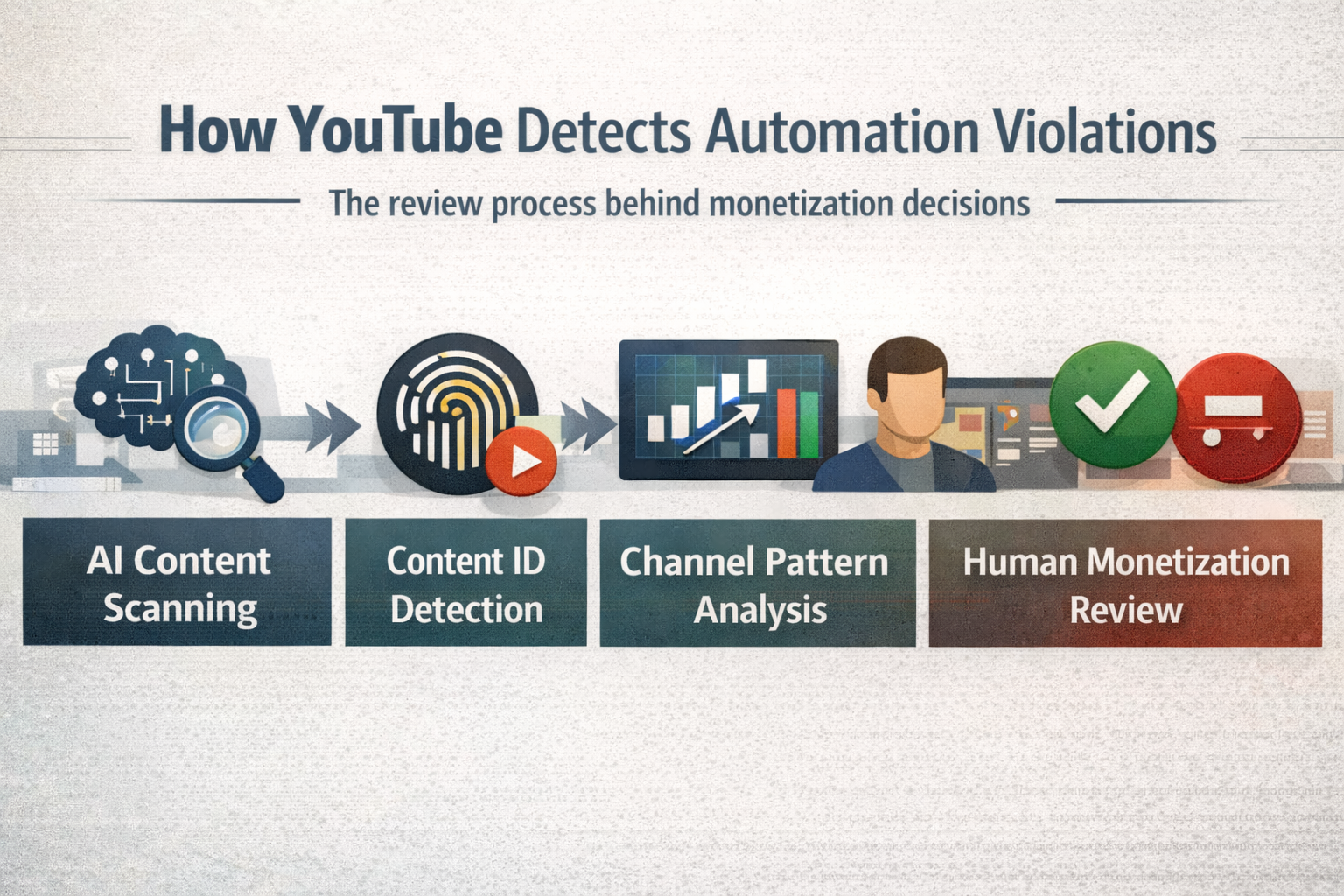
However, reaching these thresholds is not enough if your videos break YouTube Partner Program policies. YouTube uses advanced AI technology along with human reviewers to detect violations. This makes it increasingly difficult to bypass the system.
How YouTube reviews monetization applications involves evaluating the entire channel. The monetization review process doesn’t just look at single videos. It analyzes patterns across your entire content library.
Common Misconceptions About Monetization
A frequent error among new creators is assuming problematic content can be hidden among legitimate uploads. In reality, YouTube’s algorithms analyze patterns across all videos. Human reviewers can easily identify inconsistencies.
If you plan to scale your operations efficiently, build systems similar to those used in e-commerce. For anyone serious about building a sustainable YouTube automation business, understanding YouTube Partner Program policies upfront prevents major setbacks later.
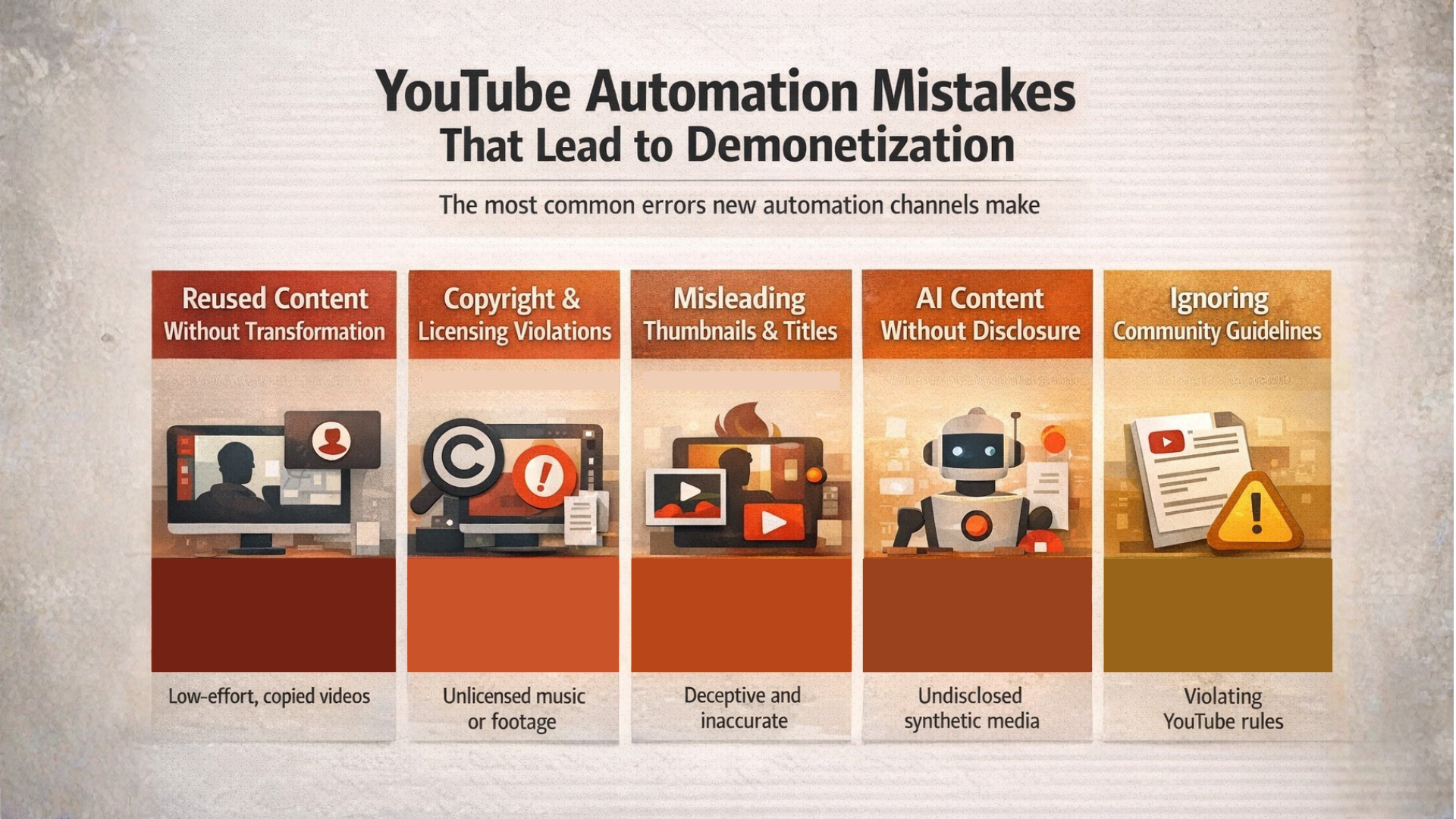
Mistake 1: Using Reused Content Without Proper Transformation
The single most damaging YouTube automation mistake is republishing content that already exists online. This happens when creators don’t add meaningful original value. YouTube has a strict reused content YouTube policy that focuses on channels compiling clips, audio, or images from other sources.
The reused content policy targets content without genuine commentary, educational insight, or creative transformation. Violating the reused content YouTube guidelines is one of the fastest ways to trigger YouTube automation demonetization.
Why Reused Content Leads to YouTube Automation Demonetization
Many automation channels make a critical error. They download trending videos and layer over a basic voiceover. They then upload the result as new content. This approach goes against YouTube’s reused content guidelines, even if the original creators receive credit.
The platform views this as low-effort material. It provides little value to viewers. This often leads to swift YouTube automation demonetization or removal from the Partner Program. Understanding why YouTube automation channels get demonetized starts with recognizing reused content violations.
How to Avoid the Reused Content Trap
To transform reused content YouTube flags, creators must add substantial original elements. These include detailed analysis, educational context, and unique research. Creative editing that reshapes how viewers experience the material also works.
A strong example is a documentary-style channel that uses licensed or stock footage. However, it combines these assets with expert narration. It adds structured storytelling and in-depth educational value. These additions turn existing assets into something entirely new and monetizable.
The Compilation Channel Problem
Compilation channels face even greater scrutiny under the reused content policy for automation channels. If you’re producing “funniest moments” or “best of” style videos, you’re operating in a high-risk area. These videos rely heavily on clips from other creators.
Even with permissions, there’s a problem. If your channel primarily consists of these compilations without significant added value, it will likely be flagged. YouTube considers this reused content that doesn’t meet monetization standards. This is one of the common YouTube automation mistakes that destroys channels.
Mistake 2: Violating Copyright Through Poor Asset Management
YouTube copyright strikes are one of the fastest ways to trigger YouTube monetization issues. Automation channels are especially vulnerable because they rely heavily on external assets. The issue isn’t just using copyrighted material. It’s misunderstanding how copyright works on YouTube and assuming unsafe practices are acceptable.
The Fair Use Myth
Many creators think using short clips qualifies as fair use. However, fair use is a legal defense judged on a case-by-case basis. Simply using a few seconds of a song doesn’t guarantee protection. Labeling content as educational doesn’t either.
The YouTube Copyright Center outlines how courts consider four factors. These include purpose, nature of the work, amount used, and market impact. Misunderstanding these factors leads to copyright mistakes in YouTube automation.
Common Licensing Errors and Content ID Claims
Licensing errors are another common problem with automation channels. Creators often buy stock footage or music from platforms like Envato or Storyblocks. However, they violate the license terms. For example, they use assets in monetized videos when the license forbids it.
Background music also causes issues. Many “copyright-free” tracks are not actually cleared for commercial use. YouTube’s Content ID system scans every upload. One improperly licensed track can lead to multiple Content ID claims YouTube applies automatically. These Content ID claims YouTube generates can severely impact your revenue.
Copyright Mistakes in YouTube Automation
Understanding copyright mistakes in YouTube automation helps you avoid YouTube copyright strikes that could terminate your channel. The best solution is organized asset management. Keep records of all music, images, and footage. Include license details and expiration dates. Use only trusted sources.
Three YouTube copyright strikes within 90 days results in permanent channel termination. Even one strike can temporarily halt monetization for channels under review.
Mistake 3: Misleading Thumbnails and Titles That Violate Clickbait Policies
YouTube has increased enforcement against misleading metadata. Yet many automation channels still depend on misleading thumbnails and titles. These don’t match the actual content. This tactic once drove higher view counts. Today it triggers algorithmic penalties and can lead to YouTube monetization issues when repeated.
What Counts as Misleading Content
The issue isn’t being attention-grabbing. It’s being deceptive. A thumbnail with a shocking image that never appears in the video violates platform guidelines. Titles that promise information the content doesn’t deliver are also considered misleading.
YouTube monitors viewer behavior closely. When audiences click away quickly after realizing they were misled, the algorithm treats it as a quality problem. The YouTube Help Center explains how these signals affect visibility and monetization. Using misleading thumbnails and titles is a critical YouTube automation mistake.
The Faceless Channel Thumbnail Challenge
Can faceless YouTube channels get monetized? Yes, but they face unique challenges with thumbnails. Some use stock images or AI-generated faces to boost click-through rates. While this isn’t directly banned, it can cause authenticity issues. Problems arise when viewers expect that person to appear in the video.
Several channels have faced backlash and lost monetization. This happened after audiences discovered that the faces weren’t real. This represents one of the common YouTube automation mistakes in visual branding.
Creating Honest, Effective Thumbnails
A sustainable approach involves designing thumbnails that represent content accurately while remaining compelling. Avoid misleading thumbnails and titles completely. Use clear text overlays. Include relevant images taken from the video. Add design elements that highlight value without misleading viewers.
Titles should describe what the video genuinely offers. Use YouTube SEO keywords naturally rather than forcing trending terms. Honest metadata helps you avoid YouTube demonetization.
Mistake 4: Ignoring Community Guidelines on Sensitive Topics
YouTube community guidelines cover a wide range of topics. Automation channels often overlook these. Content related to health, finance, crisis events, or minors requires careful attention. YouTube community guidelines violations in these areas can lead to immediate YouTube automation demonetization or even channel termination.
Health and Medical Content Risks
Health and medical content is particularly sensitive. Automation channels that create videos about symptoms, treatments, or wellness topics often face problems. This happens when they lack clear disclaimers or credible sources. These channels often trigger YouTube community guidelines violations through misinformation.
YouTube has stated that videos contradicting official health authority guidance may be removed. This applies regardless of presentation. Referencing organizations such as the World Health Organization helps maintain accuracy and compliance. Avoiding health-related YouTube community guidelines violations protects your monetization.
Financial Advice and Investment Content
Financial advice also faces strict review under YouTube community guidelines. Content that promotes get-rich-quick schemes violates platform rules. So does encouraging specific investments without disclosure or spreading cryptocurrency scams.
Many channels in this niche experience YouTube monetization issues. This happens when they present speculation as fact. It also happens when they fail to include necessary disclaimers about financial risks.
Crisis Content and Sensitive Events
Crisis and tragedy content requires sensitivity and journalistic responsibility. Videos that cover disasters, deaths, or traumatic events solely to gain views often lose monetization. They must have educational or reporting value.
YouTube prohibits exploiting tragedies. It also prohibits spreading misinformation during developing situations. These are serious YouTube community guidelines violations.
Content Featuring Minors
Content that features minors involves the highest level of scrutiny. Even educational or family-friendly material can violate YouTube Partner Program policies. This happens if it unintentionally sexualizes or endangers children.
Automation channels using stock footage must ensure all images of minors are used responsibly. They should never be used in a way that could be misinterpreted.
The best approach is to research YouTube community guidelines for your niche before producing videos. Include proper context. Cite authoritative sources. Use disclaimers where appropriate.
Mistake 5: Poor Disclosure of AI-Generated Content
As AI tools become more advanced, YouTube has introduced new policies. These require disclosure when synthetic or altered media could mislead viewers. Many automation channels now rely on AI voiceovers, AI-generated scripts, and visual elements. However, they don’t fully understand these rules about AI-generated content YouTube requires.
YouTube’s AI Disclosure Requirements
The YouTube Help Center explains when disclosure is required. This maintains transparency and compliance. The policy doesn’t prohibit AI content YouTube monetization. However, it requires clear disclosure if synthetic media might mislead viewers about real people, places, or events.
For example, imagine your channel uses AI-generated images that resemble authentic historical photographs. You must state that the visuals are synthetic or altered. Failing to disclose AI-generated content YouTube uses can result in YouTube monetization issues.
AI Voiceovers and Viewer Expectations
Does YouTube allow AI-generated videos? AI voiceovers currently fall into a gray area. Disclosure isn’t required unless the content impersonates someone. It’s also not required if it presents AI narration as if it were human.
However, viewer expectations play an important role. Robotic narration often lowers engagement. This indirectly affects AI content YouTube monetization by reducing watch time and ad performance.
The Problem with Unedited AI Scripts
A more serious error occurs when creators use AI to produce entire scripts. This becomes a problem when there’s no human editing. YouTube hasn’t confirmed that it penalizes AI-generated material. However, low-quality or repetitive output often triggers manual reviews.
Reviewers may determine that a channel mainly consists of unedited AI-generated content YouTube flags. If there’s little original input, it may fail to meet the original content requirements for monetization.
Content quality strongly influences viewer retention and satisfaction. To improve your approach, explore our guide on writing product descriptions that sell. It explains how authentic communication drives engagement across platforms.
Mistake 6: Failing to Maintain Consistent Upload Schedule and Channel Identity
YouTube’s algorithm strongly rewards consistent publishing habits. Automation channels that post irregularly or shift between unrelated topics often face YouTube monetization issues. This happens even if their content meets basic YouTube Partner Program policies.
The Multi-Channel Trap
A frequent YouTube automation mistake among creators is launching multiple channels at once. They treat them as short-term experiments. Many start several channels in different niches. They upload a few videos to each. Then they abandon those that don’t perform immediately.
This scattered approach drains time and budget. It doesn’t give any single channel the chance to build sustained momentum. This represents one of the common YouTube automation mistakes in strategy.
Niche Confusion Damages Growth
Niche confusion is another mistake in YouTube automation. Channels that switch from technology to cooking to true crime within a short period send mixed signals. YouTube relies on audience patterns to recommend videos. Unpredictable topics limit reach regardless of production quality.
Viewers also lose interest when they can’t anticipate what content will come next. This leads to lower engagement and higher unsubscribe rates.
Building a Consistent Channel Strategy
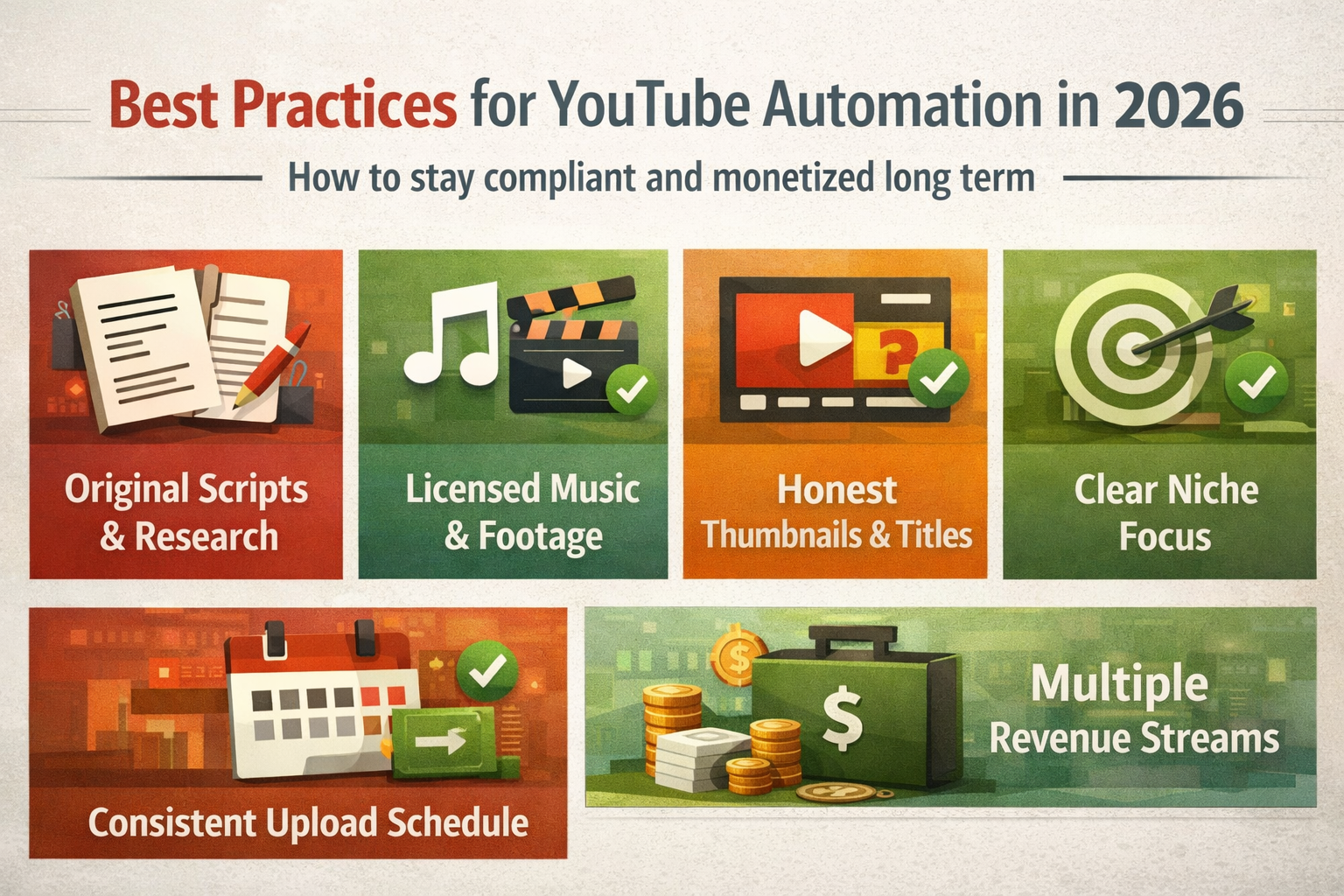
Successful automation channels treat their operations like real businesses. They choose a clear niche. They understand their target audience deeply. They follow a structured content calendar.
This focus helps maintain viewer trust. It also gives the algorithm a clear signal of what the channel stands for. Consistency is essential for can faceless YouTube channels get monetized successfully.
Mistake 7: Inadequate Response to Copyright Claims and Community Guidelines Strikes
How you respond to claims and strikes matters almost as much as avoiding them in the first place. Many automation channel owners panic when they receive YouTube copyright strikes or community guidelines warnings. That reaction often leads to missteps that make the situation worse.
Understanding Different Types of Claims
Copyright issues fall into two main categories. Content ID claims YouTube applies typically affect the revenue or visibility of a single video. They don’t automatically become strikes.
YouTube copyright strikes are more serious. Three strikes within 90 days can result in channel termination. Even a single strike can temporarily halt monetization for new or under-review channels.
When to Dispute and When to Accept
A frequent mistake is either ignoring Content ID claims YouTube sends or disputing every claim without legal grounds. Disputes should only be filed when you have valid reasons. These include proper licensing, fair use, or mistaken identity.
Submitting false disputes can escalate enforcement actions. Creators should understand the rules before taking action. This helps you avoid how to avoid YouTube demonetization problems.
Community Guidelines Strike Progression
YouTube community guidelines violations work differently than copyright issues. A first strike serves as a warning. A second strike can lead to a temporary upload suspension. A third strike within 90 days usually results in channel termination.
Some creators make the mistake of creating new channels after termination instead of filing a proper YouTube demonetization appeal. This violates YouTube’s terms and often leads to further enforcement.
The best approach is to treat every claim and strike as a learning opportunity. Document what went wrong. Refine your content processes. Respond through proper appeal channels with clear communication.
Building Sustainable YouTube Automation Channels
Avoiding YouTube automation demonetization isn’t just about following rules. It’s about building genuinely valuable channels that serve audiences while generating sustainable income. The most successful creators treat automation as a legitimate business rather than a shortcut to passive revenue.
Investing in Quality Production
This involves investing in quality at every level. Hire skilled voiceover artists who deliver engaging narration. Collaborate with editors who understand pacing and storytelling. Commission original music and graphics to give your channel a professional feel.
Understanding YouTube monetization policies ensures that every element of your channel aligns with YouTube Partner Program policies.
Research-Driven Content Creation
Research forms the foundation of content creation. Before producing any video, verify facts through multiple authoritative sources. Analyze the competitive landscape. Identify the unique value your video provides.
This research-intensive approach helps your content meet YouTube’s originality requirements. It emphasizes synthesis and fresh insights rather than mere repetition. Quality research helps you avoid common YouTube automation mistakes.
Building Genuine Audience Engagement
Audience building should focus on genuine engagement rather than vanity metrics. A channel with 10,000 engaged subscribers who regularly watch, comment, and share generates more consistent revenue. This beats a channel with 100,000 subscribers who rarely interact.
Responding to comments helps build a loyal community. Seeking feedback does too. Creating content based on audience requests strengthens viewer relationships.
Diversifying Beyond YouTube
Diversification protects your business from platform risk. While growing your automation channel, simultaneously develop email lists. Maintain a social media presence. Consider launching digital products or services related to your niche.
This ensures that if YouTube changes YouTube Partner Program policies or your channel encounters challenges, your audience and income aren’t entirely dependent on a single platform.
YouTube Monetization Alternatives and Multiple Revenue Streams
Smart automation channel owners don’t rely exclusively on AdSense revenue. Diversifying income streams increases total earnings. It also protects against YouTube automation demonetization or changes in ad rates. Understanding YouTube monetization alternatives is crucial.
Affiliate Marketing for Automation Channels
Affiliate marketing is a natural fit for many automation channels. If you create content about products, services, or topics with relevant affiliate programs, include affiliate links in video descriptions. This can generate substantial revenue.
The key is to promote products you genuinely recommend rather than adding links indiscriminately. Affiliate marketing represents one of the best YouTube monetization alternatives.
Brand Sponsorships and Partnerships
Sponsorship opportunities become viable once your channel reaches significant size and engagement. Brands often pay more than AdSense for integrated promotions within videos. These partnerships require disclosure according to FTC guidelines.
They must align with your channel’s niche and values. Sponsorships are powerful YouTube monetization alternatives.
Digital Products and Courses
Creating digital products offers fully controlled passive income. If your channel educates viewers on a particular topic, produce courses, templates, or ebooks related to that subject. Your videos can serve as marketing for your products.
This generates revenue without sharing profits with YouTube. It also means YouTube automation demonetization won’t affect that income stream.
Direct Fan Support Features
Features like channel memberships and Super Thanks let engaged viewers support you directly. After meeting eligibility requirements, such as 30,000 subscribers for memberships, your audience can contribute financially. They receive perks in exchange, such as badges, exclusive content, or early video access.
These are excellent YouTube monetization alternatives that give you direct control.
Tools and Resources for Compliant Automation
Running compliant automation channels requires the right tools and systems. Investing in proper resources from the start helps you avoid YouTube automation mistakes. It also improves efficiency as your channel scales.
Content Creation and SEO Tools
For content creation, platforms like TubeBuddy and VidIQ assist with keyword research and SEO optimization. They also provide competitor analysis while remaining fully compliant with YouTube Partner Program policies. These tools provide data-driven insights that guide your content strategy. They highlight what performs best in your niche.
Project Management Systems
Project management becomes crucial when coordinating freelancers. You need it for scripting, voiceovers, editing, and thumbnail creation. Platforms such as Trello, Asana, or Monday.com allow you to track production pipelines.
This ensures every video meets quality standards. Nothing falls through the cracks. Strong systems help you avoid mistakes in YouTube automation.
Asset Tracking and Analytics
Effective asset management protects you from YouTube copyright strikes. Use a spreadsheet or software like Airtable to document each piece of licensed content. Include usage rights and expiration dates. This prevents accidental violations as your library grows.
Analytics tools beyond YouTube’s built-in analytics give deeper insights. You’ll understand audience behavior, engagement patterns, and monetization performance better. Understanding which videos generate the highest revenue per view allows you to optimize future content.
Legal Protection
Legal protection is also essential. Consulting an entertainment lawyer specializing in digital content before launching your channel can help. They’ll identify potential issues in your planned content strategy.
The consultation cost is minimal compared to losing a monetized channel over avoidable legal problems. Legal guidance helps you understand how to avoid YouTube demonetization.
Conclusion: Building YouTube Automation Channels That Last
Building sustainable automation channels requires understanding that shortcuts often lead to YouTube automation demonetization. Consistent quality and compliance create lasting income instead. Every YouTube automation mistake covered in this guide represents real risks. These have caused channels to fail and cost creators significant revenue.
The difference between channels that succeed and those that don’t usually comes down to one thing. You must treat automation as a serious business rather than a quick passive income solution. Learning how to avoid YouTube demonetization demands ongoing education about YouTube Partner Program policies.
You need investment in high-quality content creation. Pay careful attention to copyright and licensing. Maintain a genuine commitment to providing valuable content to your audience.
Successful automation entrepreneurs view YouTube Partner Program policies differently. They don’t see them as obstacles but as filters that remove low-effort competition. The policies reward creators who do things properly.
Your channel’s long-term stability depends on several factors. Create multiple YouTube monetization alternatives. Maintain consistent quality standards. Establish systems that scale efficiently. Adapt as platform policies evolve.
The automation channels that continue thriving are those managed by creators who understood from the beginning one simple truth. Real business success requires real effort, even when production is outsourced.
Whether you’re starting your automation channel or working to revive a struggling one, the principles remain the same. Produce genuinely original content that serves viewers. Follow copyright and YouTube community guidelines. Cultivate authentic audience relationships. Operate with the professionalism of any legitimate media business.
This approach not only shields you from YouTube automation mistakes that destroy monetization. It also positions your channel for sustainable growth and profitability that extends beyond AdSense revenue.
FAQs About YouTube Automation and Demonetization
Q. How long does it take to get monetized with a YouTube automation channel?
Most automation channels take between 3 and 12 months to meet the YouTube Partner Program requirements. You need 1,000 subscribers and 4,000 watch hours. The timeline depends heavily on your niche competitiveness, content quality, and upload consistency. It also depends on how effectively you promote your videos.
Channels in trending niches with strong SEO optimization can achieve monetization faster. Highly competitive spaces may take longer. After meeting the requirements, how YouTube reviews monetization applications typically takes 2 to 4 weeks. It can extend longer if your content requires additional scrutiny for potential YouTube monetization issues.
Q. Can faceless YouTube channels get monetized using only stock footage and AI voiceovers?
Yes, can faceless YouTube channels get monetized? They absolutely can, but only if they add substantial original value beyond the raw materials. Simply compiling stock footage with basic narration violates the reused content YouTube policy.
You must provide significant added value through original research, unique insights, or creative editing. Educational context or transformative presentation also works. The content must be original enough that viewers gain value they couldn’t get from the stock footage alone. Does YouTube allow AI-generated videos? Yes, with proper disclosure and original value added.
Many successful documentary and educational channels use these elements. They succeed because of their unique scripting, storytelling, and expertise. They avoid the reused content policy for automation channels by adding genuine value.
Q. What happens if you get demonetized on YouTube?
When your channel experiences YouTube automation demonetization, you immediately lose the ability to earn ad revenue from your videos. The videos remain public unless they violate other YouTube community guidelines. You can file a YouTube demonetization appeal through the review process. This typically takes several weeks.
During demonetization, focus on fixing whatever issues caused the problem. Remove or edit problematic content. Ensure future uploads comply with all YouTube Partner Program policies. You can reapply for monetization 30 days after YouTube automation demonetization if you’ve resolved the issues.
Some creators also face limited monetization. Ads still run but on fewer videos or at lower rates until they restore full good standing. Understanding how to avoid YouTube demonetization from the start is crucial.
Q. Is YouTube automation still profitable in 2026?
YouTube automation remains profitable in 2026. However, it requires significantly more effort, quality, and strategic planning than in previous years. YouTube Partner Program policies have become stricter. Competition has increased across most niches. Low-effort content no longer succeeds.
Profitable automation channels now operate like legitimate media businesses. They focus on quality production, original research, and genuine value creation. Channels that treat automation as easy passive income typically fail or experience YouTube automation demonetization.
Those approaching it as a serious business continue to generate substantial income. They invest in quality content and proper processes. They focus on audience-building. They develop YouTube monetization alternatives beyond just AdSense. They avoid common YouTube automation mistakes by following best practices.
Q. Can you run multiple YouTube automation channels from one account?
YouTube allows you to manage multiple channels from a single Google account. Each channel has a separate monetization status and follows its own YouTube Partner Program policies. However, if one channel receives YouTube community guidelines violations or termination for serious violations, YouTube can penalize your other channels. It can also penalize your entire account, depending on the severity.
Running multiple channels requires even more careful attention to compliance. Issues on one channel can affect your entire operation. Many successful automation entrepreneurs run multiple channels. However, they implement strict quality control processes. They keep detailed compliance documentation. They treat each channel as a distinct business entity with its own brand identity and content strategy.
If you want to avoid the most common YouTube automation mistakes that can quietly destroy your monetization and instead build a system that actually scales, our team can help. Visit Hisellit YouTube Automation Services or contact us here to get expert support tailored to your channel goals.