
Amazon FBA for Beginners 2026: Complete Step-by-Step Guide to Start Selling on Amazon
Have you ever wanted to quit your 9-to-5 and run your own business from home? Amazon FBA for Beginners 2026 might be the opportunity you have been looking for.
Amazon is the largest online store in the world. It has over 200 million Prime subscribers in the United States alone and more than 310 million active customers globally. That is a massive built-in audience ready to buy.
According to Statista, Amazon’s third-party seller revenue is expected to hit $1.2 trillion by 2030. Industry experts also predict more than four million Amazon FBA sellers will be active by that same year. E-commerce is projected to make up 24% of all global retail sales, up from 15.6% in 2024.
Businesses launched on Amazon FBA in 2026 still have significant room to grow, especially in strong niches with smart product selection and efficient operations. Some established FBA sellers build substantial annual revenue, but results vary widely by niche, margins, and execution.
This guide breaks everything down in simple, clear steps. You will learn how to find profitable products, set up your account, ship your inventory, and grow your sales. It also covers real costs, fees, and what to avoid as a beginner.
The best part? You do not need experience, a big budget, or a tech background to get started. This guide explains how Amazon FBA works and whether it is still worth starting in 2026.
Quick Answer: What Is Amazon FBA?
Amazon FBA (Fulfillment by Amazon) is a service where sellers send products to Amazon warehouses, and Amazon handles storage, packaging, shipping, customer service, and returns.
This allows sellers to run an online store without managing logistics themselves.
- Amazon stores your inventory
- Amazon packs and ships orders
- Amazon handles returns and customer support
- Sellers focus on product sourcing and marketing
What is Amazon FBA?
FBA stands for Fulfillment by Amazon. It is a service where Amazon stores your products, packs them, ships them to customers, and handles returns and customer support.
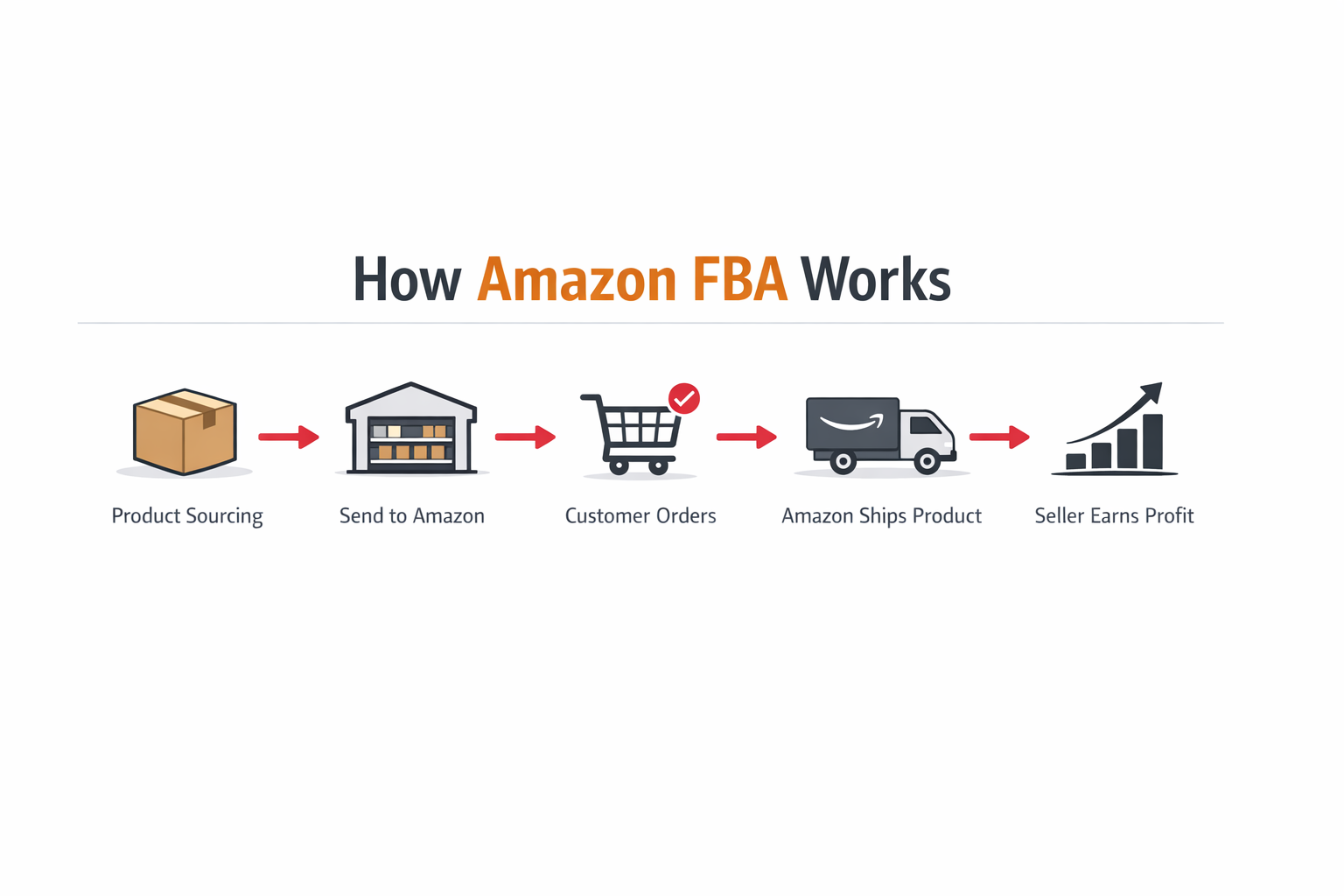
Here is how simple the process is:
- You find a product and send your stock to Amazon’s warehouse.
- Amazon stores it until someone places an order.
- Amazon packs and ships the order directly to the customer.
- Amazon’s support team handles returns and questions.
Once your products are in Amazon’s fulfillment center, your job is to focus on growing your business. You do not need to pack boxes, rent a warehouse, or deal with shipping logistics. That is the power of FBA.
Many beginners start with just a few hundred dollars of inventory. As sales come in, they reinvest and scale up. If you want to learn more about how sellers are automating their growth, read our guide on Amazon FBA automation and how to scale without manual work.
Real Numbers That Show the Opportunity
As of 2025, more than 65% of Amazon sellers use FBA as their main fulfillment method, according to Jungle Scout’s annual seller report.
The average new FBA seller earns over $30,000 per year in profit. Some sellers earn much more. Over 70% of Amazon shoppers prefer buying products fulfilled by Amazon because they trust the fast shipping and easy returns, per Forbes.
FBA vs Other Ways to Sell on Amazon
Before you commit to FBA, it helps to understand how it compares to other options.
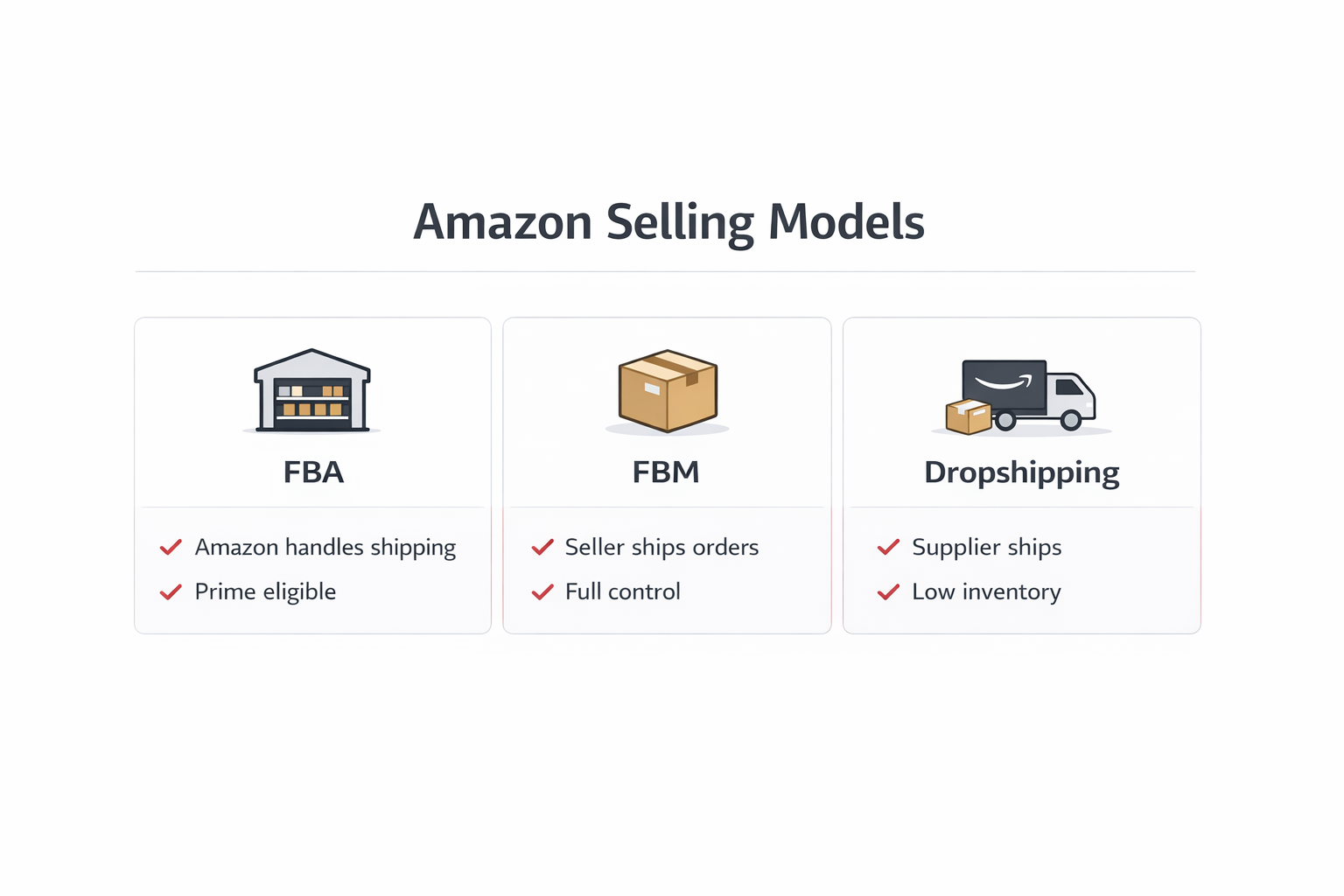
FBM (Fulfilled by Merchant): You sell on Amazon but handle storage, packing, and shipping yourself. You keep more control, but you also do all the work.
Dropshipping: You sell products without holding stock. When an order comes in, your supplier ships directly to the customer. It takes less money to start, but Amazon has strict rules about dropshipping, and many sellers struggle with quality control and delivery times.
Hybrid Selling: Some experienced sellers use both FBA and FBM depending on the product or season. This gives flexibility but requires more management.
For beginners in 2026, FBA is still the easiest and most scalable model. Amazon handles the hard parts so you can focus on finding great products and marketing your brand.
| Model | Who handles shipping? | Startup difficulty | Best for |
|---|---|---|---|
| Amazon FBA | Amazon | Easy to moderate | Beginners who want scalability |
| FBM | Seller | Moderate | Sellers wanting more control |
| Dropshipping | Supplier | Moderate to high | Sellers with strong supplier systems |
Why the Prime Badge Matters
When you use FBA, your products get the Prime badge. That little logo tells shoppers they will get fast, free shipping and easy returns.
FBA often helps listings become Prime-eligible, which can improve shopper trust and conversion. However, Prime eligibility is also possible through Seller Fulfilled Prime for sellers who meet Amazon’s requirements.
Think about it this way. If two products show up in search results at the same price, but one has the Prime badge and one does not, most shoppers pick the Prime option. Automatically. FBA gives you that edge.
Why Amazon FBA Is Still Worth It in 2026
You might be wondering if the opportunity has passed. It has not. Amazon FBA is more accessible than ever for beginners, and here is why.
Amazon’s customer base keeps growing. More than 310 million active customers shop on Amazon globally. That is a ready-made audience for your products, with no need to build traffic from scratch.
Logistics are handled for you. Amazon manages warehousing, packing, shipping, and returns. This frees you up to run your business from anywhere.
Global reach is built in. Through Amazon Global Selling, you can reach customers in the UK, Germany, Canada, and beyond without setting up a separate business in each country.
Passive income is possible. FBA is not truly hands-off, but once your listings are optimized and your inventory is stocked, your store can generate sales while you sleep.
Honest Downsides to Know Before You Start
Amazon FBA is not perfect. Fees can add up. You will pay for fulfillment, storage, and referral commissions. The FBA Revenue Calculator is a free tool that helps you estimate your exact profit margin before you spend a dollar on inventory.
Amazon also has strict rules. Breaking them, even by accident, can get your account suspended. This is why research and ongoing education matter so much.
Competition exists in almost every category. But the right product research tools and a strong listing can help you stand out, even as a beginner.
Amazon FBA Trends in 2026
The FBA landscape is always shifting. Here are the biggest trends shaping Amazon selling in 2026.
AI-powered research tools are taking over. Sellers now use artificial intelligence to spot profitable products faster, analyze competitors, and predict demand before spending any money. Tools like Helium 10 and Jungle Scout have added AI features that make product research sharper than ever.
Amazon is investing in faster delivery. Amazon keeps expanding its warehouse network and improving same-day and next-day delivery. This makes the Prime badge even more valuable for FBA sellers.
Brand building is no longer optional. The most successful Amazon sellers in 2026 are not just flipping random products. They are building recognizable brands. With Amazon Brand Registry, you unlock A+ Content, a custom Amazon Storefront, and better advertising tools.
Automation is the key to scaling. Sellers who grow fast are not doing everything manually. They use repricing software, inventory alerts, and automated review requests to save time and stay competitive. Learn how in our blog on Amazon FBA automation.
Global marketplaces are wide open. Amazon Europe, especially the UK, Germany, and France, still has less competition in many niches compared to the US marketplace. Sellers who expand internationally in 2026 gain a serious advantage.
Setting Up Your Amazon Seller Account
Before you can sell anything, you need a seller account. The process is straightforward. Here is what to expect.
Step 1: Pick Your Selling Plan
Amazon offers two plans for new sellers.
Personal Plan: You pay $0.99 per item sold. This works if you plan to sell fewer than 40 items per month and just want to test the waters.
Professional Plan: You pay $39.99 per month with no per-item fee. This plan unlocks bulk listing tools, detailed reports, advertising features, and access to the Buy Box. If you are serious about building an Amazon FBA business in 2026, the Professional Plan is the better long-term choice.
| Feature | Personal Plan | Professional Plan |
|---|---|---|
| Monthly fee | No monthly fee | $39.99/month |
| Per item fee | $0.99 per item sold | No per item fee |
| Best for | Beginners testing one product | Serious sellers planning to scale |
| Bulk listing tools | No | Yes |
| Advertising access | Limited | Yes |
Step 2: Register on Amazon Seller Central
Go to sellercentral.amazon.com and click Sign Up. You will need to provide:
- Your business name or personal name and address
- A valid phone number and email address
- A credit card for billing
- Tax information (W-9 for US sellers)
- A bank account for receiving payments
Setting up an LLC gives you legal protection and makes your brand look more professional. But you can also register as an individual when you are just starting out.
Use a business email address if you can. Something like yourname@yourstore.com looks much more professional than a Gmail address when communicating with suppliers and customers.
Step 3: Verify Your Identity
Amazon takes account security seriously. They will ask for:
- A government ID, like a passport or driver’s license
- A recent bank or credit card statement
- A short video call to verify your documents
Verification usually takes 24 to 48 hours. Once approved, you have full access to Amazon Seller Central, which is your dashboard for managing listings, inventory, and sales.
Quick Steps: How to Start Amazon FBA
Starting an Amazon FBA business in 2026 can be broken down into a few simple steps:
- Create an Amazon Seller Central account
- Choose a profitable product to sell
- Find a reliable supplier
- Send inventory to Amazon fulfillment centers
- Create an optimized product listing
- Launch and promote your product
Once your product is live, Amazon handles storage, packing, shipping, and returns.
How to Find the Right Products to Sell
Picking the right product is the single most important decision you will make. A great product in a good market can succeed even with average marketing. A bad product with great marketing will still fail.
Here is how to find products that actually sell.
Use Product Research Tools
The two most popular tools for Amazon FBA product research are Jungle Scout and Helium 10. Both give you monthly sales estimates, competition data, keyword search volumes, and profit projections.
Jungle Scout is great for beginners. It shows you how many units a product sells per month, what the top sellers are charging, and whether demand is growing or shrinking.
Helium 10 goes deeper. It lets you analyze competitors’ keywords, track ranking changes, and find hidden product opportunities. Most experienced sellers use both tools together.
You can also check the Amazon Best Sellers list for free. It updates every hour and shows you exactly what shoppers are buying right now, across every category.
What to Look for in a Product
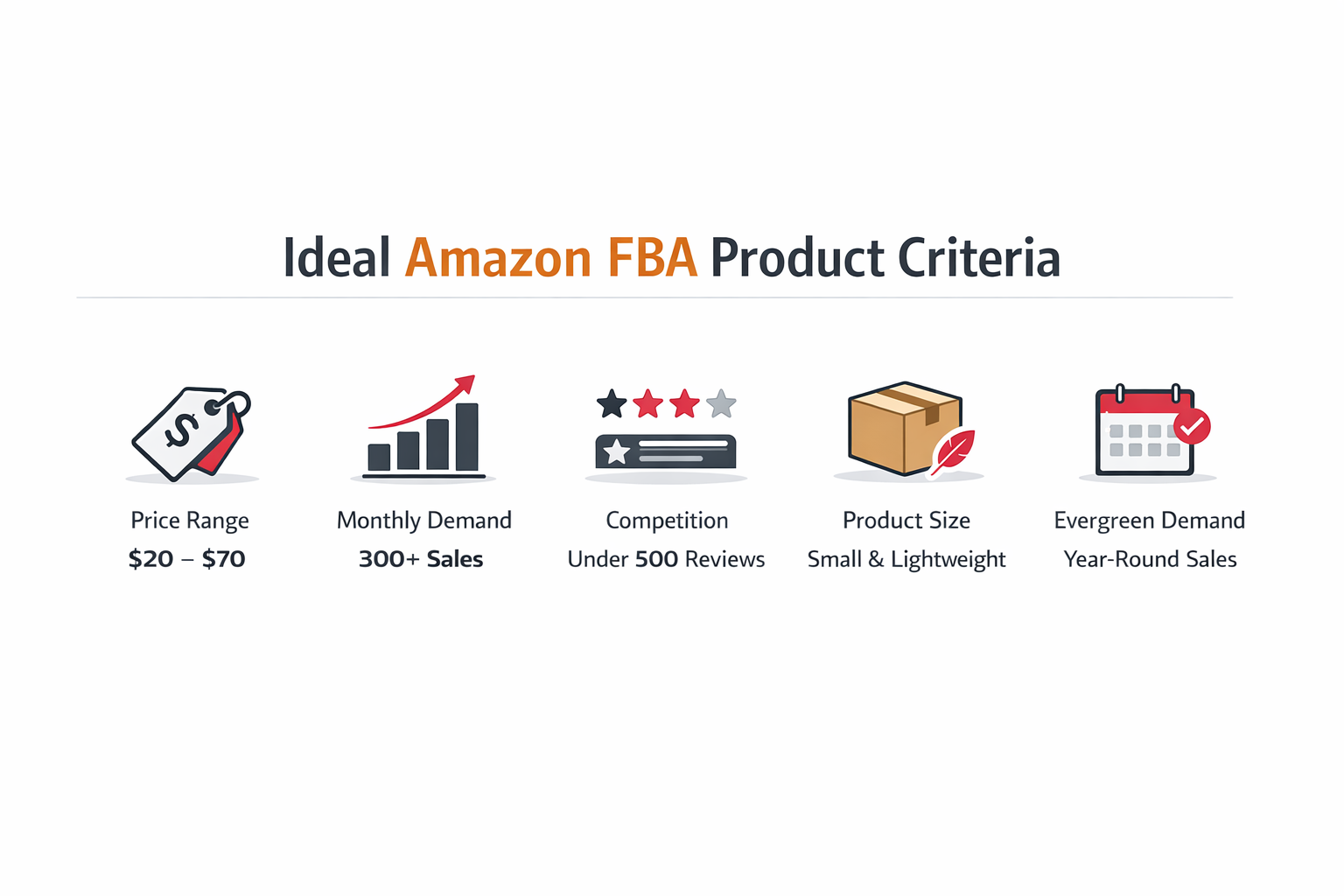
Not every product that sells well is a good fit for a beginner. Use these criteria to filter your options:
- Selling price between $20 and $70. Products in this range have healthy margins and lower return rates.
- At least 300 units sold per month across the top listings. This proves steady demand.
- Top competitors have fewer than 500 reviews. Fewer reviews means less competition and a more realistic chance of ranking.
- The product is small and lightweight. Heavy or bulky items cost more to ship and store, which eats into profit.
- Not sold by Amazon directly. When Amazon sells the same product, they almost always win the Buy Box.
| Criteria | Ideal Range | Why It Matters |
|---|---|---|
| Selling price | $20 to $70 | Leaves room for profit after fees |
| Monthly demand | 300+ sales | Shows proven demand |
| Competition | Under 500 reviews | Easier for new sellers to enter |
| Size and weight | Small and lightweight | Lower shipping and storage costs |
| Seasonality | Evergreen preferred | More stable year-round sales |
Products and Niches to Avoid
Electronics: High return rates, technical complaints, and tough competition make electronics risky for beginners.
Heavily seasonal products: Items that only sell for a few months per year make cash flow unpredictable.
Oversaturated categories: If the top 10 listings all have thousands of reviews, it will be very hard to break in without a significant budget.
Best Niches for Beginners in 2026
These categories have consistent demand, manageable competition, and good private label potential:
- Home organization
- Fitness and workout accessories
- Pet supplies
- Kitchen tools and gadgets
- Office and desk supplies
For a full breakdown of the tools top sellers use for research, read our complete guide to Amazon seller tools.
Finding Reliable Suppliers
Once you know what you want to sell, you need a supplier. Here are your main options.
Sourcing from Alibaba
Alibaba is the world’s largest B2B marketplace and the go-to platform for most Amazon FBA sellers. It connects you with thousands of manufacturers, mainly from China, who can produce your product at scale.
When browsing suppliers, look for:
- Gold Supplier badge and Trade Assurance protection
- Strong response rate and communication quality
- Verified reviews from other buyers
- Willingness to do small trial orders first
Always contact at least five to ten suppliers before deciding. Compare pricing, minimum order quantities, production timelines, and shipping options. Negotiating is expected, so do not hesitate to ask for a better deal.
Local and Domestic Suppliers
Do not overlook local suppliers. US-based manufacturers can be found on ThomasNet and at local trade shows. Working domestically means faster shipping, easier communication, and no import duties.
Domestic sourcing often costs more per unit, but the speed and reliability can be worth it, especially for your first product launch.
Always Order Samples First
Before you commit to a large order, always request product samples. Test the quality, check the packaging, and time the delivery. A $50 to $100 sample investment can save you thousands in bad inventory.
How to Ship Your Inventory to Amazon
Once your products are ready, you need to get them into Amazon’s fulfillment network. Here is how.
Step 1: Create a Shipping Plan in Seller Central
Log in to your Amazon Seller Central account. Go to your inventory, select the products you are sending, and create a new FBA shipment. You will enter the number of units, how they are packaged, and which Amazon warehouse location will receive them.
Step 2: Label Your Products
Every unit needs an FNSKU barcode label so Amazon can track your inventory. You can print and apply labels yourself, or pay Amazon a small fee per unit to do it for you. Amazon’s FBA labeling requirements spell out exactly what is needed.
Step 3: Choose a Shipping Method
SPD (Small Parcel Delivery): Best for smaller shipments. Works with carriers like UPS and FedEx.
LTL (Less Than Truckload): Better for large bulk orders sent on pallets. More cost-effective for high-volume shipments.
Save all invoices and supplier correspondence. Amazon may ask to verify the source of your products. Also, if you are importing from overseas, research import duties and customs requirements before shipping.
Need help navigating the logistics? Explore Amazon wholesale FBA services for hands-on support.
How to Optimize Your Amazon Listings
Getting your products into Amazon’s warehouse is only half the battle. Your listing needs to convince shoppers to buy. Here is what matters most.
Write a Title That Ranks and Converts
Your product title is the most important piece of your listing for both search ranking and click-through rate. Include your main keyword naturally near the beginning. Amazon’s search algorithm documentation confirms that titles carry significant weight in ranking decisions.
Keep titles clear and readable. Do not stuff them with keywords to the point where they stop making sense to a real person.
Use High-Quality Images
Images sell products. According to BigCommerce’s e-commerce research, 78% of online shoppers say product photos influence their purchase decision more than any other content element.
Use a pure white background for your main image (required by Amazon). Add lifestyle shots, infographics showing key features, and a size or scale reference image. Aim for at least five to seven high-quality photos.
Write Bullet Points That Solve Problems
Your five bullet points are prime selling real estate. Lead with benefits, not just features. Think about what problem your product solves and speak directly to that.
Bad example: Made from stainless steel, 12 inches long.
Better example: Never rust again. This 12-inch stainless steel spatula holds up to daily cooking without bending, warping, or staining.
Optimize Your Backend Keywords
Backend keywords are invisible to shoppers but indexed by Amazon’s search algorithm. Use this space to add synonyms, alternate spellings, and related terms you could not fit in your title or bullets. Our Amazon seller tools guide covers the best tools for keyword research.
How to Grow and Scale Your FBA Business
Once you are making consistent sales, the next step is growth. Here are the strategies that work in 2026.
Automate Repetitive Tasks
Automation is how FBA sellers scale without burning out. Start with these tools:
Repricing software (like Sellerise or BQool) adjusts your prices automatically to stay competitive and win the Buy Box.
Inventory management tools (like RestockPro) track stock levels and tell you when to reorder so you never run out during a sales spike.
Review request automation (like FeedbackFive) sends polite follow-up emails to buyers asking for honest reviews, which boosts your listing’s credibility over time.
For a full breakdown of how to set this up, check our guide on Amazon FBA automation.
Drive Outside Traffic to Your Listings
Listings that pull traffic from outside Amazon get rewarded by Amazon’s algorithm. According to Search Engine Journal, external traffic signals help boost organic ranking.
Effective traffic sources include:
- Facebook and Instagram ads targeted at buyers in your niche
- Pinterest for lifestyle and home product categories
- Micro-influencer partnerships for authentic product reviews
- Email lists built through product giveaways and launch campaigns
Expand Your Product Line Strategically
Once your first product is profitable, add related items that serve the same customer. If you sell yoga mats, add resistance bands or a water bottle. Bundle related items together for a higher average order value.
Use existing product reviews and customer questions as your roadmap. They tell you exactly what buyers wish was different or what else they need.
Go International
Amazon operates in over 20 countries. Amazon Global Selling makes it easier than ever to list your products in the UK, Germany, France, Canada, and beyond. Many of these markets have less competition than the US, which means it can be easier to rank and win sales.
5 Mistakes Beginners Make (And How to Avoid Them)
Learning from other people’s mistakes is much cheaper than making your own. Here are the five biggest pitfalls for new FBA sellers.
- Skipping product research. Choosing a product based on gut feeling instead of data is the number one reason new sellers fail. Use Jungle Scout or Helium 10 to validate demand before spending any money on inventory.
- Ignoring fees. Amazon’s referral fees, fulfillment fees, and storage fees can quietly eat your profits. Always run numbers through the FBA Revenue Calculator before placing any order.
- Poor listing quality. A blurry main photo or a vague product title sends shoppers straight to your competitor. Invest time in your images, title, and bullet points before you launch.
- Running out of stock. Stockouts do not just mean lost sales. They hurt your search ranking, and recovering can take weeks. Monitor inventory levels constantly and reorder before you hit zero.
- Breaking Amazon’s rules by accident. Review manipulation, misrepresenting your product, or using prohibited items in your packaging can get your account suspended. Read and follow Amazon’s seller policies carefully.
Is Amazon FBA for Beginners 2026 Worth It?
Honestly, yes. But only if you treat it like a real business.
The easy money era is over. You cannot just list any random product and expect sales to pour in. What still works is choosing the right product, building a solid listing, managing your inventory carefully, and reinvesting your profits to grow.
The opportunity is massive. Business Insider reports that Amazon FBA gives individual sellers access to one of the most powerful retail networks in the world, with millions of daily buyers already in the marketplace.
Most new sellers see their first sales within two to four weeks of launching. Meaningful profits usually take three to six months of consistent effort. Sellers who stick with it and keep reinvesting often see dramatic growth between months six and twelve.
If you are willing to put in the work up front, Amazon FBA in 2026 can change your financial future.
Quick Answer: How Much Does Amazon FBA Cost?
Starting an Amazon FBA business typically costs between $1,000 and $5,000 for most beginners.
- Amazon Professional plan: $39.99 per month
- Initial product inventory: $500 – $2,000
- Product samples: $100 – $300
- Shipping and prep costs: $200 – $500
- Research tools and software: optional
Your exact startup cost depends on the product, supplier, and order quantity.
Amazon FBA for Beginners 2026: FAQs
Q: Can I do Amazon FBA with no experience?
Yes, absolutely. Amazon FBA for Beginners 2026 is designed for people who are starting from zero. You do not need a business degree, tech skills, or a big starting budget. Amazon handles fulfillment and customer support. Your job is to find a good product and get your listing in front of buyers. Thousands of successful sellers started with no experience by learning as they went.
Q: How much money do I need to start Amazon FBA in 2026?
You can technically get started with $1,000 to $3,000. But to give yourself a real shot at long-term growth, aim for $5,000 to $10,000. That budget covers your first inventory order ($500 to $2,000), the Professional selling plan ($39.99 per month), product samples ($100 to $300), and basic research tools. Many sellers suggest starting with one product, proving it works, and then reinvesting the profits into a second product.
Q: How do I find profitable products to sell?
Look for products that sell at least 300 units per month, have a price between $15 and $50, and have top competitors with fewer than 100 reviews. Use Jungle Scout or Helium 10 to analyze sales volume, keyword demand, and profit margins. Avoid seasonal products and overcrowded categories when you are just starting out.
Q: How long does it take to make money with Amazon FBA?
Most beginners see their first sales within two to four weeks of launch. Real, consistent profits usually take three to six months. Your timeline includes time for product research, getting inventory produced and shipped, and building up reviews and organic ranking. Sellers who reinvest early profits and stay consistent often see significant income growth in their first year.
Q: Should I use private label or retail arbitrage?
For long-term success in 2026, private label is the stronger choice. Retail arbitrage is faster to start but harder to scale, with thin margins and no brand ownership. Private label lets you build a brand, control your pricing, and create real barriers to competition. Margins for private label products typically run 25% to 40%, versus 10% to 20% for retail arbitrage.
Still have questions? Visit HiSellIt or reach out to our team. We are ready to help you build and grow your Amazon FBA business in 2026.