
eBay Automation and How It Works: The Complete 2025 Guide to Scaling Your Business
eBay automation has revolutionized the online selling experience. It transforms tedious manual tasks into seamless, continuous operations. In 2025, eBay generated more than $2.6 billion in quarterly revenue. The platform connected 134 million buyers with 18.3 million sellers worldwide. This establishes it as one of the top e-commerce platforms for automation-driven businesses.
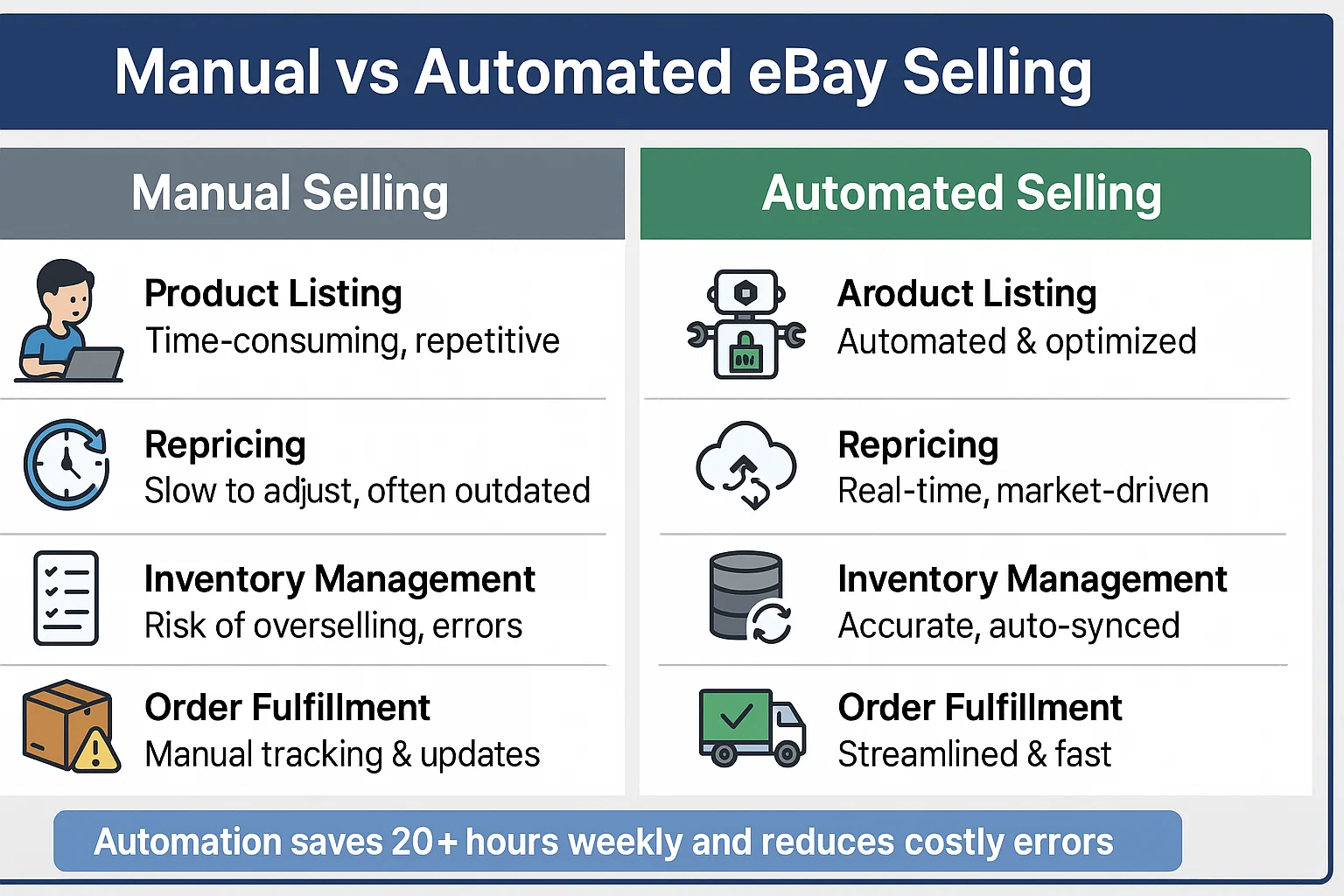
Managing a successful eBay store manually can feel overwhelming. You’re constantly updating listings, adjusting prices, and keeping track of inventory. Yet there never seems to be enough time to focus on growth. This is where eBay automation tools step in as your ally. They handle repetitive tasks such as inventory management, product listings, and repricing strategies. This allows you to focus on expanding your store.
With the right eBay automation software, sellers can transform their business. What was once a time-consuming side hustle becomes a profitable and scalable venture. Whether you’re using eBay dropshipping automation to source products or managing inventory across multiple platforms, these systems improve efficiency. They create a more hands-off selling experience. For sellers seeking to scale their businesses, automation has become crucial for long-term success.
What is eBay Automation?
eBay automation utilizes specialized software tools and systems. These automate everyday e-commerce tasks, eliminating the need for manual effort. The systems can handle everything from creating optimized product listings to tracking inventory. They manage pricing automation and coordinate order fulfillment. It’s similar to having a personal virtual assistant. One that never takes breaks, works around the clock, and avoids human mistakes.
The primary purpose of eBay automation software is clear. It eliminates the obstacles that hinder sellers from scaling their stores. Instead of spending countless hours updating product details daily, automated systems complete these tasks instantly. You no longer need to monitor competitor prices manually or manage inventory by hand. This enables sellers to concentrate on higher-value tasks. These include product research, customer relationships, and strategic business decisions.
Modern eBay automation platforms connect with supplier APIs. They integrate with competitor tracking tools and market analytics services. This creates a fully integrated ecosystem. Your eBay store operates as part of a larger, intelligent network. One that can adapt to market changes independently. For sellers who want to expand quickly, automation solutions have become powerful resources. They help build a sustainable business.
Similar automation strategies are transforming other major platforms. According to Shopify’s research on e-commerce automation, businesses using automation see efficiency gains of up to 40%. Our guide on Etsy automation services shows how creative sellers apply these same principles. They use them to scale their handmade and vintage product stores.
Core Components of eBay Automation Systems
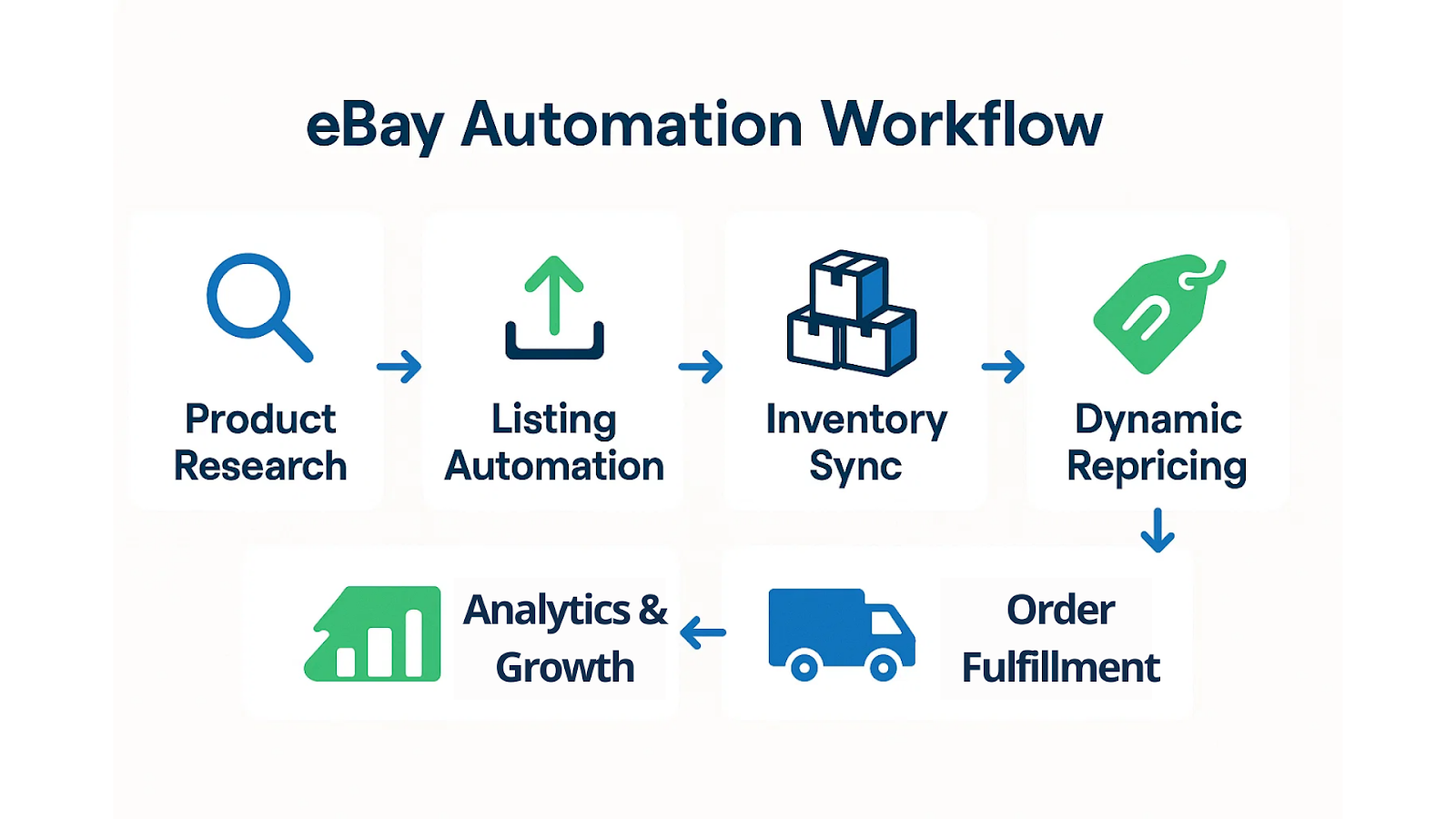
Product Research and Listing Automation
Effective eBay automation begins with intelligent product research. Advanced tools analyze market trends, competitor performance, and customer demand. They discover profitable products. Once the right items are identified, listing automation takes over. It creates optimized descriptions, sets competitive prices, and schedules product launches for maximum visibility.
The listing process also benefits from built-in SEO automation. These tools analyze successful eBay listings. They apply proven strategies to your own products. This helps them rank higher in search results. The result is greater visibility, stronger buyer engagement, and increased sales, all without needing manual keyword research or constant A/B testing.
Inventory Management and Stock Monitoring
Inventory management is one of the most critical parts of an eBay automation strategy. Automated systems track stock levels in real time. They monitor inventory across suppliers and marketplaces. When a product sells on eBay, the software automatically updates inventory counts. It can even reorder products before stock runs out.
This synchronization helps prevent overselling. It reduces customer complaints and protects seller ratings. Many platforms also delist products that are out of stock. They relist them automatically when inventory becomes available again. By keeping inventory accurate and reliable, eBay store automation ensures smooth operations. Buyers always see the correct availability and enjoy a seamless shopping experience.
Dynamic Pricing and Repricing Tools
Pricing automation is one of the most powerful features of modern eBay automation systems. These tools monitor competitor prices and shifts in market demand. They track your profit margins to automatically adjust prices. Some advanced eBay repricing tools update prices multiple times a day. This keeps sellers competitive while protecting their profitability.
The repricing algorithms consider multiple factors. These include shipping costs, seller ratings, product condition, and seasonal demand fluctuations. This approach ensures your products stay attractive to buyers. It also maintains healthy margins. For sellers who want to scale, pricing automation often makes the difference. It keeps you ahead of the competition rather than losing visibility.
According to McKinsey’s research on dynamic pricing, companies using automated pricing strategies achieve revenue increases of 2-7%. These gains come through optimized pricing decisions.
Popular eBay Automation Tools and Platforms
DSM Tool for Comprehensive Store Management
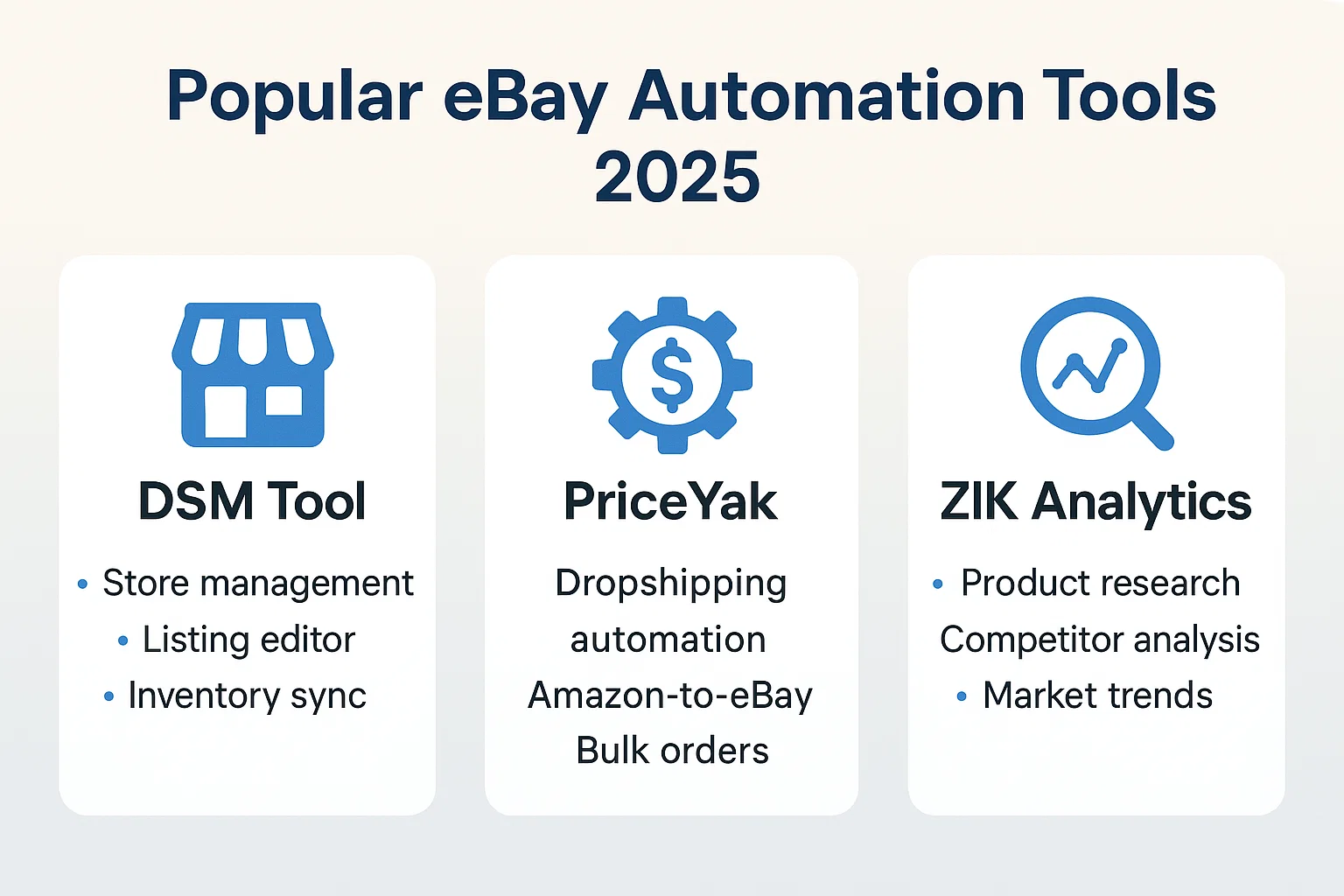
The DSM Tool has become a top choice for eBay sellers. Those seeking to streamline their entire store prefer this platform. It supports bulk product importing, automatic inventory updates, and intelligent price adjustments. One of its most valued features is the listing editor. This optimizes product descriptions for stronger search visibility.
The DSM Tool dashboard provides automated optimization alerts. This makes it easier for sellers to identify opportunities for improvement. No need to manually monitor them. Many experienced eBay store owners consider it essential automation software. It helps scale beyond the limits of manual operations.
PriceYak for Advanced Dropshipping Automation
PriceYak began with engineering expertise from MIT. It has grown into a trusted solution for dropshipping businesses. The platform is widely recognized for its efficiency in Amazon-to-eBay dropshipping. It also supports Walmart and other popular retailers. Its speed and reliability make it valuable for high-volume eBay sellers.
PriceYak offers generous free tier options for beginners. It also provides advanced features for established operations. Its automation suite covers product sourcing, listing automation, and inventory synchronization. It handles order fulfillment, too. This gives sellers nearly hands-off eBay dropshipping automation.
For sellers interested in expanding beyond eBay, consider exploring other platforms. Our comprehensive guide on Walmart dropshipping automation explores similar opportunities. Walmart represents another central marketplace worth considering.
ZIK Analytics for Data-Driven Decision Making
ZIK Analytics is designed to provide sellers with powerful market research automation. It delivers competitive intelligence. The platform analyzes millions of eBay listings. This uncovers trending products, pricing strategies, and profitable niches. This data-driven method eliminates guesswork. It enables sellers to make more informed decisions.
ZIK Analytics also integrates with AliExpress, Walmart, and Amazon. This makes it a versatile solution for dropshipping and multi-channel sellers. Its analytics give store owners a clear picture of market dynamics. This enables them to build profitable inventory strategies. They stay competitive in a crowded marketplace.
Need help choosing the right automation tools for your business? Our expert team at HiSellIt has hands-on experience with all major platforms. Contact us for personalized guidance. We’ll help you select and implement the ideal automation solution tailored to your specific needs.
Benefits of Implementing eBay Automation
Time Savings and Operational Efficiency
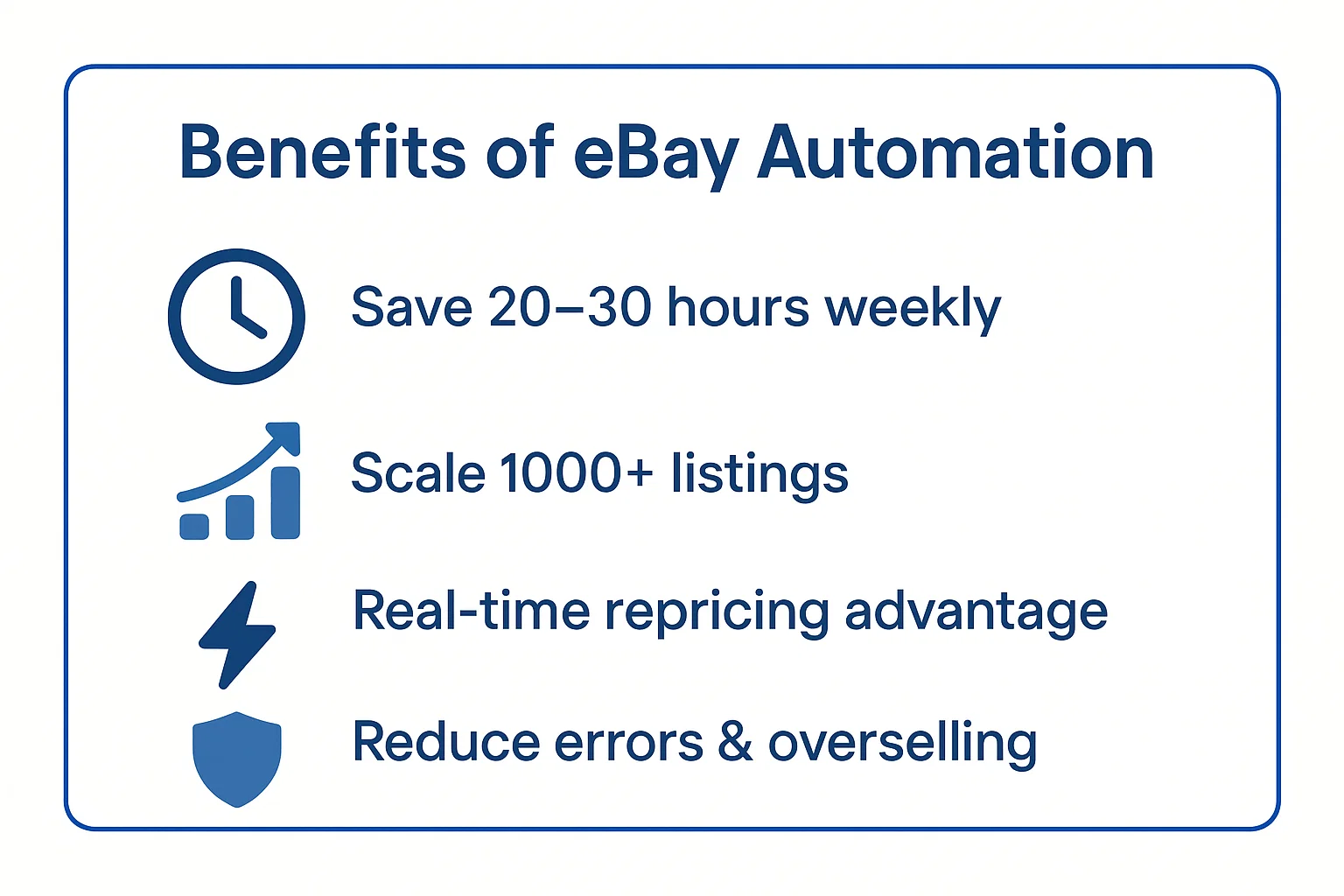
One of the most significant advantages of eBay automation is time savings. It reduces the hours spent on repetitive daily tasks. Many sellers report cutting their hours by 20 to 30 hours per week. This happens after implementing complete automation solutions. The freed-up time can be used for growth strategies. Focus on customer service improvements and exploring new sales channels.
Automation also reduces human error. These mistakes often come with manual management. Regular price updates, inventory synchronization, and listing modifications are carried out with precision. This means fewer order issues. You’ll see stronger seller metrics and a smoother customer experience. Tools that manage eBay inventory ensure stock levels remain accurate. This works across multiple platforms. It’s crucial for establishing long-term trust with buyers.
Scalability and Growth Potential
Running an eBay store manually has apparent limitations. There’s only so much time in the day. You must adjust prices, create listings, and track inventory. Automation removes these restrictions. It allows sellers to manage thousands of listings across multiple product categories simultaneously.
This scalability opens doors for sellers. You can expand into international markets and diversify product offerings. Grow catalogs at a pace that would be impossible with manual effort. Many sellers find they can significantly increase their active listings. This occurs within a few months of integrating eBay automation software. It creates more opportunities to reach untapped buyers.
Competitive Advantage Through Real-Time Responses
In today’s competitive e-commerce landscape, speed is crucial. Automation tools offer instant adaptability. They adjust prices in response to competitor changes. They relist popular products immediately after they sell. They identify trending items before manual competitors can notice them.
This agility yields higher sales conversions. You’ll see stronger search engine rankings and higher customer satisfaction. Buyers value accurate inventory data, fair and dynamic pricing, and timely communication. With eBay’s repricing automation and listing tools handling these processes in real-time, sellers maintain an edge, even in crowded markets.
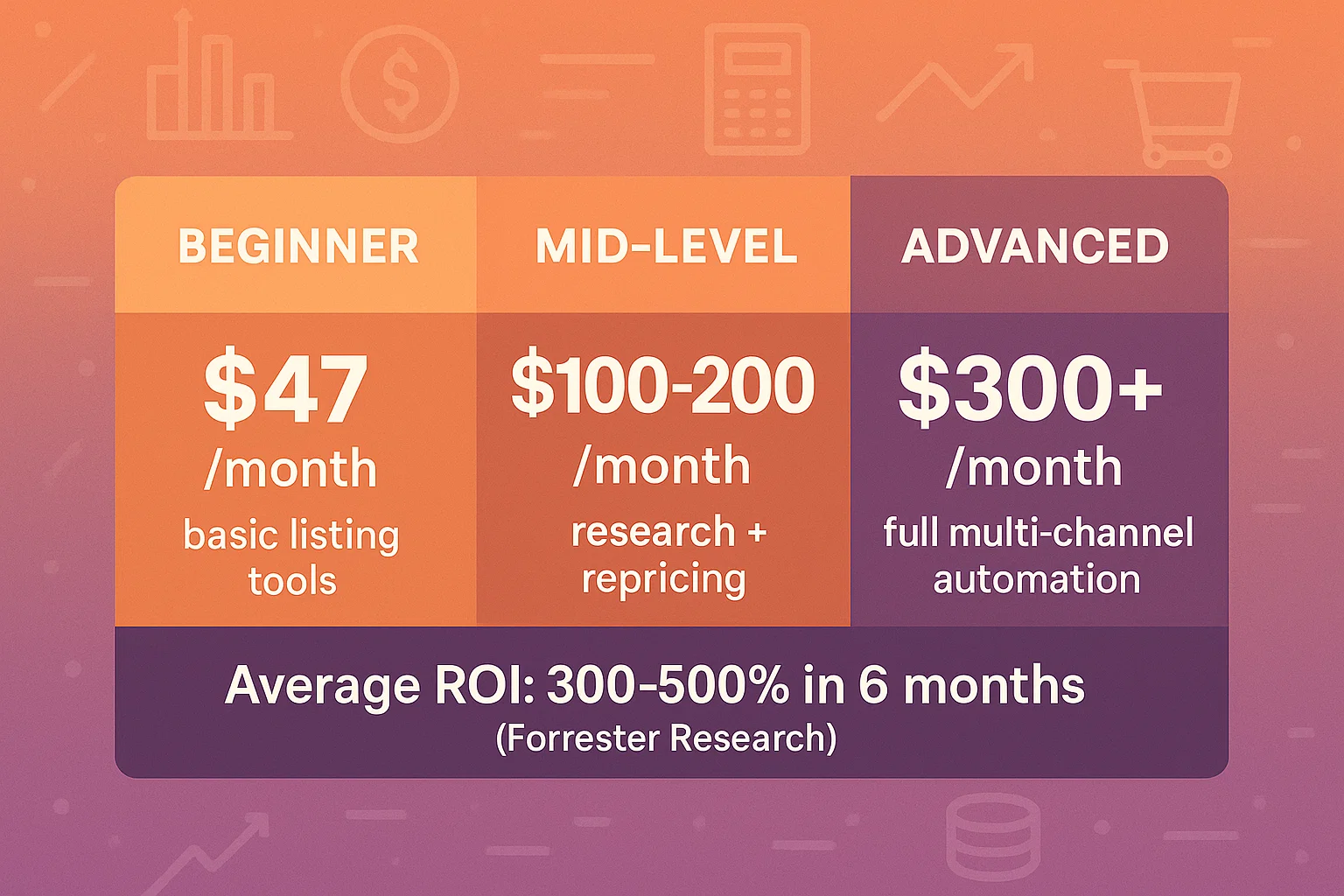
According to Forrester’s research on automation ROI, businesses typically see returns of 300-500% on their automation investments. This happens within the first year.
How Much Does eBay Automation Cost?
The cost of eBay automation varies significantly. It depends on the scale of your business and the specific features you require. Entry-level tools typically start at around $47 per month. Platforms like Dropified offer these rates. Advanced solutions with enterprise-level features can range from $200 per month or more.
For most sellers, automation expenses typically account for 5% to 15% of monthly revenue. While that might sound substantial, the return on investment is often immediate. Sellers making around $5,000 each month usually find that spending $300 on automation pays for itself. This happens through increased sales, reduced labor costs, and smoother workflows.
There are also free and beginner-friendly options available. Tools like PriceYak offer extended trial periods. ZIK Analytics provides free product research resources for sellers just starting out. As operations grow, most sellers transition to paid versions. This gives them access to stronger features. These include advanced repricing, bulk listing, or multi-channel inventory management.
Setting Up Your eBay Automation Strategy
Choosing the Right Automation Tools
The right automation tool depends on several factors. Consider your sales model, product types, and growth goals. For example, eBay dropshipping automation requires different features. This differs from sellers managing physical stock. A small store may only need repricing tools. Larger operations often need complete inventory management systems. These handle thousands of listings.
A good starting point is to list your most time-consuming tasks. Do this each week. If repricing takes hours, then a dedicated eBay repricing tool should be your first investment. If research is your main bottleneck, focus on product analytics and sourcing tools instead.
Integration is another major factor. The best platforms share data seamlessly. This happens across your listings, orders, and inventory. Avoid systems that create data silos. Don’t use ones that require you to enter the same information multiple times. Smooth collaboration between your tools will save time. It prevents mistakes down the line.
Implementation Best Practices
Rolling out eBay automation works best with a gradual, thoughtful approach. Start by testing automation on a small group of listings. Measure its impact on your performance metrics. Watch your data closely during the first few weeks. Adjust your rules as needed.
Keep detailed notes of your automation rules and configuration settings. This ensures consistency and accuracy. Market conditions shift, and algorithms may require fine-tuning. Having documentation makes updates faster. It helps prevent errors.
Finally, make sure both you and your team understand how the tools function. Although automation handles day-to-day tasks, understanding the system gives you greater control. It enables you to troubleshoot, improve efficiency, and maximize your investment value.
Many sellers find success by starting with simpler platforms. They move to more complex solutions later. For those considering broader e-commerce opportunities, explore other options. Our guide on Amazon FBA for beginners provides insights. It covers another automated selling model.
Advanced eBay Automation Strategies
Multi-Channel Integration and Synchronization
Advanced eBay automation extends beyond managing a single platform. It integrates activities across multiple sales channels. This method automatically keeps inventory, pricing, and product details in sync. It works across eBay, Amazon, Walmart, and other marketplaces.
Cross-platform automation helps avoid overselling. It supports consistent branding across all channels. When an item sells on eBay, the eBay inventory management tools automatically update stock. This happens on Amazon and Walmart. Similarly, you can adjust pricing to remain competitive across various platforms.
This type of integration requires advanced multichannel e-commerce software. But it offers significant benefits for sellers who utilize eBay dropshipping automation. The complexity brings rewards. It creates more sales opportunities and reduces management burdens.
For sellers interested in expanding their revenue streams, consider additional options. Our comprehensive guide to the Walmart affiliate program explores opportunities. These monetization strategies complement automated selling.
AI-Powered Analytics and Forecasting
The latest eBay automation tools utilize artificial intelligence. They enhance predictive analytics and market forecasting. These systems analyze past sales data, seasonal patterns, and market signals. They forecast demand and adjust inventory levels as needed.
AI algorithms can identify emerging product trends early. This happens before they become mainstream. It aids eBay listing optimization and provides automated sellers with a first-mover advantage. Predictive models also enhance listing timing, promotional strategies, and pricing adjustments. They do more than simply react to market shifts.
As time passes, machine learning capabilities improve. Automation systems become more efficient by gathering more data. This data covers your business and market conditions. Early adoption of AI-powered eBay automation leads to continuous improvements. It brings long-term benefits for sellers.
Research from MIT’s Computer Science and Artificial Intelligence Laboratory indicates significant benefits. Businesses utilizing AI-driven pricing experience average profit improvements of 15-25%. This compares favorably to traditional methods.
Common Challenges and Solutions
Managing Automation Complexity Correctly
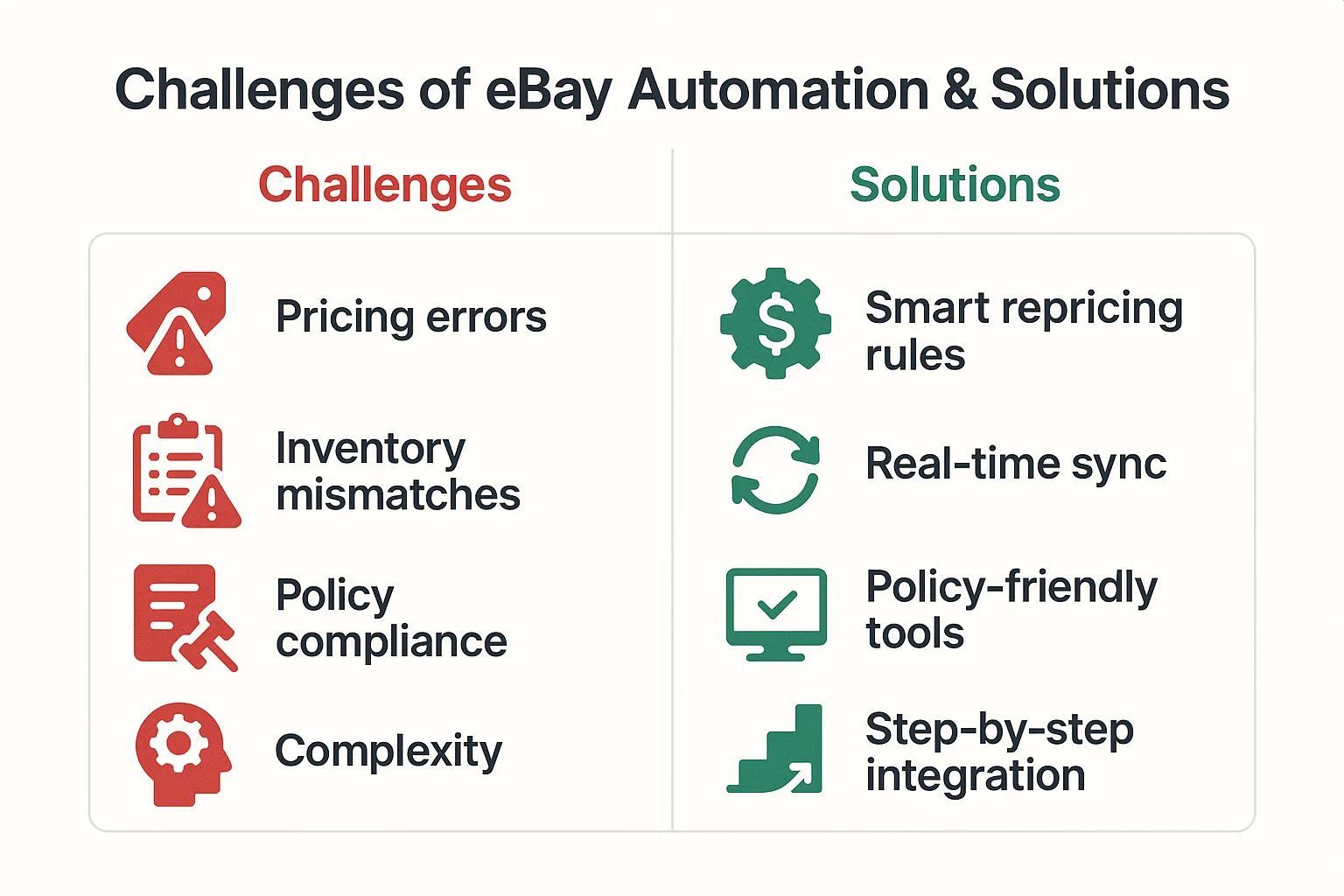
As eBay automation systems advance, they can become challenging to handle. Sellers often feel overwhelmed by the variety of settings, rules, and integrations. These are needed to achieve the best results.
Managing complexity effectively comes down to taking things step by step. Keep everything well-organized. Begin with the essential e-commerce automation features. Gradually incorporate more advanced capabilities. Maintain thorough records of all settings and rules. Make it a habit to regularly check system performance. This identifies opportunities for improvement.
Maintaining Quality Control
Sometimes, automation in e-commerce can impact quality control. This happens if it’s not properly set up and monitored. Mistakes in pricing, wrong product descriptions, or mismatched inventory can occur. These can impact your eBay seller reputation. They negatively affect your sales performance.
Incorporate quality control checks into your automation workflows. Establish price change boundaries to prevent sudden shifts. Regularly review product descriptions. Monitor customer feedback regarding concerns about automation. Regular audits help spot problems. Address them before they turn into significant issues.
Find the right mix of automation and human involvement. This is particularly important for essential business operations. Although automation effectively handles everyday tasks, human insight and intuition are crucial. They’re needed for making strategic choices and addressing unique situations.
Discover our specialized eBay automation services to see how professional management helps. We can help you avoid common automation pitfalls while maximizing growth potential.
Future Trends in eBay Automation
Integration with Emerging Technologies
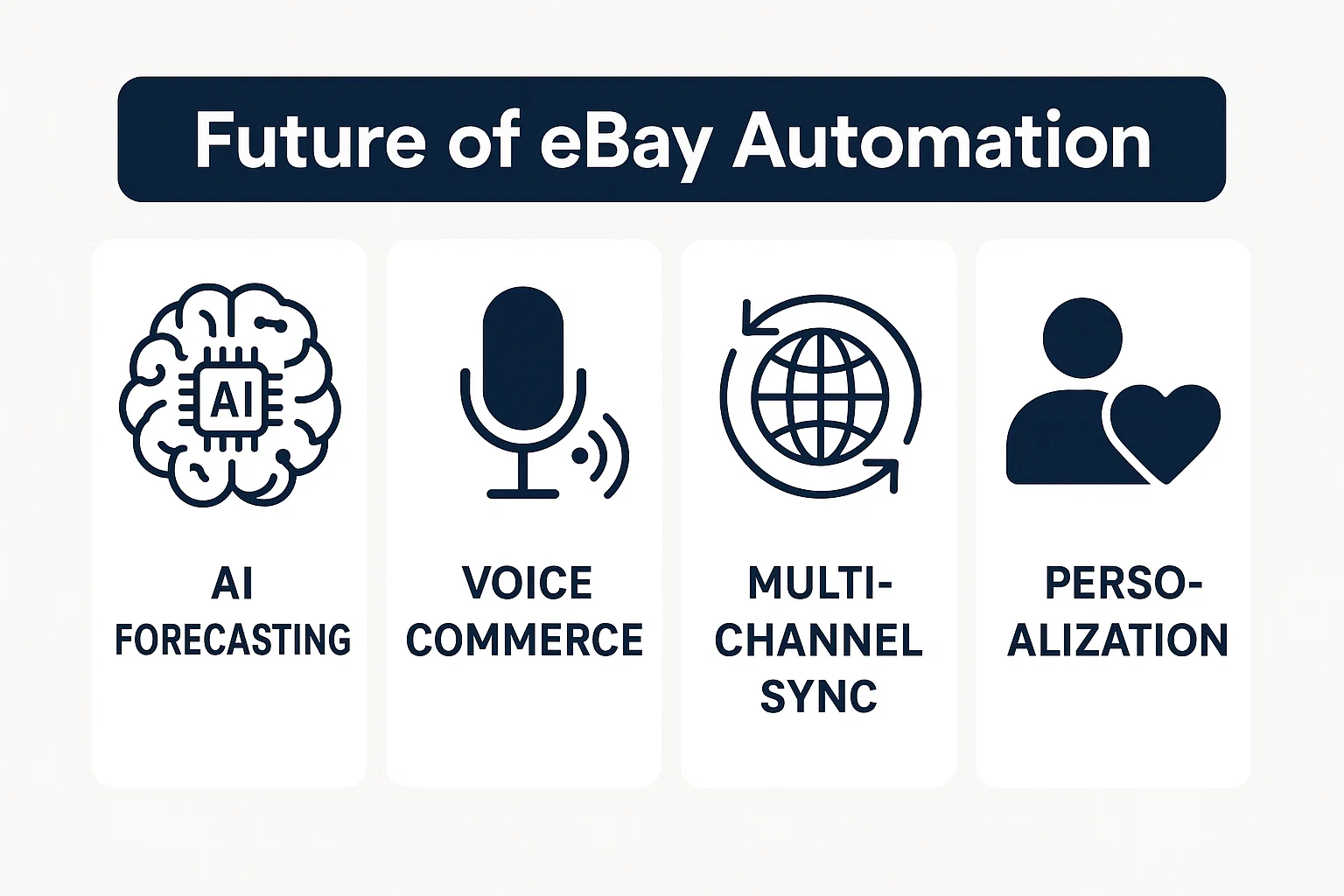
The future of eBay automation is poised to incorporate exciting advancements. These include voice commerce, augmented reality, and blockchain verification systems. These integrations will open up fresh possibilities. They’ll enhance customer engagement and showcase eBay products more dynamically.
Voice-activated ordering and customer service automation could become common. This allows customers to interact with your eBay store through smart speakers and voice assistants. Automated systems must continue to evolve. They need to support these new forms of engagement. They must maintain the efficiency, accuracy, and scalability that eBay sellers depend on. For a deeper look into the impact of voice technology, check how voice commerce is shaping e-commerce.
Enhanced Personalization and Customer Experience
Future automation systems will emphasize personalized customer experiences. They’ll leverage data analytics to tailor product recommendations. Pricing strategies and communication methods will be customized to each buyer. This personalization will occur naturally. It reflects customer behavior patterns and preferences.
Customer service automation is poised to advance significantly. It will handle complex questions and provide personalized assistance. This happens without requiring human intervention. These improvements will enable smaller sellers to compete with larger retailers. They can offer top-notch customer service through automation. For further insights, see resources on customer service automation.
Conclusion
eBay automation represents a fundamental shift. It changes how successful sellers operate their businesses. Rather than being constrained by manual processes and time limitations, automation enables scalable operations. These are efficient and compete effectively in today’s fast-paced e-commerce environment.
Investing in automation tools and systems yields dividends. You’ll see increased productivity, improved competitive positioning, and enhanced growth potential. As the e-commerce landscape continues evolving, sellers who embrace automation will be best positioned. They’ll capitalize on new opportunities while maintaining operational excellence.
Remember that automation is a tool to enhance your business strategy. It doesn’t replace strategic thinking. The most successful automated sellers combine robust technology with sound business principles. They prioritize continuous learning and customer-focused approaches. By understanding both the capabilities and limitations of automation, you can build a thriving eBay business. One that works for you rather than demanding constant manual attention.
The future belongs to sellers who can effectively leverage automation. They maintain the human touch that fosters lasting customer relationships. Start with the basics and scale gradually. Always keep your customers’ needs at the center of your automation strategy. With the right approach, eBay automation can transform your part-time selling activity. It becomes a full-scale, profitable business that generates income while you sleep.
Frequently Asked Questions
Q. What is the average cost to start eBay automation in 2025?
The average cost ranges from $100-$500 monthly. This represents 10-15% of revenue. Most sellers see ROI within 3-6 months.
The average monthly cost to start eBay automation in 2025 ranges from $100 to $500. This depends on your business size and feature requirements. Basic automation tools, such as Dropified, start at $47 per month. Comprehensive platforms with advanced analytics and multi-channel integration can cost between $200 and $300 per month. Most sellers find that automation costs represent 10% to 15% of their monthly revenue. However, they generate returns through increased efficiency and sales volume. This justifies the investment.
Q. How long does it take to see results from eBay automation?
Most sellers see initial results within 30-60 days. Full ROI is typically achieved within 3-6 months of implementation.
Most sellers begin seeing positive results from eBay automation within 30 to 60 days of implementation. Initial improvements in efficiency and time savings are typically noticeable within the first week. Automated systems take over routine tasks like pricing updates and inventory management. Revenue growth usually becomes apparent after 4 to 8 weeks. This happens once the systems have optimized pricing strategies and improved listing visibility. Full ROI realization typically occurs within 3 to 6 months. This depends on the scope of automation and the business size.
Q. Can eBay automation work for dropshipping businesses?
Yes, eBay automation is essential for dropshipping. It automates product sourcing, listing creation, inventory synchronization, and order fulfillment.
eBay automation works exceptionally well for dropshipping businesses. It’s often considered essential for scaling dropshipping operations. Automation tools handle product sourcing, listing creation, and inventory synchronization with suppliers. They coordinate order fulfillment. Platforms like PriceYak and DSM Tool specialize in dropshipping automation. They manage everything from Amazon-to-eBay arbitrage to AliExpress product importing. The automation eliminates manual bottlenecks that limit dropshipping growth. Sellers can manage thousands of products across multiple suppliers simultaneously.
Q. What are the most significant risks of using eBay automation tools?
Main risks include pricing errors, inventory mismatches, policy violations, and over-reliance without proper monitoring. All can be mitigated with proper setup and oversight.
The most significant risks of eBay automation include pricing errors. These could lead to financial losses. Inventory mismatches result in overselling. Potential policy violations occur if automation tools don’t comply with eBay’s terms of service. Overreliance on automation without proper monitoring can lead to customer service issues. Quality control problems may arise. Additionally, poorly configured automation rules might create pricing wars with competitors. They could lead to unsustainable profit margins. These risks can be managed through proper setup. Regular monitoring is essential. Use reputable automation platforms that stay current with eBay’s policies.
Q. Do I need technical skills to implement eBay automation?
No extensive technical skills are needed. Most platforms offer user-friendly interfaces. The learning curve is 1-2 weeks for basic functionality.
Most modern eBay automation tools are designed for users without extensive technical backgrounds. Platforms like DSM Tool, ZIK Analytics, and Dropified offer user-friendly interfaces. They provide guided setup processes. However, successful automation does require an understanding of basic e-commerce concepts. These include profit margins, competitive pricing, and inventory management. The learning curve typically takes 1 to 2 weeks for basic functionality. It takes 4 to 6 weeks to master advanced features. Many platforms offer training resources, tutorials, and customer support. These help users successfully implement automation without requiring deep technical expertise.
Ready to 10X your eBay sales with professional automation?
Stop wasting 20+ hours weekly on manual tasks. Our expert team has helped hundreds of sellers scale their eBay businesses. We use cutting-edge automation strategies.