
Shopify SEO Trends Every Store Owner Should Know in 2025
Shopify SEO trends are reshaping how online stores attract and retain organic traffic, and if you’re running a Shopify store, you already know that ranking on Google doesn’t happen by accident. Recent insights from Shopify and SEMrush show that stores prioritizing strong Shopify SEO trends experience 43% more consistent organic traffic than those that don’t. The reality is, Shopify SEO trends continue to shift rapidly, and what worked last year might not deliver results today.
To ensure your products appear in search results for potential customers, it’s essential to understand these Shopify SEO trends and use the right optimization tools. The good news is, you don’t need to be an SEO expert to succeed. This Shopify SEO guide walks you through the most important Shopify SEO trends for 2025 and gives you actionable Shopify SEO tips to improve your store’s visibility and drive sustainable growth.
If you want expert guidance on implementing these Shopify SEO trends and Shopify SEO strategies, explore our Shopify dropshipping services to start driving more organic traffic today.
Why Shopify SEO Trends Matter More Than Ever
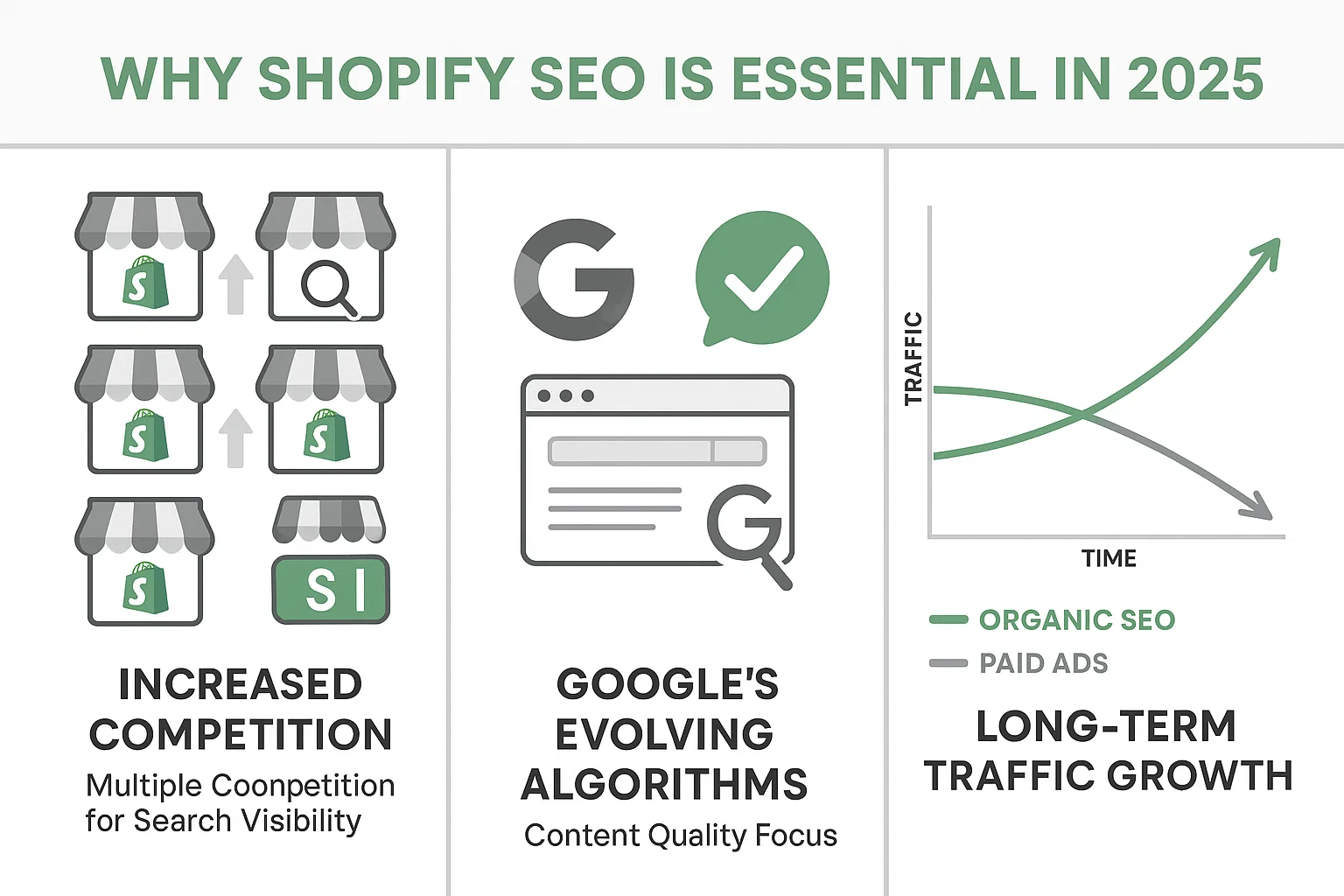
Shopify SEO trends in 2025 play a crucial role in how online stores build visibility and attract qualified customers in an increasingly competitive digital space. Understanding these Shopify SEO trends is essential because your Shopify store operates within a massive platform that hosts hundreds of thousands of businesses, each trying to reach the same audience. Without a well-structured approach to Shopify SEO trends and proven Shopify SEO strategies, your products risk being overshadowed by competitors in the search results.
Search engines, particularly Google, have advanced significantly in understanding user intent. Generic product pages no longer rank as effectively because Google prioritizes content that provides clear value and answers specific customer questions. To stay competitive with current Shopify SEO trends, your store must communicate its offerings in a way that both users and search engines easily understand. According to Google Search Central, providing helpful, structured, and relevant content is one of the strongest signals for better visibility.
Stores that consistently apply Shopify SEO best practices and follow emerging Shopify SEO trends not only rank higher but also capture high-intent traffic that converts better than most paid advertising campaigns or social media promotions. Users who find your site through organic search are actively looking for solutions, which leads to stronger engagement and higher conversion rates.
Following Shopify SEO trends is also an investment that grows over time. The Shopify SEO trends you implement today continue to yield results months later, unlike paid ads, which lose traffic the moment you stop spending. By focusing on long-term Shopify SEO strategies and understanding emerging Shopify SEO trends, your store builds sustainable authority, improved rankings, and consistent organic traffic that supports ongoing growth.
Trend 1: Content Is Still King (But Quality Matters More)
One of the most important Shopify SEO trends in 2025 is the clear shift toward creating content that genuinely helps users. Search engines, particularly Google, are increasingly rewarding websites that deliver real value and actively demoting thin, repetitive, or unhelpful content. For Shopify store owners following Shopify SEO trends and implementing Shopify SEO best practices, this means your product descriptions, category pages, and blog posts must serve a clear purpose for your audience and align with user intent.
Quality content doesn’t mean publishing lengthy, unfocused articles about every product. A strong Shopify content strategy aligned with current Shopify SEO trends means being precise, answering the actual questions your customers ask, and offering information they cannot easily find elsewhere. When a visitor arrives on your product page, they should quickly understand why the product matters, how it compares to alternatives, and how it solves their problem.
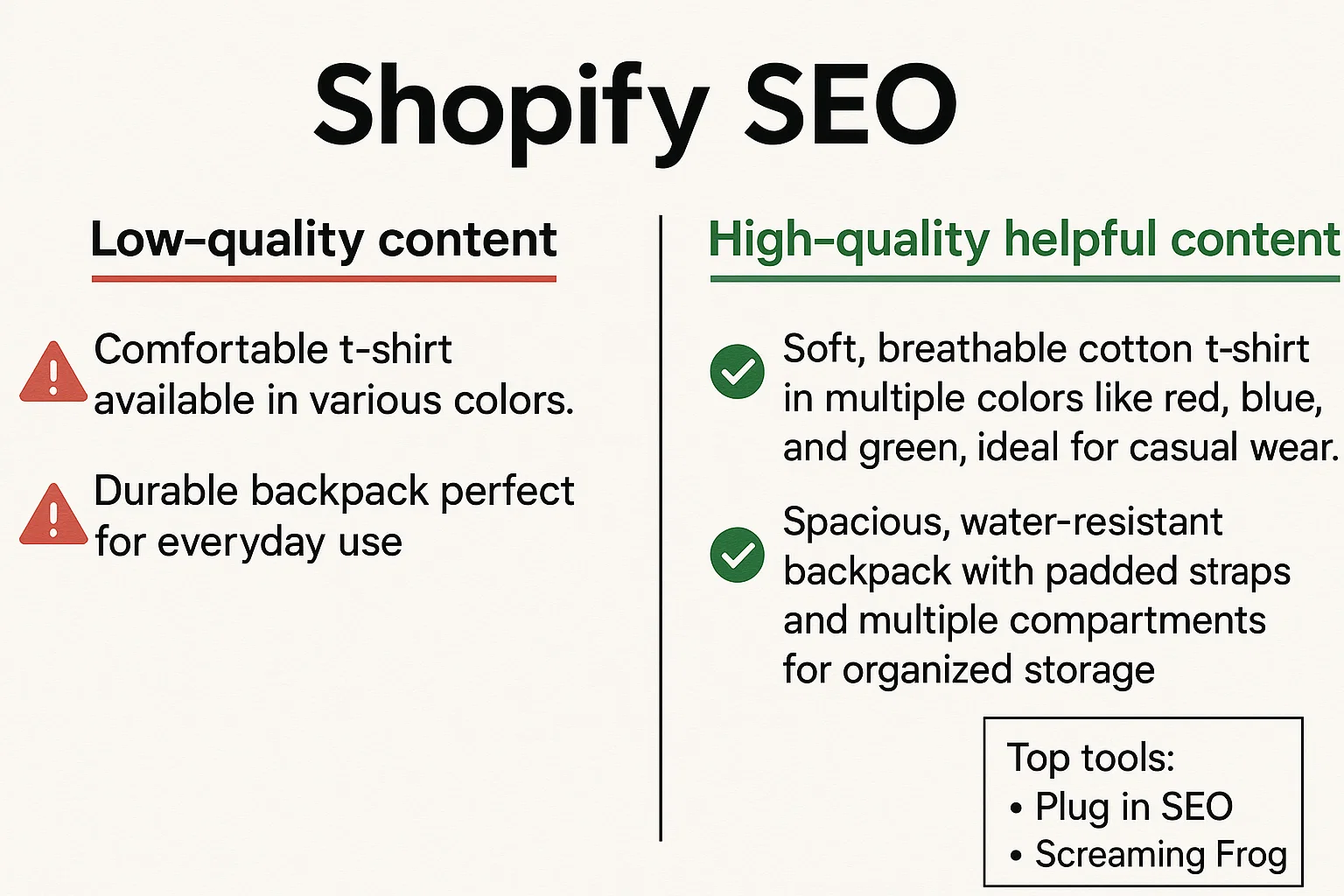
For example, instead of a generic description like “High-quality cotton t-shirt available in multiple colors,” a more effective version would be “Breathable, pre-shrunk cotton t-shirt designed for runners and active wear, available in navy, charcoal, and black.” This approach clearly identifies the target audience, highlights the unique selling points, and addresses specific needs. According to Moz’s SEO guide, this level of detail is exactly what Google rewards because it demonstrates relevance and value, which ultimately leads to higher conversions.
To refine your product messaging and on-page SEO, following Shopify SEO best practices and current Shopify SEO trends, review your content using trusted tools. Plug in SEO is a Shopify app that scans your site for missing meta descriptions, keyword issues, and content gaps. At the same time, Screaming Frog crawls your website to identify areas that need optimization. Both tools provide clear insights into which pages need improvement, enabling you to focus on content that enhances your store’s visibility and supports long-term ranking growth through proven Shopify SEO trends.
Trend 2: Long-Tail Keywords Are Becoming Essential
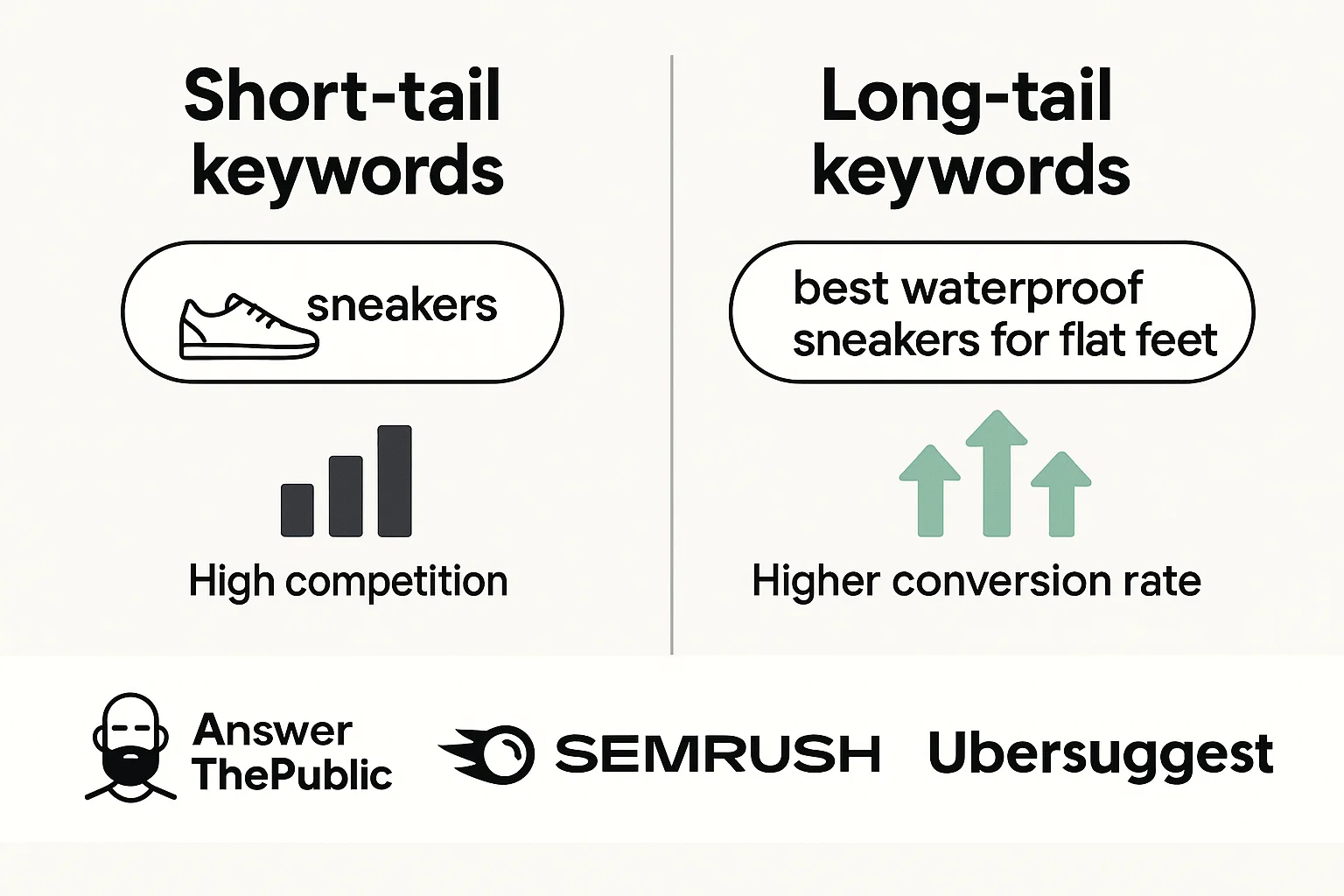
Another major development among Shopify SEO trends in 2025 is the growing importance of long-tail keywords for driving high-quality, conversion-focused traffic. While many store owners compete for broad, high-volume keywords like “sneakers” or “organic coffee,” a more strategic approach aligned with Shopify SEO trends and best practices is to target specific phrases such as “waterproof running sneakers for flat feet” or “single-origin Ethiopian coffee for French press.” These longer, more detailed queries may have lower overall search volume, but they deliver significantly higher conversion rates because they match clear user intent.
Someone searching for “how to find reliable dropshipping suppliers” is far more likely to purchase than someone who simply types “suppliers.” Long-tail keywords reduce competition, enabling Shopify stores to rank effectively without needing massive domain authority. This targeted Shopify SEO tips strategy also attracts shoppers who already know what they want, leading to stronger engagement, better conversion rates, and often higher average order values.
To find the best long-tail keywords for your store through Shopify keyword research aligned with Shopify SEO trends, research the specific questions your ideal customers are asking. Tools like Answer the Public reveal real search queries in your niche, Ubersuggest provides affordable Shopify keyword research with competitive insights, and SEMrush offers advanced keyword analysis and tracking. These platforms reveal which long-tail phrases are driving traffic in your niche, highlighting opportunities your competitors may already be leveraging. If you want to target the right long-tail keywords and work with trustworthy suppliers, explore our complete guide on how to find reliable dropshipping suppliers.
Once you’ve identified valuable phrases using Shopify SEO trends insights, create content that answers these queries clearly and directly. By aligning your content with these search terms, whether through detailed product descriptions, blog posts, or FAQ sections, and following Shopify SEO trends, your Shopify store can improve its search rankings for keywords that matter most to buyers. This approach not only boosts visibility but also connects you with high-intent users who are ready to take action.
Trend 3: Core Web Vitals and Mobile Optimization
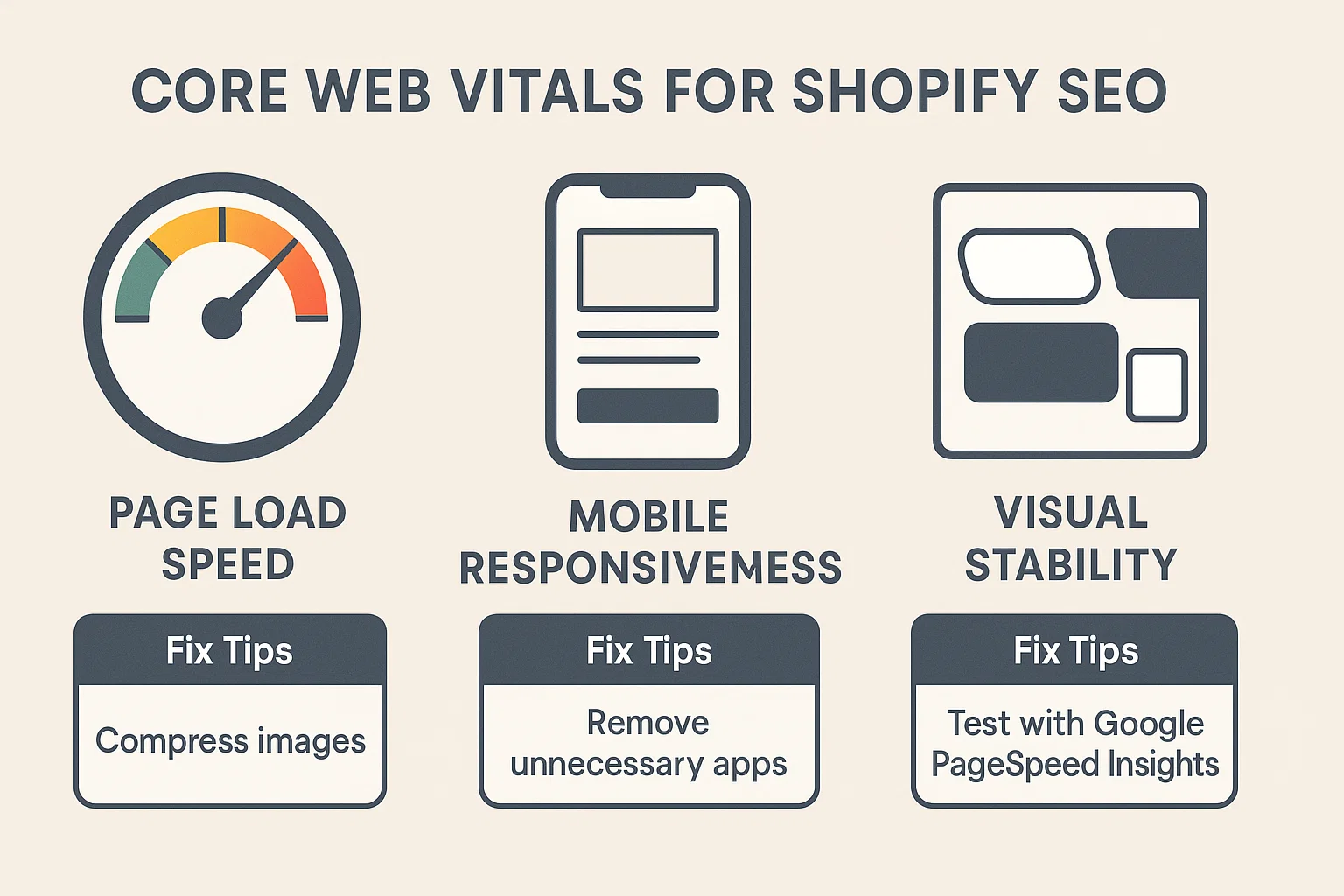
Among the critical Shopify SEO trends in 2025, Core Web Vitals and mobile optimization stand out as inseparable factors. Understanding these Shopify SEO trends is crucial because Google has made it clear that page speed and mobile performance are crucial ranking factors, and stores that ignore them risk losing both visibility and revenue. If your Shopify store takes even three seconds to load on mobile, you’re likely losing potential customers and damaging your search performance.
Core Web Vitals Shopify metrics measure how quickly your pages load, how responsive they are to user interactions, and how visually stable they remain during loading. These metrics may sound technical, but they directly influence whether users stay on your site or bounce back to search results. A slow, clunky mobile experience can undo even the strongest Shopify SEO strategies implementation.
Start by checking your own site for Shopify mobile optimization, following Shopify SEO trends. Open your Shopify store in an incognito tab on your phone, browse a few product pages, and pay attention to speed, responsiveness, and layout stability. If anything feels laggy or shifts around while loading, it’s a signal that improvements are needed to align with current Shopify SEO trends.
Use Google PageSpeed Insights for a free Core Web Vitals report. Paste your URL to identify what’s slowing your site and receive actionable recommendations. For a deeper technical audit, Screaming Frog can highlight broken images, missing alt text, bloated scripts, and other speed-related issues that affect Shopify SEO trends performance.
Fixing these problems doesn’t always require complex changes when following Shopify SEO strategies and Shopify SEO trends. Compress your images without sacrificing quality, remove unnecessary apps, streamline your checkout process, and check your Core Web Vitals in Google Search Console through Shopify’s built-in integrations. Even small improvements can lead to significant gains in rankings and conversions while keeping pace with evolving Shopify SEO trends.
Trend 4: Structured Data and Schema Markup
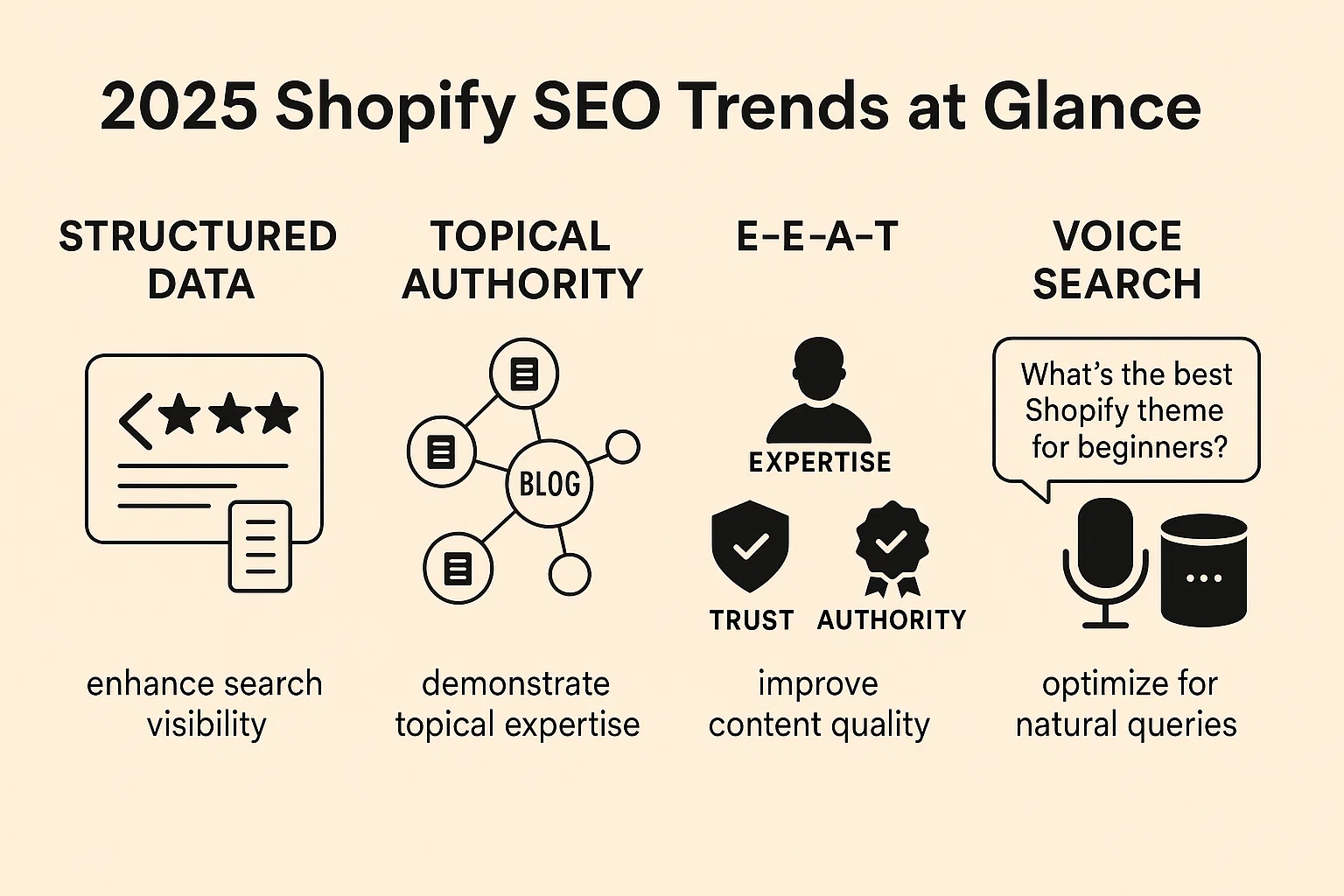
Another key development among Shopify SEO trends in 2025 is the smarter use of structured data, Shopify implementations, and schema markup. Schema tells Google exactly what’s on your page, enabling your products to appear with rich snippets such as star ratings, prices, and availability directly in search results. This additional context makes your listings stand out and often leads to higher click-through rates.
Shopify automatically includes basic schema for product pages, but you can further enhance it by adding structured data for FAQs, reviews, blog content, and more using Shopify SEO best practices. These details provide search engines with richer information to display, helping your store attract more qualified traffic aligned with Shopify SEO trends.
To see which schema is currently on your pages and align with Shopify SEO trends, use Google’s Rich Results Test or consult the Schema.org documentation for best practices. If you prefer a no-code solution, the Smart SEO app in the Shopify App Store lets you implement advanced schema through an easy-to-use dashboard, aligning with Shopify SEO trends and best practices.
For technical audits aligned with Shopify SEO trends, tools like Ahrefs and SEMrush provide schema markup recommendations in their site audits, showing you exactly what’s missing and how to fix it. By combining clean technical foundations with rich, structured data aligned with current Shopify SEO trends, your Shopify store can achieve better visibility and attract high-intent users before they click through.
Need help implementing these techniques? Contact us for expert guidance.
Trend 5: Topical Authority and Topic Clusters
A major shift among Shopify SEO trends in 2025 is the rise of Shopify topical authority. High-ranking Shopify stores aren’t publishing random blog posts and hoping for the best. Instead, they’re creating interconnected content around specific topics, which sends strong signals to Google that their site is an authoritative resource following Shopify SEO trends.
Think of it as building a library around a single subject to improve Shopify blog SEO. For instance, if your Shopify store specializes in fitness equipment and follows Shopify SEO trends, it’s best to focus on a single topic, such as dumbbells, rather than switching to an unrelated subject like yoga mats. A better approach is to create a comprehensive guide on building a home gym, then write supporting content on dumbbell exercises, proper storage solutions, and choosing the right weights for different fitness levels. By linking these pieces, you create a structured topic cluster that reinforces your authority in the home fitness niche.
This Shopify SEO guide approach improves your rankings and keeps visitors on your site longer. Someone might arrive via a single blog post but stay to read several related articles, which increases engagement metrics and signals quality to search engines, in line with Shopify SEO best practices.
To identify content gaps and visualize clusters aligned with Shopify SEO trends, use tools like Ahrefs Content Gap or SEMrush Topic Research. These tools help you identify topics your competitors cover, but you don’t, making it easier to plan content that builds authority over time, following Shopify SEO trends, and improve Shopify search rankings systematically.
Trend 6: E-E-A-T: Experience, Expertise, Authority, Trustworthiness
Google continues to emphasize E-E-A-T (Experience, Expertise, Authority, Trustworthiness) in its ranking systems. For e-commerce businesses, this focus has become more impactful among Shopify SEO trends in 2025.
Start with experience and expertise, following Shopify SEO best practices and Shopify SEO trends. If you have real knowledge in your niche, show it. Include detailed author bios in your blog posts, share your personal story on your About page, and publish content that reflects your understanding of customer needs and industry trends. These elements help Google and users recognize the human expertise behind your brand.
Social proof is equally important in this Shopify SEO guide, which aligns with current Shopify SEO trends. Genuine customer reviews and testimonials strengthen trust signals. Shopify includes built-in review features, but apps like Judge.me and Yotpo make it easier to collect and prominently showcase reviews.
Authority comes through backlinks and mentions aligned with Shopify SEO trends. If credible industry sites reference your content, Google interprets that as a vote of confidence. Use Ahrefs Backlink Checker or Moz Link Explorer to track backlinks and find opportunities to earn more from relevant sources.
Finally, make trust visible with these Shopify SEO strategies and Shopify SEO trends. Include clear contact details, transparent return policies, and a valid business address on your site. Adding security badges through apps like Trust Badges can further reassure customers that your store is legitimate and safe to shop from. Learn more about building customer trust at HiSellIt.
Trend 7: Voice Search and Conversational Keywords
Voice search is reshaping the way people discover products online, and understanding what are Shopify SEO trends in 2025 means accounting for this shift. More shoppers are using voice assistants, and their queries are longer and more conversational compared to typed searches.
Someone might type “best running shoes,” but through voice search, they’re more likely to ask, “What are the best running shoes for marathon training?” To adapt to these Shopify SEO trends, incorporate natural language and question-based keywords throughout your site, especially in FAQs and blog content, using the best Shopify SEO techniques for 2025.
Start by identifying real customer questions with these Shopify SEO tips aligned with Shopify SEO trends. Review emails, support tickets, and call inquiries to identify common phrases. Convert these into detailed FAQ sections on relevant product or category pages. You can also create standalone blog posts that answer these questions comprehensively.
Tools like Answer the Public and Google Autocomplete (start typing your keyword to see what users ask) are excellent for uncovering conversational queries aligned with Shopify SEO trends. SE Ranking also offers voice search tracking to help you monitor how your store performs in voice results following Shopify SEO trends.
By aligning your content with how people naturally speak, you make your Shopify store more discoverable in this rapidly growing search segment, capturing high-intent users before competitors do.
Ready to improve your store’s SEO? Explore our e-commerce optimization services and discover how we help Shopify stores attract more organic traffic and convert more customers.
Essential Shopify SEO Tools You Should Be Using
Understanding Shopify SEO trends is only half the battle. To execute these Shopify SEO trends effectively, you need the right Shopify SEO tools to gather data, optimize your content, and track progress. You don’t have to invest in every option available, but using a smart mix of free and paid tools can save time and help you make informed decisions that improve Shopify search rankings and boost your store’s visibility following Shopify SEO trends.
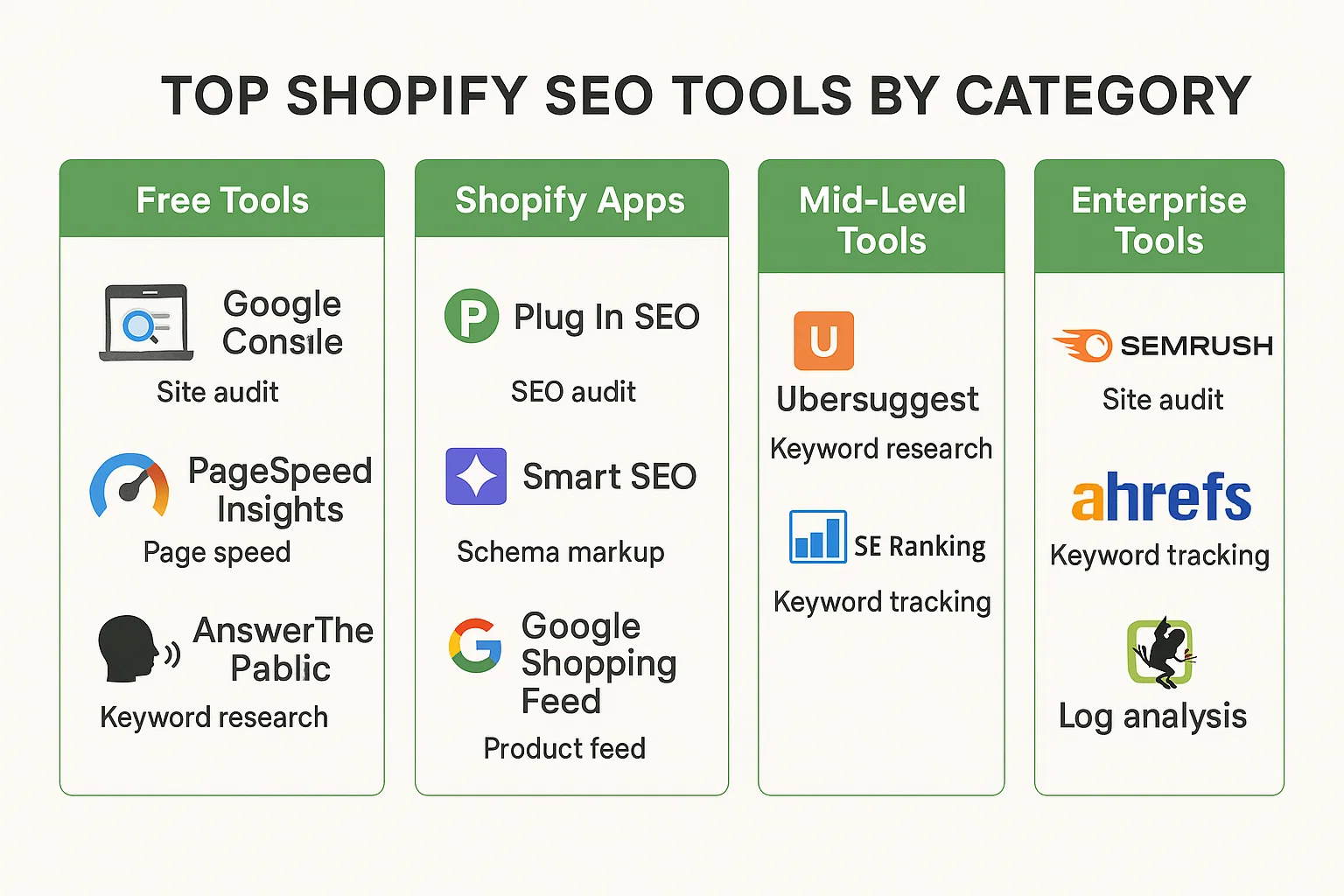
Free Tools to Start With:
Google Search Console: This tool is non-negotiable for implementing Shopify SEO strategies aligned with Shopify SEO trends. It shows which keywords are driving traffic, how often your pages appear in search results, and whether any indexing or technical issues need attention. Check it weekly to stay on top of your performance.
Google PageSpeed Insights: Use this tool to analyze your Core Web Vitals and determine if your store’s speed affects rankings and user experience following Shopify SEO trends.
Answer the Public: A goldmine for content planning and long-tail keyword discovery following Shopify SEO trends. It reveals the real questions people are asking in your niche so you can create content that directly answers them.
Shopify Analytics Dashboard: Shopify’s built-in analytics provide essential data about organic traffic, conversions, and customer behavior. It’s a great starting point for understanding which pages perform best.
Shopify-Specific Apps:
Plug in SEO: Scans your entire store for on-page issues like missing alt text, duplicate meta descriptions, and keyword gaps. It’s a quick way to catch and fix problems that can hold back rankings.
Smart SEO: Manages meta tags, structured data, and URL optimization without requiring code. It’s especially useful for adding schema markup to product and blog pages.
Google Shopping Feed: This free Shopify channel connects your products to Google Shopping results, increasing visibility where buying intent is highest.
Affordable Mid-Level Tools:
Ubersuggest: Offers keyword research, competitor analysis, and rank tracking at a reasonable price. The free version is limited, but the paid plan provides excellent value for growing stores.
SE Ranking: An underrated all-in-one platform with keyword tracking, site audits, and competitor insights. It’s a strong alternative to enterprise-level tools for those working with a mid-range budget.
Enterprise-Level Tools:
SEMrush: Widely considered the industry standard for SEO. It combines keyword research, backlink analysis, competitive tracking, and content optimization in one powerful platform.
Ahrefs: Renowned for its backlink data and content gap analysis, Ahrefs is a top choice for agencies and advanced SEO users.
Screaming Frog: A technical crawler that audits your entire site. It identifies broken links, redirect chains, missing metadata, and other issues that affect your SEO health.
Looking for more resources and Shopify SEO tools to optimize your Shopify store? Visit our website to discover solutions tailored for e-commerce growth aligned with current Shopify SEO trends.
 How to Get Started With These Shopify SEO Trends
Trying to implement every SEO trend at once isn’t practical. Begin by selecting two or three key Shopify SEO trends that will have the greatest impact on your store at this time. For instance, consider starting with product descriptions and long-tail keyword targeting, utilizing free tools like Answer the Public. Or focus on building topical authority through blog content while monitoring performance in Google Search Console.
The key is consistent action with your Shopify SEO tips and Shopify SEO trends. SEO is a long-term investment, and results build over time. If you need expert help prioritizing these Shopify SEO trends for your specific business, consider reaching out to an SEO professional to develop a tailored roadmap based on current Shopify SEO trends.
Simple Shopify SEO Checklist to Start Today:
- Set up Google Search Console and verify your Shopify store
- Test your top five product pages using Google PageSpeed Insights and note any issues
- Use Answer the Public to find 10–15 long-tail keywords related to your best-selling products
- Review your top product descriptions to ensure they clearly explain who the product is for and the problem it solves
- Add customer testimonials or reviews to at least one product page using Shopify’s built-in review feature or an app like Judge.me
This Shopify SEO checklist provides a practical starting point for implementing Shopify SEO tips and Shopify SEO trends that drive measurable results. Need personalized help? Contact our team today.
The Connection Between Pricing Strategy and SEO Performance
Many store owners underestimate the impact of SEO on their pricing strategy. When you rank for high-intent keywords using Shopify SEO trends, you attract customers who are ready to buy and are less focused on discounts. This gives you more flexibility to set prices that reflect the value of your products rather than relying on frequent promotions to drive sales. A well-optimized approach following Shopify SEO trends can support healthier margins by aligning visibility with buyer intent.
For a deeper dive on optimizing your pricing while maximizing profit, check out our guide on dropshipping pricing strategies to maximize profit in 2025.
Conclusion
The landscape of Shopify SEO trends is evolving quickly, but the core principles remain the same. Success depends on creating real value for customers while making your content easy for Google to understand and rank. Key Shopify SEO trends driving growth include publishing helpful content, targeting long-tail keywords, improving Core Web Vitals, adding structured data, building topical authority, strengthening E-E-A-T signals, and optimizing for voice search. Together, these Shopify SEO trends and Shopify SEO strategies determine which stores rank higher and attract more organic traffic.
The real difference between thriving stores and struggling ones lies in consistent implementation supported by the right tools. Platforms such as Google Search Console, SEMrush, Ahrefs, and Plug in SEO help identify opportunities, monitor performance, and resolve issues as part of a comprehensive Shopify SEO guide.
If you’re just starting out with Shopify SEO trends, begin with free tools. Set up Google Search Console to track your store’s performance, use PageSpeed Insights to address loading issues, and research long-tail keywords with AnswerThePublic. These simple Shopify SEO tips create a strong SEO foundation without requiring a large budget. To take this further, explore our step-by-step guide to starting a profitable dropshipping business in 2025 to build a solid foundation for long-term growth.
As your store grows, consider investing in mid-tier tools such as Ubersuggest or SE Ranking to scale your efforts and refine your approach to Shopify SEO.
SEO is a long-term investment that compounds over time. Unlike paid ads that cease when spending stops, organic traffic continues to attract visitors long after the work is done. Your customers are already searching for your products. The question is whether they will find your store or your competitors. Start by applying one technique from these Shopify SEO trends with one free tool this week to build momentum.
Frequently Asked Questions About Shopify SEO Trends
Q. How long does it take to see SEO results on Shopify?
Most e-commerce stores see initial improvements within three to six months of implementing solid what are Shopify SEO trends practices, though significant ranking improvements typically take six to twelve months. The timeline depends on your industry competition, how aggressively you execute these Shopify SEO trends, and whether you’re starting from scratch or building on existing SEO efforts. Using tools like Google Search Console and SEMrush to track your progress will help you stay motivated and adjust your Shopify SEO best practices aligned with current Shopify SEO trends as needed.
Q. What’s more important for Shopify SEO trends: blog content or product descriptions?
Both matter for Shopify SEO trends, but product descriptions are your foundation since they’re what customers actually see when considering a purchase. Blog content builds topical authority and brings in long-tail keyword traffic aligned with Shopify SEO trends. If you have to choose one to focus on initially, start with high-quality product descriptions that incorporate your target keywords naturally, then expand your blog strategy as you have more resources, following Shopify SEO tips. Use a plug-in SEO tool to audit your current product page optimization.
Q. Can I rank on Google without external backlinks using Shopify SEO trends?
You can rank for less competitive, long-tail keywords without many backlinks, especially in niche markets following Shopify SEO trends. However, for competitive terms or if you want to dominate your category, building quality backlinks is important. Utilize Ahrefs or Moz to analyze your competitors’ backlink profiles and pinpoint opportunities to build links. Focus on creating content that’s so valuable that other websites will want to link to it, and consider reaching out to industry blogs and publications about guest posting opportunities.
Q. Do Shopify stores get an SEO advantage compared to other platforms?
Shopify doesn’t give you an inherent ranking advantage, but the platform is well-designed for Shopify SEO best practices. You get clean URLs, fast servers, built-in schema markup, and good mobile responsiveness out of the box. The real advantage comes from stores that use these features strategically and create content that actually answers customer questions following Shopify SEO trends. Tools like Plug in SEO make it easy to implement best practices within Shopify. For more insight into building a successful Shopify business from scratch, check out our guide on how to start a profitable dropshipping business in 2025.
Q. Should I focus on local SEO if my Shopify store ships nationwide or globally?
Local SEO is less critical for pure e-commerce following Shopify SEO trends, but if you have a physical location or serve specific geographic areas, it’s worth optimizing for local keywords. This might include city-specific pages or blog content targeting regional searches. For most Shopify stores shipping nationwide or internationally, focus on product-related keywords and topical authority first, then consider geographic expansion if it applies to your business model. Use Google Search Console to see if local variations of your keywords are driving traffic.
Do you need a customized roadmap for implementing the latest Shopify SEO trends for your store? Contact us today and let our experts help you achieve lasting results with proven Shopify SEO strategies and Shopify SEO best practices.