
YouTube SEO: How to Rank Videos on the First Page
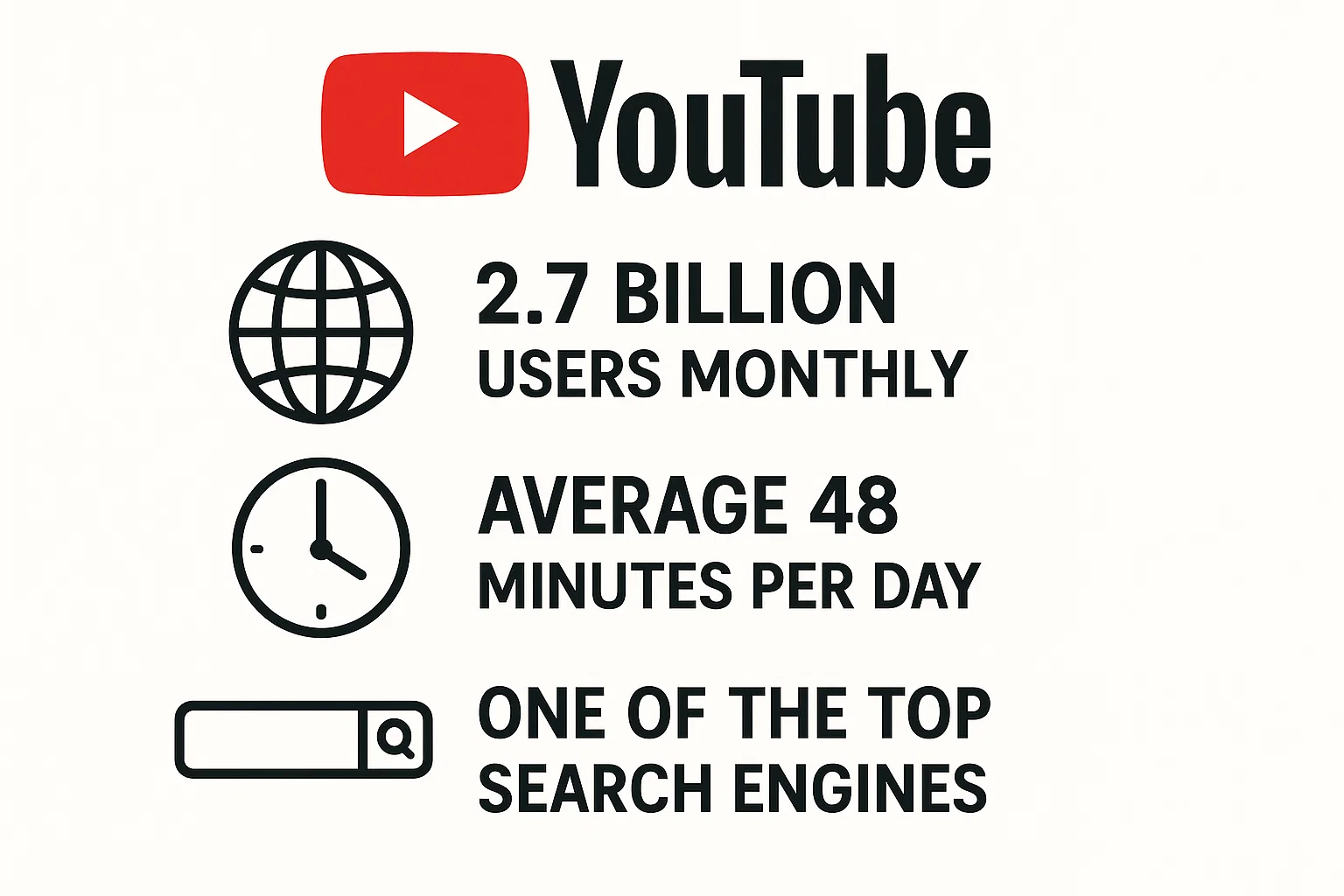
YouTube SEO is now at the heart of digital marketing, with more than 2.7 billion people using the platform each month and spending nearly 48 minutes a day watching videos. This massive audience makes YouTube one of the most powerful search engines in the world. The competition for visibility is more challenging than ever. The difference between a video that gets buried and one that ranks on the first page often comes down to understanding how the YouTube algorithm works. It also requires applying the right YouTube SEO optimization strategies.
Ranking videos on YouTube’s first page is not about luck. It’s not just about having a catchy thumbnail alone. It requires a thoughtful mix of keyword research, optimized titles and descriptions, compelling thumbnails, and audience engagement strategies. The good news is that many creators still overlook these YouTube SEO fundamentals. This means applying them correctly gives you a clear edge.
Whether your goal is to promote products, build brand authority, or drive qualified traffic to your e-commerce website, mastering YouTube ranking factors will put you ahead of the competition. For a deeper dive into how video search works, you can explore Backlinko’s YouTube SEO guide. It breaks down essential YouTube SEO techniques for video content. In this YouTube SEO guide, we’ll walk through the proven YouTube SEO strategies that deliver real results in 2026.
 Understanding YouTube’s Algorithm and Ranking Factors
YouTube’s algorithm has undergone significant changes in recent years. What once revolved around simple view counts now focuses on deeper engagement signals. It also prioritizes overall user satisfaction. Today, the platform prioritizes videos that keep viewers watching longer. It encourages them to interact and leads to meaningful viewing sessions across YouTube.
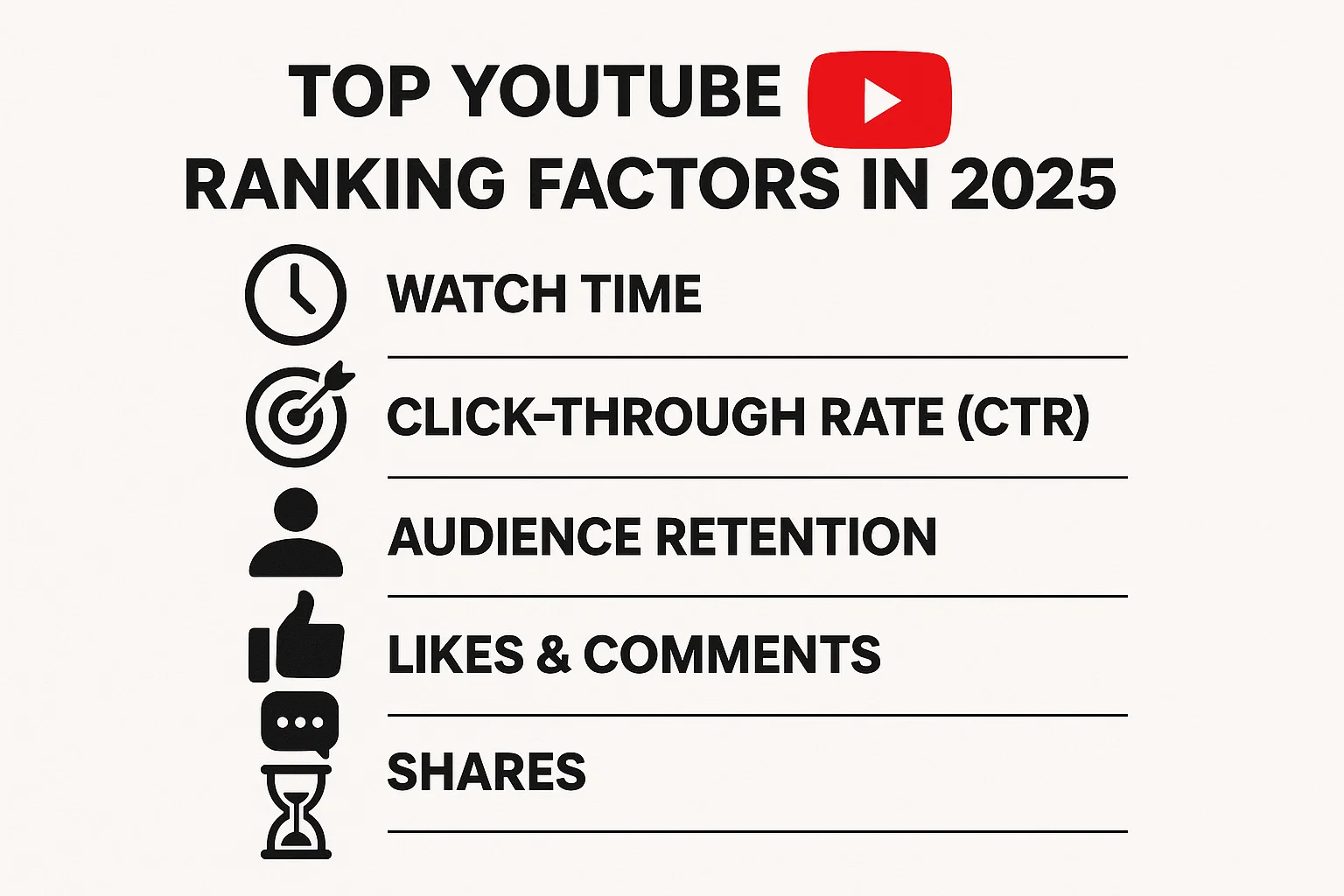
The most important YouTube algorithm ranking factors include watch time and audience retention. They also include click-through rate on YouTube (CTR), engagement metrics such as likes, comments, and shares, and session duration YouTube. While these performance signals are crucial, many creators still overlook the fundamentals of YouTube search optimization. This includes optimizing video titles, crafting engaging descriptions, and utilizing tags effectively.
At its core, YouTube works much like Google’s search engine. Its goal is to deliver the most relevant and high-quality content for every search query. For brands and creators who take the time to optimize correctly, this shift presents opportunities. You can reach broader audiences and establish long-term visibility. To stay updated on how search engines shape content performance, you can review Think with Google’s insights on video behavior.
Understanding how YouTube SEO works is essential for success. When you grasp these YouTube ranking factors, you can implement better YouTube SEO strategies. Ready to take your video marketing to the next level? Explore our YouTube Automation Services and let our team help you grow faster with a data-driven approach to YouTube SEO.
Keyword Research for YouTube Success
Effective YouTube keyword research for videos begins with understanding how your audience searches. Unlike traditional SEO, YouTube keywords often reflect natural speech patterns. They include question-based phrases people use when looking for video content. This conversational style makes it essential to think like your viewers. You need to anticipate the exact terms they might type into the search bar.
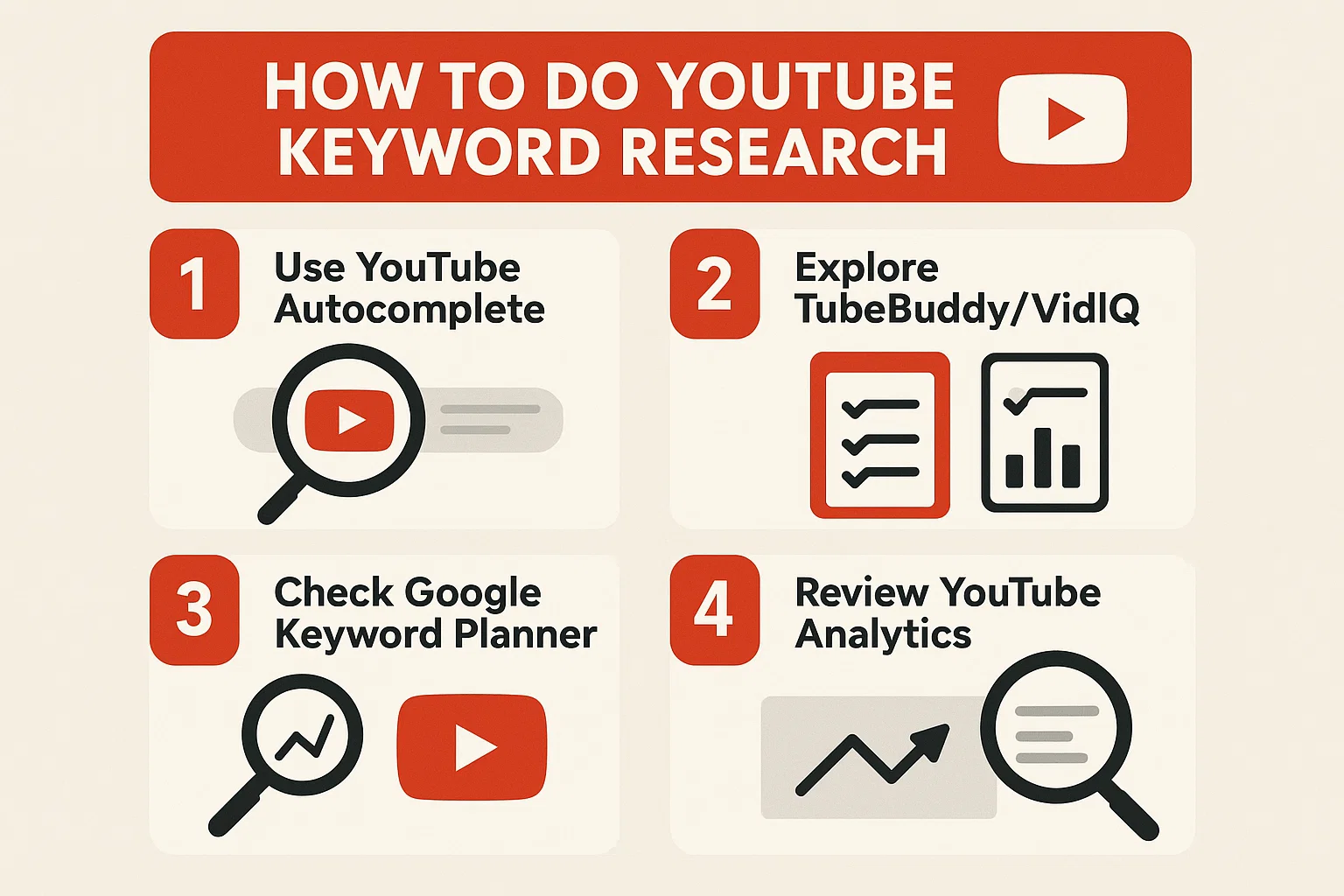
One of the easiest ways to get started with YouTube SEO for beginners is by using YouTube’s autocomplete feature. Simply begin typing your main topic. YouTube will suggest search completions based on real user behavior. These suggestions are direct insights into what people are actively searching for. This makes them incredibly valuable for content planning and YouTube video optimization.
To go deeper into how to optimize YouTube videos for search, tools such as TubeBuddy, VidIQ, and Google Keyword Planner can help. They identify search volume, competition, and ranking opportunities. Don’t overlook the data already available in YouTube Analytics insights either. Reviewing the search terms that are currently driving traffic to your videos provides a clear roadmap. It helps with future content and shows you how to do YouTube SEO in 2026 effectively.
When selecting keywords for your YouTube SEO strategy, prioritize long-tail variations. Look for keywords with high search potential and manageable competition. For example, instead of aiming for broad terms like “marketing,” you’ll get better results with more specific keywords. Try “email marketing for small businesses” or “social media marketing tips for beginners.” This targeted approach not only improves your chances when you rank videos on YouTube. It also ensures you attract viewers who are genuinely interested in your content.
Just like keywords help your YouTube videos get discovered, powerful copy helps your products convert. This happens once customers land on your store at HiSellIt. Learning best YouTube SEO techniques starts with proper keyword research. This is a fundamental part of YouTube SEO step by step implementation.
Optimizing Video Titles That Get Clicks
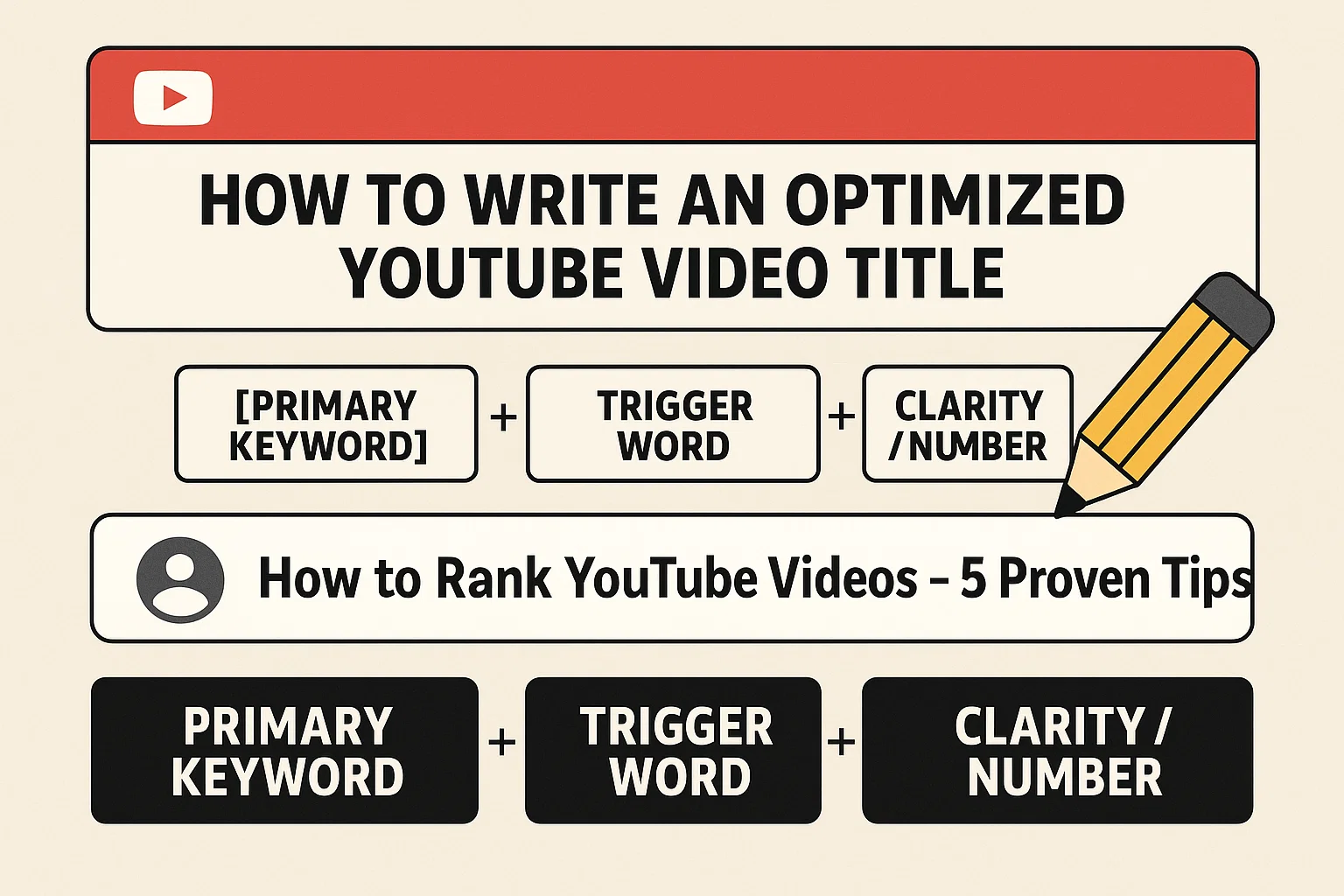
Your video title is both a YouTube video ranking factor and a marketing headline. It should include your target keyword while also persuading viewers to click and watch. Success comes from striking a balance between YouTube SEO optimization and human appeal.
Whenever possible, place your primary keyword at the beginning of the title. Make sure it still sounds natural. For example, “How to Rank YouTube Videos” is clearer and more effective. It works better than a more extended version such as “YouTube Video Ranking Optimization Tutorial Guide.” This represents one of the best YouTube SEO techniques for improving visibility in 2026.
Strong titles often use emotional triggers and persuasive language. Words like “ultimate,” “proven,” “complete,” and “secret” tend to attract attention. They work when they are applied genuinely. Numbers are another effective tool since they set clear expectations. Examples include “5 YouTube SEO Strategies” or “10 YouTube SEO Tips for Beginners.”
Keep your titles under 60 characters so they display fully in search results. Still, if a slightly longer title makes your message stronger and easier to understand, it is worth extending beyond this limit. The priority should always be clarity and impact when implementing YouTube search optimization. This is essential when learning how to rank videos on YouTube first page.
Creating Compelling Descriptions and Tags
YouTube descriptions are essential for both your viewers and the algorithm. They provide context about your content. The first 125 characters carry the most weight since they appear in search results. They also show up in suggested video previews. This opening should be keyword-rich, compelling, and clear enough to encourage users to click when you rank videos on YouTube.
Place your primary keyword naturally within the first sentence or two. After that, expand with secondary keywords and related terms. These should reinforce the topic of your video. Doing this helps YouTube understand what your content is about. It increases the chances of ranking for multiple search queries related to YouTube SEO.
For longer videos, adding timestamps improves the viewer experience. It can also help your content appear in featured snippets. It is also essential to include relevant links to your website, blog, or social media channels. This not only drives traffic outside of YouTube but also adds value for your audience. This approach demonstrates how YouTube SEO works in practice.
When writing YouTube tags and descriptions, focus on variety rather than repetition. Use a mix of broad and specific tags. Include variations of your main keywords. Consider synonyms and related terms that your audience may use when searching for similar content. Tools like VidIQ help identify effective tags and track performance. This is crucial for YouTube video optimization and understanding YouTube SEO best practices 2026.
Thumbnail Design and Visual Optimization
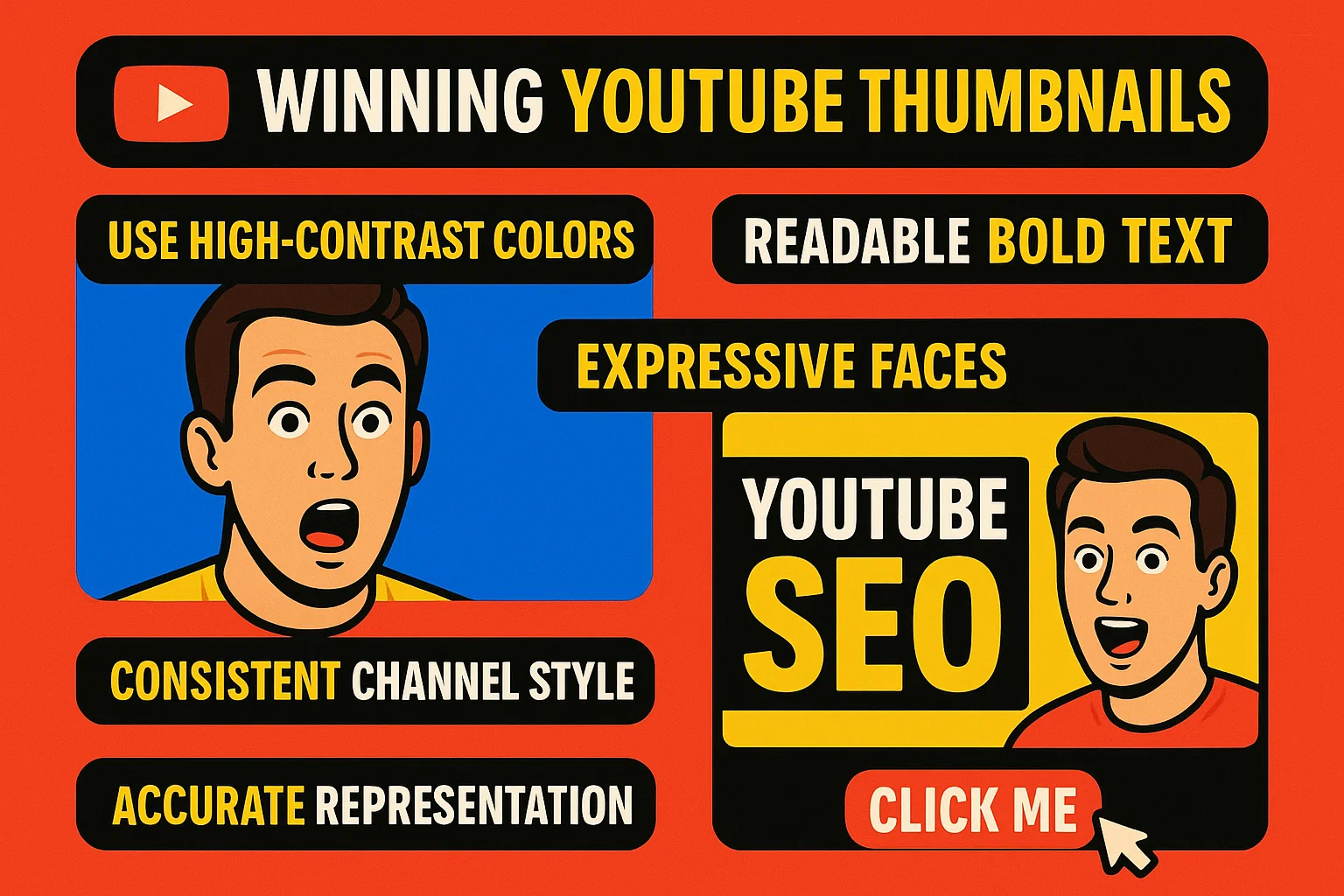
YouTube thumbnail optimization plays a significant role in YouTube SEO. Thumbnails directly impact click-through rates on YouTube, which is a key ranking factor. Custom thumbnails almost always perform better than auto-generated options. They are designed to grab attention and clearly communicate the value of the video.
When creating thumbnails, use high-contrast colors and bold text. Make sure it stays readable even on smaller screens. Including faces with emotional expressions can boost engagement. This works particularly well when the expression aligns with the tone or promise of the video.
Consistency is also essential for video SEO techniques. Maintain a consistent style across your channel while ensuring each thumbnail accurately represents its corresponding content. Misleading thumbnails may generate clicks initially. However, they often result in poor audience retention and negative signals. This can harm rankings in the long run.
To refine your approach to YouTube thumbnail optimization, experiment with different thumbnail designs. You can test variations using YouTube’s built-in A/B testing features. You can also compare the performance of similar videos with varying thumbnail styles. This helps you identify which visuals resonate best with your audience. It’s an important aspect of what helps videos rank on YouTube.
Want tailored YouTube SEO strategies for your channel? Contact us today and let’s discuss how we can maximize your YouTube SEO. We’ll help you grow your online business with professional YouTube SEO services.
Engagement Strategies That Boost Rankings
YouTube rewards videos that spark meaningful engagement. This happens through likes, comments, shares, and longer watch sessions. Building this type of interaction requires a deliberate strategy. It begins with content creation and continues through promotion. Understanding YouTube engagement metrics is critical for success.
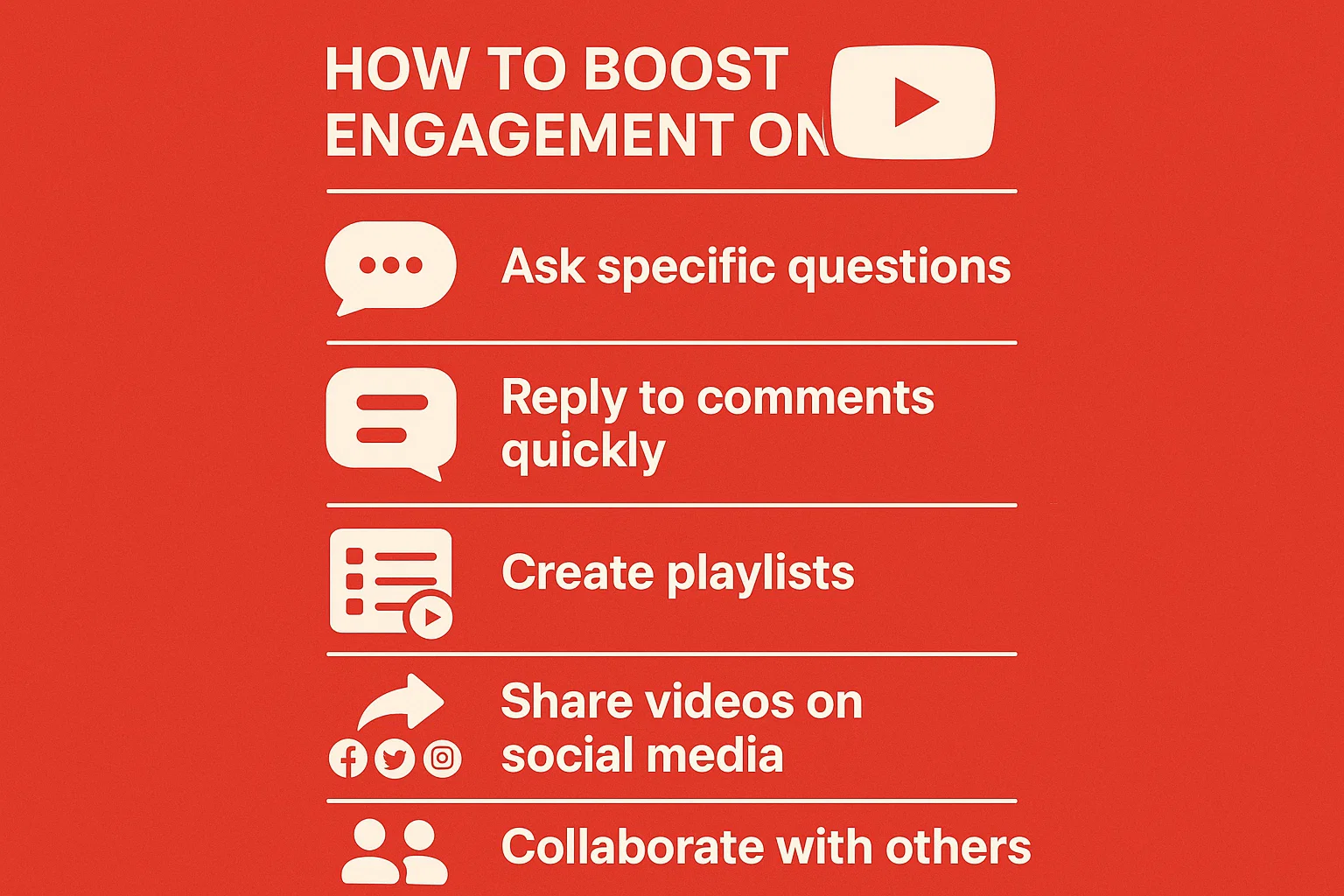
Instead of using generic prompts such as “let me know what you think,” ask viewers specific questions during your video. Make sure they relate directly to the topic. Precise and targeted questions are more likely to generate thoughtful comments. They also create active discussion, which improves your YouTube video ranking.
Responding to comments promptly is another simple but powerful strategy. Engaging with viewers within the first few hours after publishing increases the likelihood that others will join the conversation. This boosts your engagement metrics and signals to the algorithm that your content is valuable.
Playlists and video series are also highly effective for YouTube channel optimization. When viewers watch multiple videos in sequence, it signals to YouTube’s algorithm that your content is valuable and relevant. This behavior strengthens your overall channel performance. It increases visibility and improves session duration YouTube metrics.
Finally, do not rely only on YouTube for traction. Share your videos across social platforms. Include them in email newsletters. Embed them on your website or blog. External traffic can provide the early momentum needed to trigger YouTube’s recommendation system. It can expand your reach to a broader audience. This is part of comprehensive video marketing optimization.
Technical SEO Elements for YouTube
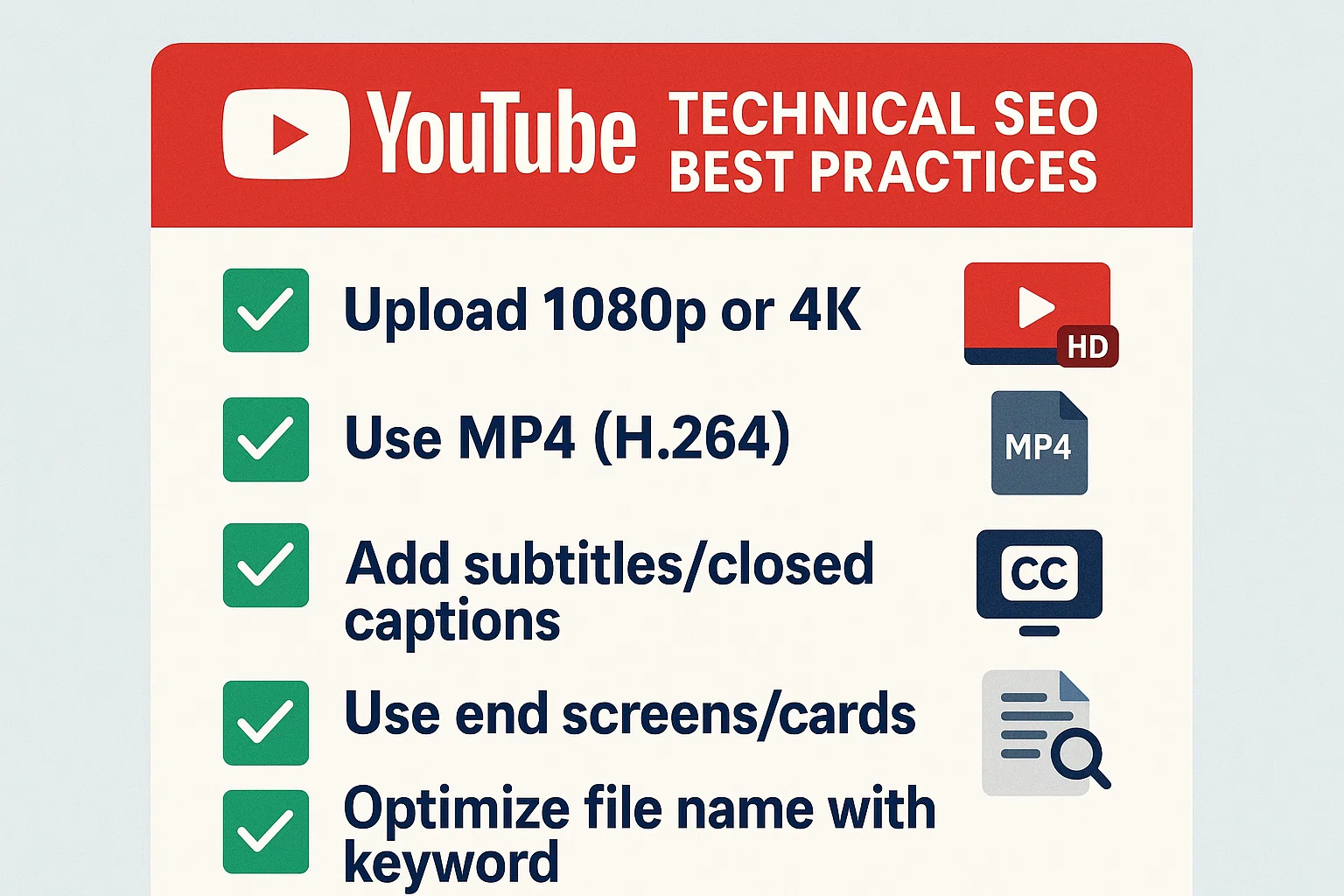
Video quality and technical specifications play a bigger role in YouTube ranking factors than many creators realize. Always upload in the highest resolution available. Use 1080p as the minimum standard. 4K is preferred when your content benefits from higher definition.
Select file formats and compression settings that strike a balance. You want quality and fast loading times. MP4 files with H.264 encoding are generally the best option for most content types. This technical foundation supports your overall YouTube SEO optimization efforts.
Adding closed captions or subtitles improves accessibility. It also provides additional text for YouTube’s algorithm to analyze. According to research from 3Play Media, accurate captions help your videos rank for keyword variations. These might not appear in your title or description. This is one of the key YouTube SEO best practices 2026 that many creators overlook.
Use end screens and cards strategically. Promote related content and encourage viewers to keep engaging with your channel. These features increase session duration YouTube metrics. Session duration is one of the most important ranking factors for search engines. It directly impacts how YouTube SEO works for your channel.
Measuring and Improving Performance
YouTube Analytics insights give you detailed information about video performance across multiple metrics. Focus on average view duration, audience retention graphs, and traffic sources. These help you spot areas for improvement in your YouTube SEO strategies.
Click-through rate on YouTube (CTR) and average watch time often matter more for rankings than total view count. For example, a video with 1,000 views and an average watch time of 8 minutes will outperform a video. This is true even if the other video has 5,000 views and a 30-second watch time. Understanding how long does YouTube SEO take requires monitoring these metrics.
Track your keyword rankings using tools like VidIQ. You can also manually check YouTube search results. Monitor changes over time. Connect improvements with the YouTube SEO optimization efforts you applied. This helps answer the question: does YouTube SEO really work?
Study competitor videos that rank well for your target keywords. Analyze their titles, thumbnails, YouTube tags and descriptions, and engagement strategies. Identify what works. Then adapt those tactics in a way that fits your own content. This competitive analysis is essential when learning how to do YouTube SEO in 2026 effectively.
Common YouTube SEO Mistakes to Avoid
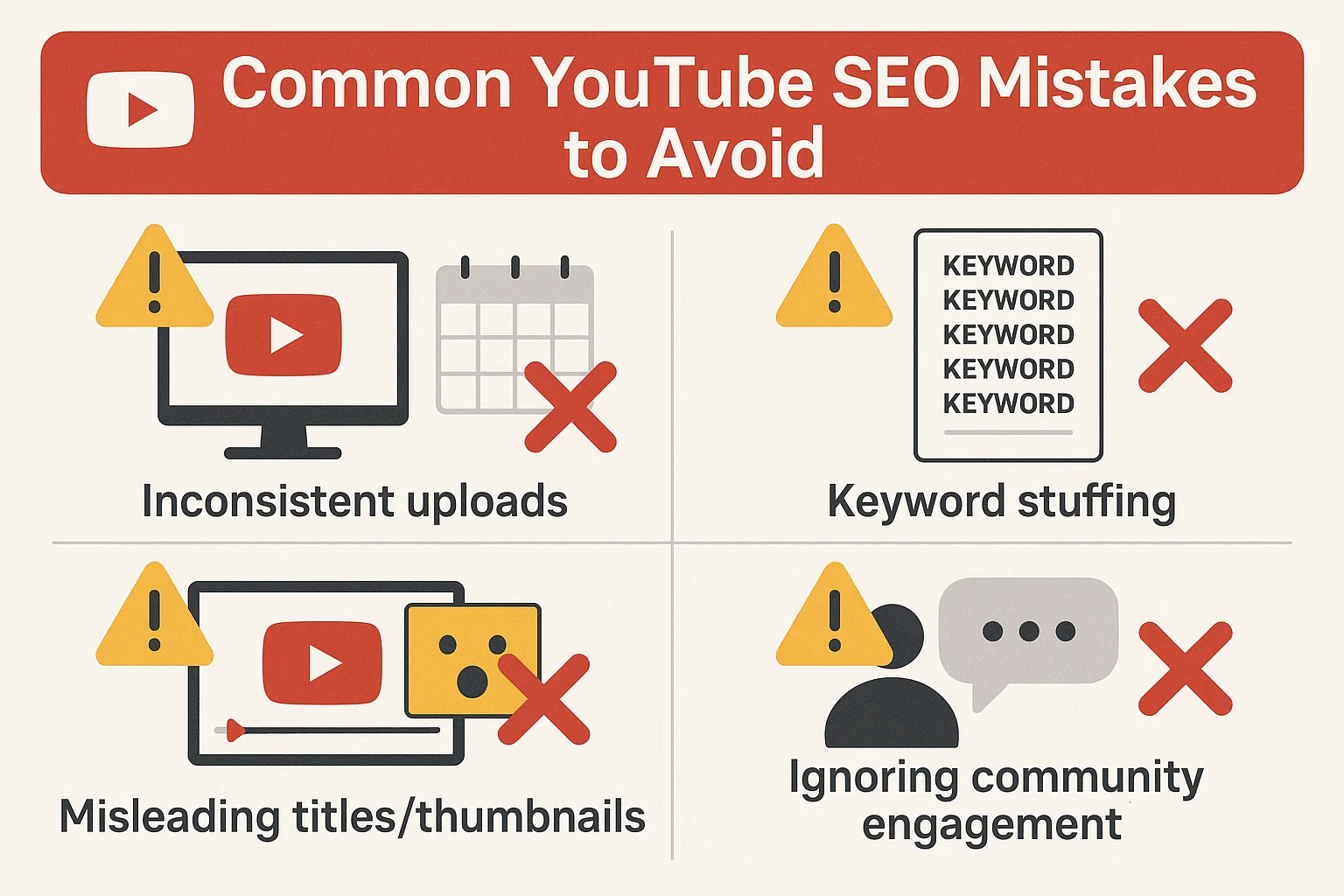
One of the most common mistakes is sticking to an inconsistent posting schedule. YouTube’s algorithm rewards channels that publish regularly. This signals ongoing value for viewers. It makes it easier for your content to be discovered. Consistency is crucial for YouTube growth services.
Another pitfall is keyword stuffing in titles, descriptions, or tags. While keywords are necessary for YouTube search optimization, overusing them can appear spammy. This can actually harm your rankings rather than helping. Follow YouTube SEO best practices 2026 by using keywords naturally.
Many creators also underestimate the importance of community building. Taking time to respond to comments is valuable. Collaborate with others in your niche. Use YouTube’s community features. These actions can boost both channel growth and individual video performance. This is part of effective YouTube channel optimization.
Finally, avoid misleading titles or thumbnails that are designed solely to attract clicks. These might bring short-term traffic. However, they will damage your reputation and lower your rankings over time. This happens due to poor audience retention and negative user signals. Understanding what is YouTube SEO means prioritizing long-term success over short-term gains.
Need expert support to make your videos stand out and rank higher? Discover our comprehensive YouTube automation services. They’re designed to help creators and e-commerce businesses scale with professional YouTube SEO.
Conclusion
Getting YouTube SEO right is not about relying on quick fixes. It requires patience, consistent effort, and the ability to adapt. The platform continues to evolve. The YouTube SEO strategies outlined here provide a solid framework for improving rankings. Yet the real impact comes when effective YouTube SEO optimization is paired with content that delivers genuine value to viewers.
There is no need to implement every YouTube SEO technique at once. A more practical approach is to begin with one or two areas. Evaluate the results. Gradually expand your YouTube SEO strategy as you refine it. By monitoring performance and making informed adjustments, you will see your videos steadily climb in search results when you rank videos on YouTube.
More importantly, you will connect with the right audience. These are the viewers who drive meaningful growth for both your channel and your business. Whether you’re just learning how to rank videos on YouTube first page or refining advanced YouTube video optimization tactics, the key is consistency. Apply these YouTube SEO best practices 2026, track your YouTube Analytics insights, and continue improving.
Understanding how does YouTube ranking algorithm work gives you a competitive advantage. When you master YouTube keyword research for videos, optimize your YouTube tags and descriptions, and focus on watch time and audience retention, success becomes achievable. Is YouTube SEO different from Google SEO? Yes, but the principles of providing value remain the same.
For businesses seeking YouTube ranking service or YouTube growth services, working with experts can accelerate your results. Visit HiSellIt to explore how professional YouTube SEO services can transform your channel’s performance in 2026.
Frequently Asked Questions
Q. How long does it take for YouTube SEO to show results?
YouTube SEO results typically begin showing within 24-48 hours for initial indexing. Significant ranking improvements usually take 2-4 weeks of consistent YouTube SEO optimization efforts and audience engagement. How long does YouTube SEO take depends on competition, content quality, and your implementation of YouTube SEO strategies.
Q. What’s the ideal video length for YouTube SEO?
Videos between 7 and 15 minutes perform best for ranking purposes. They provide enough time to cover topics thoroughly while maintaining viewer attention throughout the entire duration. This helps with watch time and audience retention, which are critical YouTube ranking factors.
Q. Should I focus on YouTube SEO or video quality first?
Both elements are essential for success. High-quality content should be your foundation. Even perfectly optimized videos won’t rank well in the long term if they don’t provide genuine value to viewers. Understanding what is YouTube SEO means balancing optimization with quality content creation.
Q. How many keywords should I use on YouTube?
Focus on one primary keyword and 2-3 related secondary keywords per video. This approach allows for natural YouTube SEO optimization without diluting your content’s focus or confusing YouTube’s algorithm. How many keywords should I use on YouTube is a common question, and the answer is quality over quantity.
Q. Can old YouTube videos rank higher?
Yes, updating titles, YouTube tags and descriptions, thumbnails, and other elements on existing videos can improve their performance. Focus on videos that already have some traction but aren’t performing to their full potential. This demonstrates that YouTube video optimization is an ongoing process, not a one-time task.