
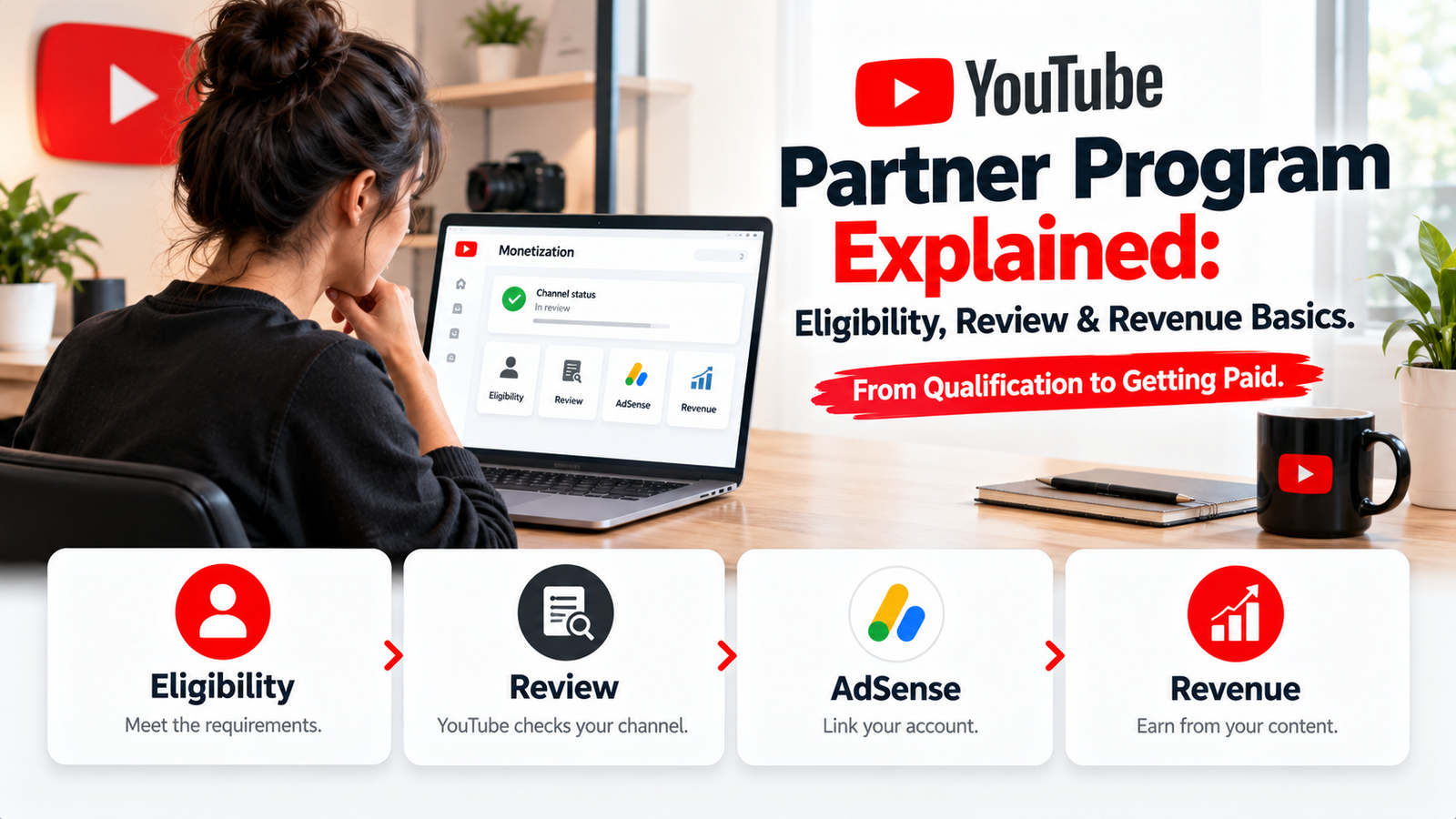
YouTube Partner Program Explained: Eligibility, Review & Revenue Basics
The YouTube Partner Program is the system that lets eligible creators access YouTube monetization features such as advertising revenue, YouTube Premium revenue, memberships, Supers, and Shopping where available.
But reaching a subscriber milestone does not automatically switch monetization on.
Current YouTube Partner Program eligibility depends on subscribers plus qualifying watch activity, and every channel still has to meet YouTube’s policies and pass review. This YouTube monetization for beginners guide explains the numbers, application steps, review, and revenue without treating monetization like guaranteed income.
The important distinction is simple: YouTube monetization requirements tell you when you can apply. They do not guarantee that YouTube will approve the channel.
What Is the YouTube Partner Program?
The YouTube Partner Program gives eligible creators access to monetization features such as Watch Page Ads, Shorts Feed Ads, YouTube Premium revenue, fan-funding tools, and Shopping where available. Creators must meet the applicable eligibility thresholds, follow YouTube’s monetization policies, and pass YouTube’s channel review before full monetization becomes available.
YouTube Partner Program Eligibility Requirements
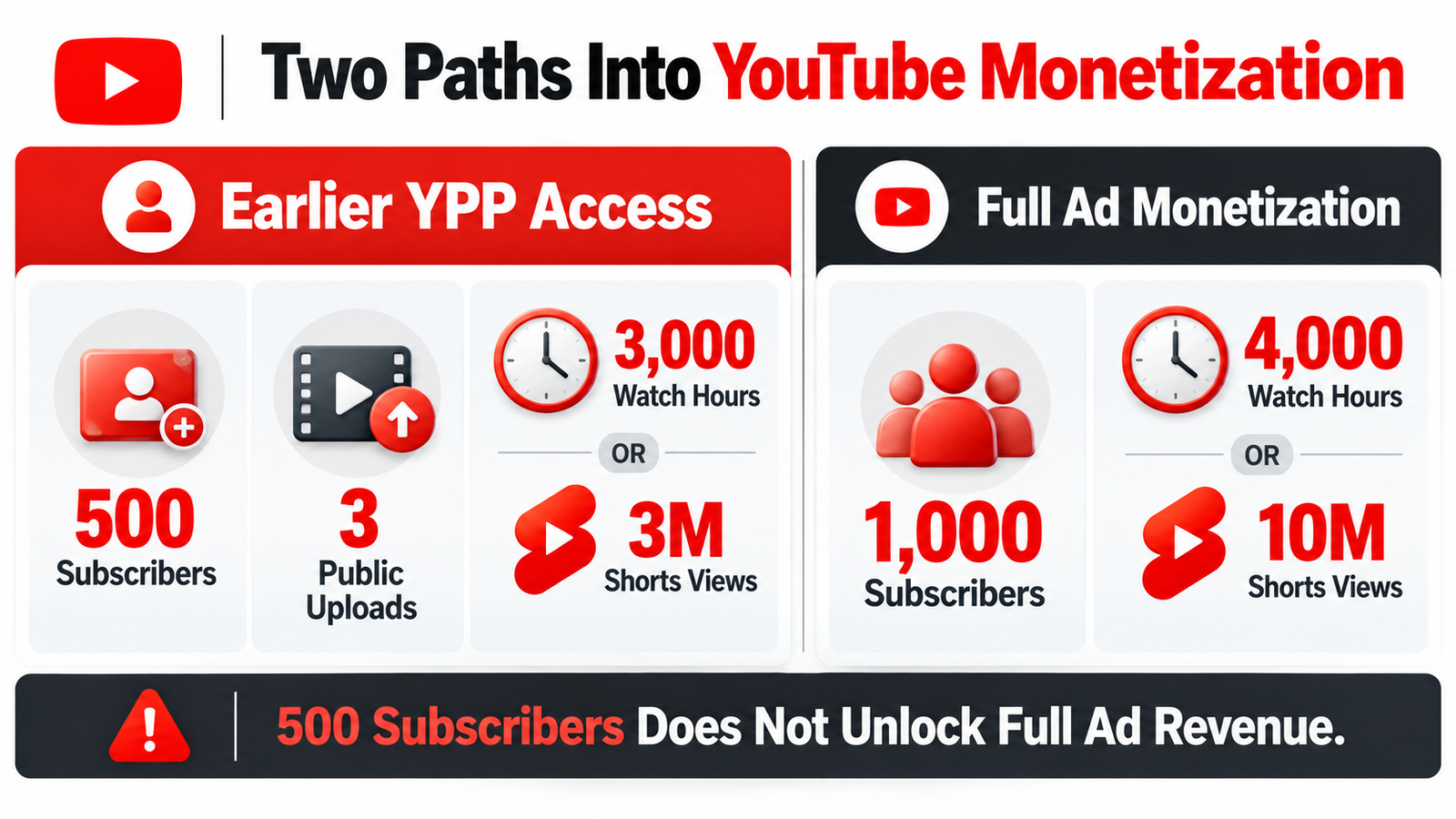 The current YouTube Partner Program eligibility rules have two important levels. The first is earlier access to selected features. The second is the higher threshold for full advertising revenue.
| Access Level | Subscribers | Additional Requirement | Typical Feature Access |
| Earlier-access YPP | 500 | 3 public uploads in 90 days + either 3,000 qualified watch hours in 365 days or 3 million qualified Shorts views in 90 days | Eligible memberships, Supers and Shopping |
| Full ad monetization | 1,000 | Either 4,000 qualified watch hours in 365 days or 10 million qualified Shorts views in 90 days | Watch Page Ads, Shorts Feed Ads, YouTube Premium and eligible YPP features |
YouTube’s current official monetization table confirms the 500-subscriber earlier-access path and the higher 1,000-subscriber threshold for Watch Page Ads, Shorts Feed Ads, and YouTube Premium.
Official YouTube Partner Program eligibility requirements
These are the current October 2026 YouTube monetization requirements for new applicants.
The standard YouTube subscriber requirement for monetization through full advertising revenue is therefore 1,000 subscribers. You also need to meet either the YouTube watch hours requirement or the YouTube Shorts monetization requirements.
The current full YouTube monetization threshold is:
- 1,000 subscribers plus YouTube 4,000 watch hours that qualify during the previous 365 days, or
- 1,000 subscribers plus 10 million Shorts views that qualify during the previous 90 days.
Those are the current YPP eligibility requirements, but YouTube has announced a future change.
Starting February 1, 2027, new applicants seeking full ad-revenue access will need 1,000 subscribers plus either 8,000 qualified watch hours during the previous 365 days or 20 million qualified Shorts views during the previous 90 days. Earlier fan-funding thresholds are not changing under that announcement.
YouTube’s announced 2027 YPP changes
That future rule does not apply yet.
Can You Join YPP With 500 Subscribers?
Yes, in eligible regions, but this is the expanded YouTube Partner Program, not full advertising monetization.
Current YouTube 500 subscribers monetization access also requires three public uploads during the previous 90 days plus either YouTube 3,000 watch hours that qualify or YouTube 3 million Shorts views that qualify.
This early YouTube monetization tier can provide YouTube fan funding eligibility for features such as memberships, Super Chat, Super Stickers, Super Thanks, and some Shopping functionality where the channel and region qualify.
It does not unlock Watch Page and Shorts Feed advertising by itself.
That distinction is one of the most important parts of the YouTube Partner Program explained correctly.
Which Watch Hours and Shorts Views Count?
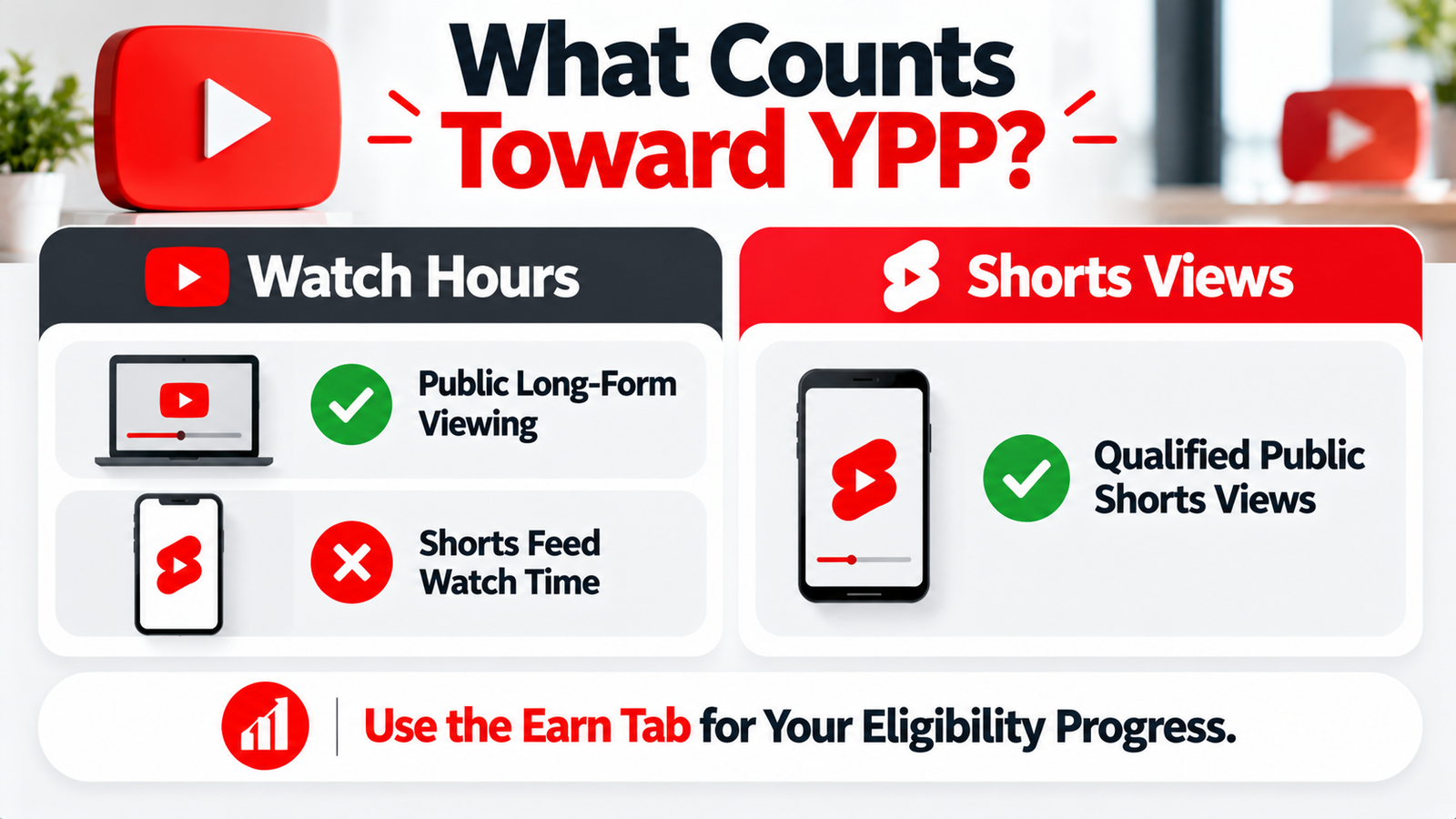 Not every view or hour moves you toward eligibility. For the long-form route, YouTube qualified watch hours come from eligible public long-form viewing.
YouTube says the 4,000-hour calculation does not include Shorts Feed watch time. Paid advertising campaign activity also does not simply count toward the threshold, although YouTube says qualifying Follow-on Views can count.
So if you are asking what watch hours count for YPP, focus on qualified public long-form viewing rather than your total lifetime Analytics number.
The same applies to Shorts.
The YouTube Shorts views requirement refers to qualified public Shorts views during the relevant 90-day period.
If you are wondering what Shorts views count for YPP, use the eligibility number shown in the Earn area rather than assuming every displayed Shorts view is automatically eligible.
This is why YouTube watch hours and raw channel watch time are not always interchangeable.
How to Apply for the YouTube Partner Program
Once the relevant threshold is reached, the YPP application process begins inside YouTube Studio.
The current workflow is straightforward:
- Open YouTube Studio.
- Go to the YouTube Studio Earn tab.
- Choose Apply Now when eligible.
- Accept the applicable terms.
- Create or connect AdSense for YouTube.
- Enter channel review.
The YouTube Partner Program application therefore involves more than clicking one monetization switch.
If you want to apply for YouTube monetization, make sure the channel is ready for policy review first.
YouTube also requires creators to have advanced features access and an active AdSense account linked to the channel or be ready to create one through YouTube Studio.
This is the practical answer to how to join YouTube Partner Program.
How Does the YouTube Partner Program Review Work?
Meeting the numbers puts your application into review. It does not guarantee YouTube monetization approval.
During the YouTube Partner Program review, YouTube checks the channel against its monetization policies and guidelines.
YouTube uses automated systems as well as human review across its content and policy systems. Its YPP documentation also explains that some channels may require more than one review when reviewers disagree.
The YouTube channel review for monetization considers the channel as a whole rather than only one high-performing video.
YouTube says YPP decisions are typically returned in about one month, but delays can happen because of application volume, system issues, resource limitations, or additional reviews.
So how long does YouTube monetization review take?
About a month is YouTube’s typical estimate, not a promise. That is the key thing to understand about the YPP review process.
Why Meeting the Numbers Does Not Guarantee Monetization
Numbers answer one question: Can you apply?
Policies answer another: Can YouTube monetize the channel?
The YouTube monetization policies include YouTube’s channel monetization rules, Community Guidelines, originality expectations, and advertiser-related requirements.
The YouTube reused content policy does not mean creators can never use outside material. The issue is whether the channel adds sufficient original value and complies with YouTube’s current monetization rules.
Likewise, the YouTube original content requirement is broader than simply recording everything yourself.
Creators also need to understand the YouTube advertiser-friendly guidelines, which affect whether individual content is suitable for advertising.
A channel can therefore reach every numerical threshold and still fail YouTube monetization review if a significant portion of the channel does not meet YouTube’s requirements.
For a deeper policy breakdown, see HiSellIt’s YouTube monetization policies guide.
If copyright is part of your concern, also see how to avoid copyright claims on YouTube.
How Does YouTube Revenue Work After YPP Approval?
 Approval creates access to eligible monetization tools. It does not guarantee YouTube revenue.
Different YouTube revenue sources work differently.
| Revenue Source | Basic Explanation |
| Watch Page Ads | Ads around eligible long-form and live content |
| Shorts Feed Ads | Shared Shorts advertising model |
| YouTube Premium | Revenue connected to Premium viewing |
| Memberships | Recurring viewer payments where eligible |
| Supers | Viewer-funded interactions |
| Shopping | Eligible commerce features |
YouTube currently lists advertising revenue, Shopping, Premium revenue, channel memberships, Super Chat, Super Stickers, and Super Thanks among the monetization options available to eligible creators.
Official YouTube guide to ways creators can earn money
These are some of the main ways to make money on YouTube, but each feature has its own eligibility rules. That means YouTube creator monetization is not simply “views multiplied by a fixed rate.”
How Watch Page Ad Revenue Works
Eligible creators who accept the YouTube Watch Page Monetization Module can earn from ads displayed or streamed around eligible public Watch Page content.
YouTube currently states that creators receive 55% of net advertising revenue from the Watch Page Monetization Module.
That 55% YouTube ad revenue share applies to the net revenue covered by that module.
This is the core model behind YouTube Watch Page Ads and standard YouTube long-form monetization.
It does not mean creators receive a guaranteed amount for every 1,000 views.
How Does YouTube Shorts Monetization Work?
YouTube Shorts monetization uses a different model.
Advertising revenue associated with the Shorts Feed is pooled. YouTube then allocates revenue through its Creator Pool methodology based on eligible engaged views and other rules.
After allocation, monetizing creators currently keep 45% of the revenue allocated to them. YouTube’s current Shorts monetization policy confirms that 45% is the creator share.
Official YouTube Shorts monetization policies
That is why YouTube Shorts revenue sharing should not be explained as if it works exactly like long-form Watch Page advertising. Shorts Feed Ads use their own revenue system, and YouTube Shorts earnings can vary widely.
YouTube Premium and Fan Funding
Eligible YPP creators may also receive YouTube Premium revenue when Premium subscribers watch qualifying content.
YouTube describes Premium as one of the revenue features available to creators who meet the applicable monetization requirements and accept the relevant modules.
Fan-funded tools can include:
- YouTube channel memberships
- YouTube Super Chat
- YouTube Super Stickers
- YouTube Super Thanks
These features operate through the YouTube Commerce Product Module.
YouTube currently states that creators accepting that module receive 70% of net revenues from memberships, Super Chat, Super Stickers, and Super Thanks.
Availability depends on location, channel eligibility, feature-specific rules, and YPP access level.
YouTube RPM vs CPM: What’s the Difference?
RPM vs CPM YouTube terminology causes a lot of confusion.
| Metric | What It Tells You |
| CPM | What advertisers pay per 1,000 ad impressions before YouTube’s revenue share |
| RPM | Creator revenue per 1,000 views after YouTube’s revenue share, using YouTube’s current methodology |
YouTube CPM is advertiser-focused.
YouTube RPM is creator-focused.
YouTube says RPM includes reported revenue from sources such as ads, memberships, Premium, Super Chat, and Super Stickers, while CPM measures advertiser spend around ad impressions.
So YouTube ad CPM is not simply the amount you receive for 1,000 video views.
That is why universal claims such as “YouTube pays exactly X per 1,000 views” are misleading.
What Happens After YouTube Monetization Approval?
After YouTube monetization approval, check which modules and monetization features are available to your channel.
You may need to accept relevant terms before specific revenue features can operate.
Estimated earnings can appear in YouTube Analytics, while finalized earnings and payment processing are handled through your linked YouTube AdSense account.
That is the simple version of how YouTubers get paid.
A YouTube payment account does not mean approval automatically creates revenue. Eligible monetized activity still has to occur.
What Happens If Your YPP Appokay writelication Is Rejected?
A YouTube monetization rejected decision does not necessarily mean the channel can never qualify.
Read the rejection reason first.
For a first unsuccessful application, YouTube currently says a creator can appeal within 21 days or generally reapply for YouTube monetization after 30 days.
If it is not the first rejection or the creator has already reapplied, YouTube currently says the next application may require a 90-day wait.
A YouTube monetization appeal argues that the original decision was incorrect.
Reapplication means correcting the issues and submitting the channel again.
Do not treat the two as the same process.
Common Beginner Misunderstandings
A useful YouTube monetization guide should clear up these points:
- 1,000 subscribers does not automatically activate ads.
- 500 subscribers does not unlock full ad revenue.
- not every view or watch hour counts toward eligibility.
- Shorts Feed watch time does not count toward the 4,000-hour long-form requirement.
- approval does not guarantee meaningful earnings.
- CPM is not the creator’s direct pay rate.
- every monetization feature is not automatically available to every channel.
These distinctions matter more than memorizing one threshold.
Conclusion
The YouTube Partner Program becomes much easier to understand when you separate qualification, policy review, and revenue.
Current YouTube Partner Program eligibility requires the appropriate subscriber and viewing thresholds, while YouTube monetization requirements also include channel-level policy compliance.
Use this YouTube monetization guide as a simple sequence:
qualify, apply, connect AdSense, pass review, accept the relevant monetization modules, and earn only when eligible monetized activity occurs.
Thresholds alone never guarantee acceptance or income.
Once you understand how YouTube monetization works, the next step is building a channel that can reach the requirements without sacrificing originality, audience value, or policy compliance.
Frequently Asked Questions
Q. How Many Subscribers Do You Need for YouTube Monetization?
For current full ad monetization, how many subscribers do you need for YouTube monetization? The answer is 1,000, plus either the qualifying long-form watch-hour threshold or the qualifying Shorts-view threshold. Earlier YPP access may begin at 500 subscribers in eligible regions.
Q. How Many Watch Hours Do You Need for YouTube Monetization?
How many watch hours do you need for YouTube monetization currently? Full ad-revenue access requires 4,000 qualified watch hours during the previous 365 days, alongside 1,000 subscribers.
Q. How Many Shorts Views Do You Need for Monetization?
How many Shorts views do you need for monetization currently? The full advertising route requires 10 million qualified public Shorts views in the previous 90 days plus 1,000 subscribers.
Q. How Long Does YouTube Partner Program Review Take?
How long does YouTube Partner Program review take? YouTube says decisions typically arrive in about one month, but additional reviews and operational delays can extend that timeline.
Q. What Happens During YouTube Monetization Review?
What happens during YouTube monetization review is a whole-channel assessment against YouTube’s applicable policies and guidelines. Hitting the eligibility numbers alone does not guarantee acceptance.
Q. How Does YouTube Ad Revenue Work?
How does YouTube ad revenue work? Eligible creators receive the applicable revenue share under the monetization module they have accepted. Watch Page advertising and Shorts Feed advertising use different revenue models.
Q. How Does YouTube Shorts Monetization Work?
How does YouTube Shorts monetization work? Eligible Shorts advertising revenue enters a shared pool, revenue is allocated under YouTube’s Creator Pool methodology, and creators currently receive 45% of their allocated amount.
Q. How Do YouTubers Get Paid Through YPP?
How do YouTubers get paid through YPP? Eligible revenue is estimated inside YouTube Analytics, finalized according to Google’s payment process, and handled through the creator’s linked AdSense for YouTube account.


One Comment